

Cambodia Investment Review
The Cambodia Chamber of Commerce (CCC) has publicly defended its role in managing the Government–Private Sector Forum (G-PSF), rejecting suggestions that the platform lacks inclusiveness and calling for any future reforms to remain within Cambodia’s established institutional framework.
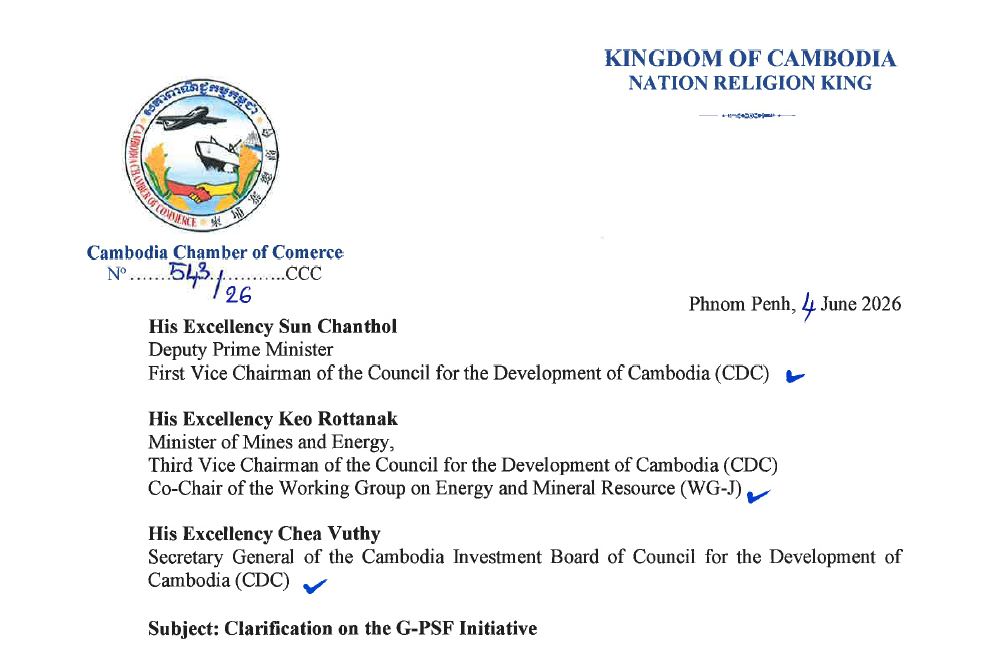
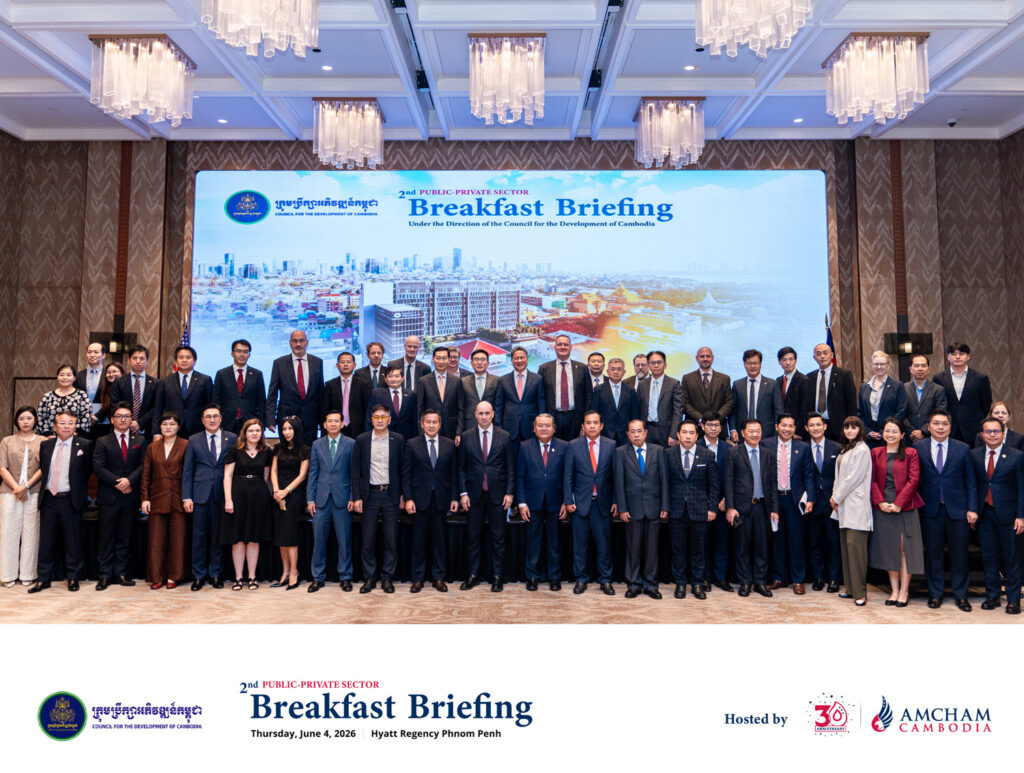
In a formal clarification letter addressed to Deputy Prime Minister H.E. Sun Chanthol and other senior government officials on June 4, the CCC responded to discussions held during a public-private sector breakfast briefing earlier the same day, where international business chambers and government representatives debated potential reforms to the country’s principal government-investor dialogue mechanism.
The letter, signed by Neak Oknha Kith Meng, President of the CCC and Chairman of the Coordinating Committee of the G-PSF Working Groups, outlined the chamber’s position on several issues raised during the meeting and reaffirmed its commitment to maintaining what it described as a broad and inclusive platform for business engagement.
CCC Rejects Claims Of Limited Inclusiveness
The CCC stated that participation and stakeholder engagement within the G-PSF have expanded significantly in recent years and rejected any implication that international chambers have been excluded from the process.
“The G-PSF is a highly institutionalized public-private dialogue mechanism operating under strict statutory frameworks,” the chamber stated.
According to the CCC, the forum has consistently operated in line with government-mandated guidelines designed to ensure broad representation across sectors and business communities.
The clarification comes after international chambers, including AmCham Cambodia, EuroCham Cambodia, BritCham Cambodia, AusCham Cambodia, the International Business Chamber (IBC), and others discussed proposals aimed at improving coordination, regulatory consultation, and issue-tracking within the G-PSF framework.
Chamber Defends Secretariat Function
A central point of the CCC’s response focused on its role as Secretariat of the G-PSF, which it described as one of its most important responsibilities on behalf of the private sector.
While acknowledging the value of feedback from foreign chambers and business associations, the CCC emphasized that governance changes must operate within the legally recognized framework governing the forum.
The chamber noted that no individual business association should bypass established mechanisms when proposing changes that could affect the broader investment landscape.
At the same time, the CCC acknowledged that the rapid growth of the G-PSF in recent years has created new demands on the Secretariat and said it remains committed to reviewing resources and operational needs to ensure the mechanism remains effective.
Commitment To Continued Dialogue
The CCC also reaffirmed its support for continued participation by international investors and foreign business associations through the existing network of G-PSF working groups.
The chamber said channels remain open for foreign chambers to raise cross-sector issues and submit structural recommendations through coordination with the Secretariat.
It further pledged to convene consultative meetings with international chambers to discuss ways of improving the efficiency of the working groups while ensuring alignment with the Royal Government’s broader reform agenda.
The statement highlights growing discussion around the future evolution of the G-PSF, which remains Cambodia’s primary mechanism for structured engagement between government and the private sector on investment, regulatory, and business issues.
The clarification follows a broader debate among business chambers regarding potential reforms to improve transparency, consultation processes, governance structures, and issue resolution within the platform as Cambodia seeks to maintain its competitiveness as a regional investment destination.


