

Dalton Wong
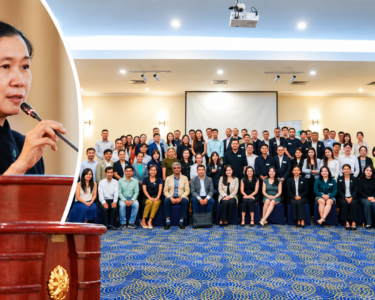
I would first like to express my sincere appreciation to H.E. Prof. Bundit Sapheacha Dr. Sok Siphana, Senior Minister in charge of Special Missions and Chairman of the Trade Policy Advisory Board (TPAB), for the invitation to participate alongside H.E. Santo Darmasumarto the Ambassador of Indonesia in the 11th episode of Cambodia’s Economic Growth Policy Dialogue, examining “Trade and Economic Relations with the Republic of Indonesia.”
It was a privilege to represent the President of the Indonesian Chamber of Commerce in Cambodia (IndoCham) in this important dialogue. This gesture itself reflects the importance both governments place on strengthening bilateral relations, while also reinforcing the broader importance of ASEAN cooperation as a collective economic system.
The dialogue highlighted several important priorities from Cambodia’s perspective, including the need to address trade imbalances, strengthen logistics connectivity, and deepen long-term business cooperation between Cambodia and Indonesia. These priorities reflect Cambodia’s broader commitment to strengthening regional integration and ensuring sustainable economic growth through deeper engagement with ASEAN partners.
Beyond bilateral relations, two broader structural themes emerged from the discussion that are critical not only for Cambodia and Indonesia, but for ASEAN as a whole.
Multilateral ASEAN Integration: From Fragmented Markets to a Coordinated Supply Chain
ASEAN today represents one of the most dynamic economic regions in the world, with over 650 million people and rapidly growing industrial capacity. However, ASEAN’s true potential lies not in the individual strength of its member states alone, but in its ability to function as a coordinated regional supply chain.
For many years, ASEAN countries have often competed independently for investment, manufacturing, and industrial development. While this has generated economic growth, it has also led to fragmentation and duplication of capabilities.
A multilateral approach offers a stronger and more sustainable path forward.
Rather than attempting to replicate identical industries across all countries, ASEAN nations can specialize in complementary roles within a shared production ecosystem. Each country contributes according to its strengths, while benefiting from the collective efficiency of the region.
This model has already begun to emerge. Indonesia has demonstrated strong upstream industrial capabilities, particularly in resource processing and downstream industrial development. Vietnam has rapidly established itself as a major electronics manufacturing hub. Thailand continues to maintain deep automotive manufacturing expertise. Malaysia plays an important role in semiconductor production. Singapore serves as a financial and logistics center. Cambodia is increasingly positioning itself as an important logistics, energy, and manufacturing connector within the region.
When these roles operate in coordination, ASEAN becomes far more competitive globally.

One of the most immediate benefits of this integrated supply chain approach is the reduction in logistics costs. As production and supply chains become coordinated across multiple ASEAN countries, transportation volumes increase, infrastructure becomes more efficient, and regulatory alignment reduces friction.
Over time, logistics within ASEAN can begin to operate more like domestic supply chain movement rather than international trade. For example, products manufactured in Indonesia and transported to Cambodia can achieve cost structures increasingly comparable to domestic distribution within Indonesia itself.
This transformation significantly strengthens ASEAN’s competitiveness, making the region more attractive as a unified manufacturing and industrial ecosystem rather than fragmented individual markets.
More importantly, multilateral integration strengthens ASEAN’s collective strategic position. When countries operate individually, their leverage is limited. When ASEAN functions as a coordinated system, it becomes one of the most significant economic and industrial regions globally.
Investment Must Build Domestic Capability and Continuity
At the same time, investment must be understood not only in terms of capital inflow, but in terms of the long-term capability it creates.
Foreign direct investment has played an essential role in Cambodia’s economic development. It has created jobs, accelerated industrial growth, and strengthened economic activity. However, the true long-term value of investment lies in its ability to strengthen domestic capability, develop local expertise, and build innovation ecosystems.
Capital naturally seeks efficiency and return. This is its fundamental function. The responsibility of policymakers, investors, and local partners is to ensure that investment contributes to long-term capability, not short-term dependency.
The distinction is not between foreign and domestic investment. The distinction is between investment that builds lasting capability and investment that creates temporary economic activity without strengthening the domestic ecosystem.
Countries that have successfully transformed their economies have ensured that investment strengthens domestic industries alongside foreign participation. China’s industrial development is a clear example of this approach. Over decades, investment was structured in a way that allowed domestic companies to develop, absorb knowledge, and progressively strengthen their own capabilities. Foreign participation was welcomed, but it operated alongside deliberate domestic ecosystem development—ensuring that local companies, engineers, and supply chains continued to evolve.
This approach is clearly visible in China’s electric vehicle industry. What began as a sector supported by policy, industrial coordination, and investment has now evolved into global leadership. Chinese companies such as BYD have advanced beyond being participants in the global automotive sector to becoming innovators and industry leaders in battery technology, electric mobility, and integrated energy systems.
Importantly, the impact of this capability building extends far beyond the automotive sector itself.
The same foundational technologies developed through electric vehicles—including precision electric motors, battery systems, sensor integration, and intelligent control software—form the core technological building blocks of advanced robotics and intelligent machines. The recent robot demonstrations during the Chinese New Year celebrations, where humanoid robots displayed complex movement and coordinated martial arts sequences, serve as a visible symbol of this progression.
These demonstrations were not merely technological showcases. They reflected decades of accumulated industrial capability, engineering expertise, and ecosystem development. The ability to design, manufacture, and operate such advanced robotic systems is built upon the same industrial foundation developed through manufacturing, automotive engineering, electronics, and energy systems.
This illustrates an important principle: when investment strengthens domestic capability, its benefits compound across multiple industries over time. What begins as capability in one sector evolves into leadership in others.
China’s experience demonstrates that long-term industrial development is not defined solely by the volume of investment, but by how effectively that investment contributes to building domestic capability, strengthening local companies, and enabling continuous innovation.
This principle holds important relevance for ASEAN. Investment that strengthens domestic capability does not only create immediate economic growth—it builds the foundation for future industries, technological advancement, and long-term economic resilience.
Indonesia has similarly demonstrated the importance of strengthening domestic value creation through industrial policy and downstream industrial development.
For Cambodia, the opportunity lies in ensuring that investment contributes to the development of domestic capability, strengthens local enterprises, and supports long-term innovation.
Investment should not only build factories. It should build capability.
Investment should not only generate short-term economic activity. It should strengthen long-term economic resilience.
ASEAN’s Future Lies in Integration and Capability
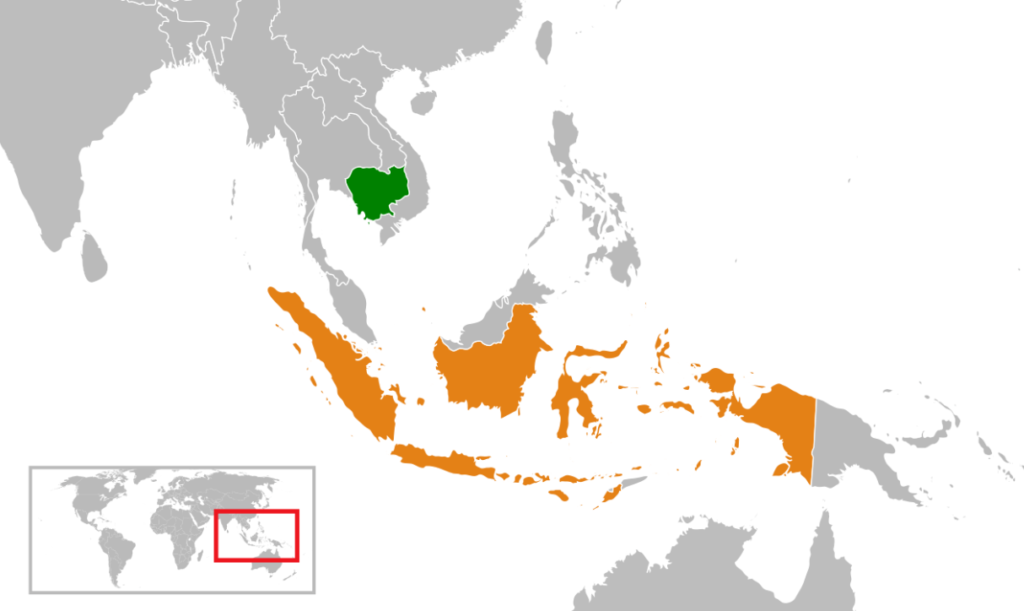
Cambodia and Indonesia share a long history of cooperation, and the continued strengthening of this relationship reflects a broader commitment to ASEAN integration.
The future of ASEAN will not be defined by individual countries competing independently, but by how effectively the region integrates its strengths into a coordinated economic system.
Multilateral collaboration allows ASEAN to function as a unified industrial ecosystem—one where supply chains operate efficiently, logistics costs decline, and each country strengthens the others.
At the same time, ensuring that investment builds domestic capability will determine whether ASEAN’s growth translates into long-term economic strength and innovation.
Cambodia stands at an important moment in its development. By strengthening multilateral cooperation within ASEAN and ensuring that investment builds lasting domestic capability, Cambodia can play an important role within a more integrated and resilient regional economic system.
ASEAN’s strength has always been its collective potential.
The task ahead is to ensure that this potential is realized through coordination, integration, and long-term capability building.