

Cambodia Investment Review
Cambodia’s fast-moving consumer goods (FMCG) market is entering a more contested phase, as supply-chain disruptions, illicit trade and rising regulatory scrutiny place new pressure on brands, distributors and enforcement agencies.
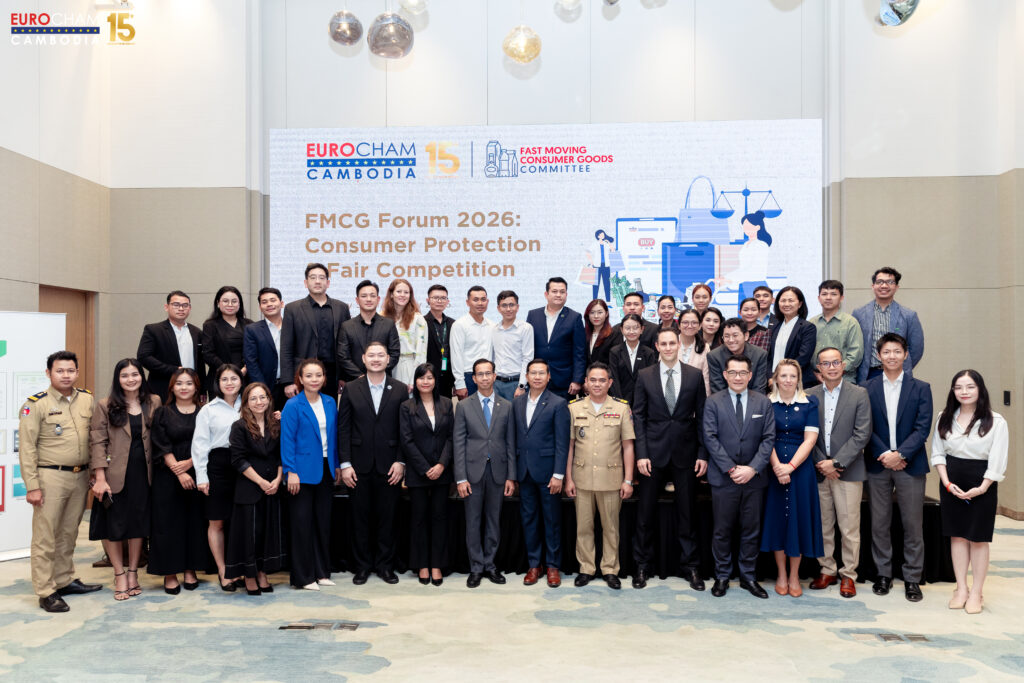
These issues were at the center of discussions at the FMCG Forum 2026, convened by EuroCham Cambodia at the Fairfield by Marriott Phnom Penh, bringing together senior government officials, multinational companies and consumer advocates.
Organised by EuroCham’s FMCG Committee, the forum reflected growing concern across both the public and private sectors that market disruptions — if left unaddressed — could weaken consumer trust and distort competition in one of Cambodia’s most economically significant sectors.
Border shocks expose supply-chain vulnerabilities
Participants noted that recent regional developments, including the Cambodia–Thailand border situation, have had direct and visible impacts on FMCG supply chains. Disruptions to cross-border logistics have affected product availability, pricing consistency and consumer sentiment, creating openings for informal and unregulated market players.
Market observers highlighted that while some emerging brands have stepped in to fill short-term gaps, established companies face increasing pressure to maintain standards amid fluctuating supply conditions. The discussion underscored how external shocks can quickly translate into reputational and operational risks for FMCG companies operating at scale.
Consumer protection moves from policy to enforcement
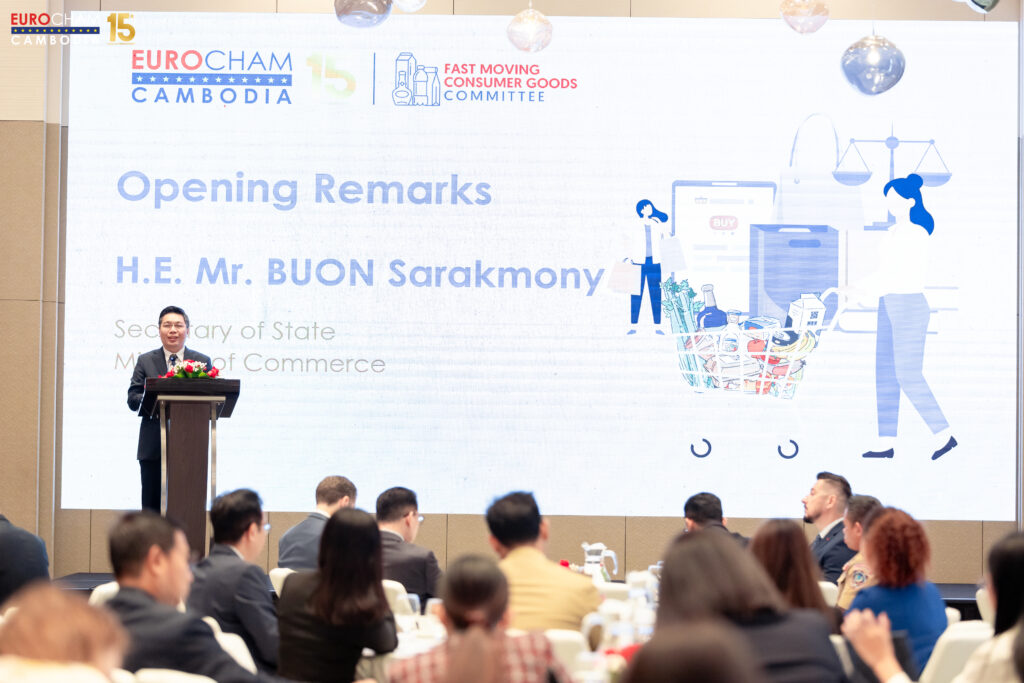
Government representatives reiterated that consumer protection is no longer a theoretical policy objective but an enforcement priority. Officials outlined ongoing efforts to tighten compliance around product registration, import procedures, retail practices and consumer information requirements.
Speakers stressed that clearer labeling, improved packaging standards and better access to product information — including barcode-linked data and digital tools — are becoming central to regulatory expectations. These measures aim to reduce consumer confusion while improving traceability in a market increasingly challenged by counterfeit and parallel-import goods.
Fair competition under strain from illicit trade
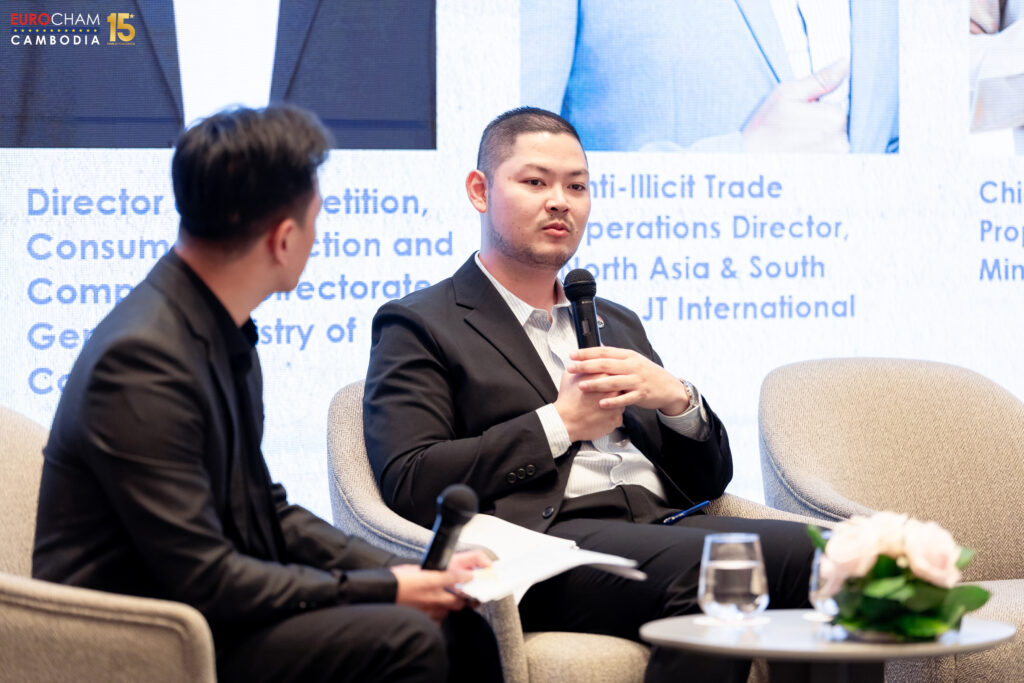
A recurring theme across panel discussions was the growing impact of illicit trade on Cambodia’s FMCG landscape. Officials from customs, interior and line ministries joined industry leaders from Danone Specialized Nutrition, HEINEKEN Cambodia, Unilever Cambodia and JT International to examine how counterfeit and illegally imported products undermine both consumer safety and legitimate businesses.
Read More: Industry and Government Leaders Push for Responsible Marketing in Cambodia’s FMCG Sector
Private-sector participants argued that uneven enforcement creates structural disadvantages for compliant companies that invest heavily in quality control, tax compliance and brand protection. Government officials acknowledged these concerns, emphasizing the need for coordinated action across agencies to restore a level playing field.

Market trust emerges as a strategic risk
Beyond enforcement, speakers warned that prolonged exposure to fake or substandard products risks eroding long-term consumer trust in established brands and formal retail channels. As Cambodian consumers become more price-sensitive and digitally informed, transparency and credibility were identified as key differentiators in the evolving market.
Panelists noted that trust, once damaged, is difficult to rebuild — making consumer protection not only a regulatory issue, but a strategic economic one.
EuroCham positions itself as bridge amid market tension
Closing discussions highlighted EuroCham’s role as a conduit between policymakers and industry at a time when the FMCG sector faces overlapping pressures from regulation, competition and external shocks. The forum reinforced calls for evidence-based policymaking, regular dialogue and closer public-private coordination.
As Cambodia’s consumer market continues to expand and diversify, participants agreed that how authorities and businesses respond to these contentious issues — border disruption, illicit trade and enforcement credibility — will shape the sector’s resilience and competitiveness in the years ahead.