
EuroCham Cambodia
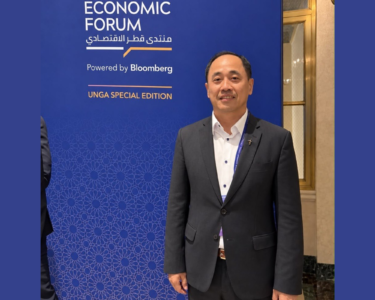
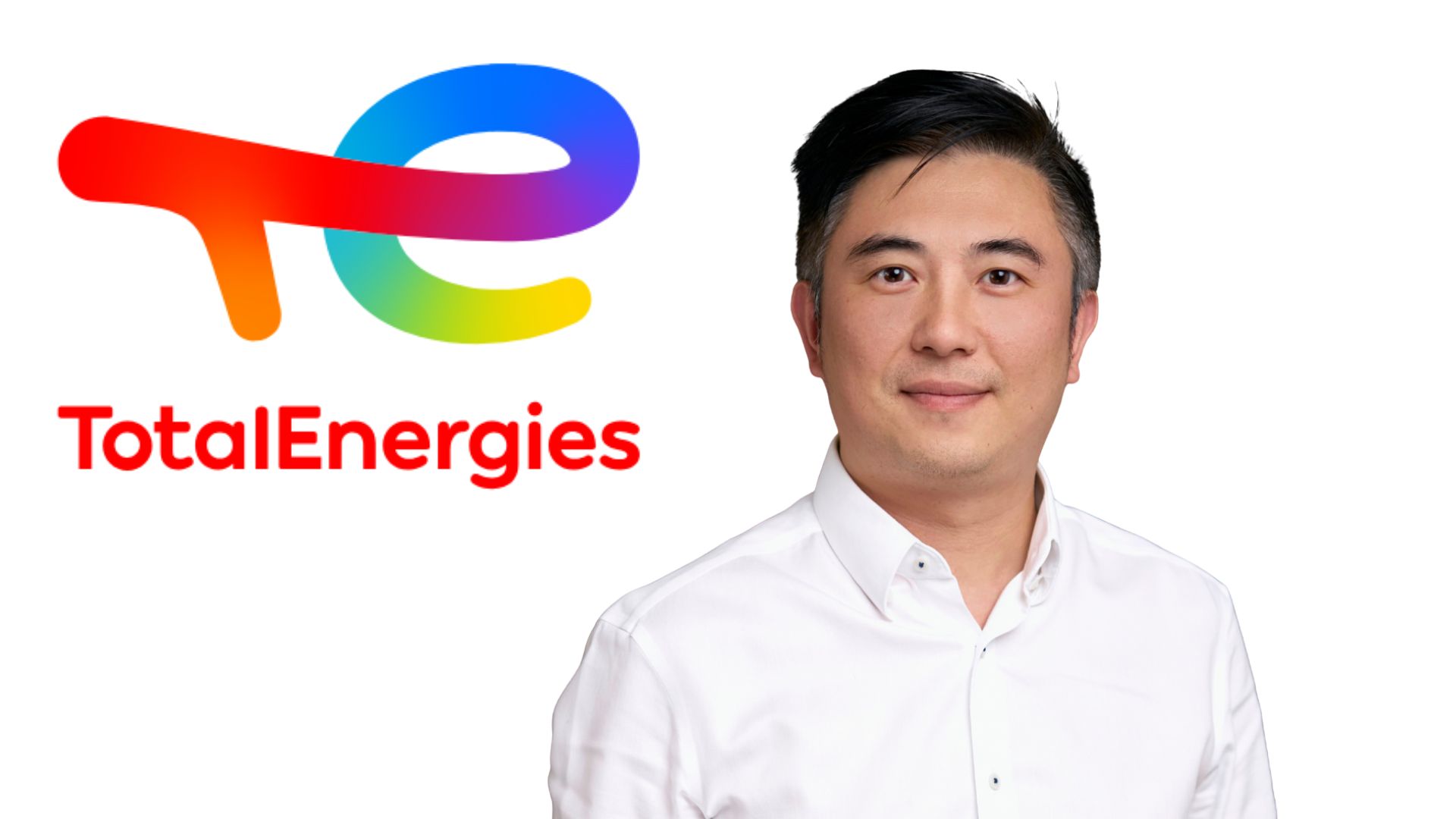
This week, we spoke with Yuan Liu, Managing Director and Country Chair of TotalEnergies Cambodia, about his first year leading the affiliate and the state of Cambodia’s energy sector.
We discussed his career across finance, audit, M&A and marketing leadership roles in France and French Polynesia, the challenges of operating in a market fully reliant on fuel imports, and what TotalEnergies’ longstanding partnership with EuroCham means for the company and the wider European business community in Cambodia.
Yuan shared what drew him to the role in Cambodia, how the company navigated supply pressures during last year’s border conflict and the ongoing Middle East crisis, and his vision for continued growth as TotalEnergies marks more than three decades in the country.
Could you start by telling us a bit about yourself and your journey to becoming Managing Director of TotalEnergies Cambodia? You’ve had a long career with TotalEnergies across finance, audit, M&A, and marketing leadership roles in France and French Polynesia. What led you to Cambodia, and how have these varied experiences shaped your approach to leading the affiliate here?
Yuan Liu: I’m originally from China, where I was born and grew up. At twenty-one, I was given the opportunity to study in France and completed a master’s degree there. I wanted to stay on and work a little longer in France, which is when I began my journey with TotalEnergies, back in 2008, so eighteen years ago now.
TotalEnergies has a strong culture of developing talent internally, and we encourage career mobility roughly every three to four years. That allowed me to start in a pure finance role as a treasury analyst, before moving into market analysis for natural gas and electricity, then into internal audit for three years. I was later expatriated to Singapore to lead strategic projects for our marketing services business segment. After four years there, I was entrusted with the role of Managing Director and Country Chair for our affiliate in French Polynesia, a French overseas territory, where I became the first non-French MD for that French-speaking affiliate.
Those two years taught me a great deal, since it was my first experience running a full affiliate: being responsible not just for the P&L, but for the whole set of activities, business, safety, HR, and public affairs. Challenging, but also exciting in terms of growth. When the position in Cambodia became vacant, the company thought of me given my Chinese background and that first experience as managing director. Cambodia is a much larger portfolio, roughly 150 stations when I arrived, compared to 21 in French Polynesia, though French Polynesia came with its own challenges around logistics and supply chain.
I arrived here on the first of September last year, so it’s been about a year now. I believe my past roles, especially leading the affiliate in French Polynesia, helped me integrate and adapt quickly to the Cambodia environment. We have a very strong ambition for growth here, and we’re growing fast. I’m proud of what we’ve been able to deliver together with our teams.
Since arriving in Cambodia, what have been your first impressions of the market and the energy sector here? How does TotalEnergies’ role in Cambodia compare with the markets you’ve worked in previously, and what makes this market distinct?
Yuan Liu: The first thing to understand about Cambodia’s oil sector is that it’s fully reliant on imports. Every fuel product, diesel, gasoline, LPG, is imported, because there are no upstream exploration or production activities in the country. There is some potential, but the blocks in question sit in disputed areas with Thailand. We hold an exploration license in one of those areas, but we can’t drill. I hope Cambodia will eventually have its own oil and gas production, but today there is none.
That reliance on imports became especially clear with the Middle East crisis that began at the end of February. The scale and duration of its impact surprised all of us, including here in Cambodia. The country’s storage capacity is quite low, below one month, so when the crisis hit, we were looking at a situation where any disruption to new supply could leave the country out of stock within weeks. That matters because oil products, whatever their emissions footprint, still power the broader economy.
As a company that’s been in Cambodia for more than three decades, since 1993, our mission has always been to deliver energy to our customers safely, sustainably, and affordably. During last year’s Thai-Cambodia border conflict, we continued deliveries to stations in the border areas despite the safety risks, managing it carefully through complex delivery protocols, because that mission doesn’t change regardless of geopolitical risk, as long as we can do it safely for our employees and transporters. It was the same with the Middle East crisis: our first priority was securing supply by working closely with our suppliers. Pricing is a separate issue, since international prices rose sharply, but we’ve had no disruption to supply, and I don’t foresee one in the near future. The real concern now is price. High prices aren’t good for anyone, customers are unhappy, demand softens, and we may see some switching from oil products to electricity or other fuels. We’re doing what we can to keep costs manageable, but not everything is within our control.
TotalEnergies is one of the most established energy players in Cambodia. How would you describe the company’s role in the country’s energy sector today, and where do you see the biggest opportunities or challenges as Cambodia’s energy needs continue to evolve?
Yuan Liu: Our first and most important role is delivering energy to our customers safely, sustainably, and as affordably as possible. Beyond that, I believe we bring real added value to the country.
First, we bring international standards. Our service stations and operations, particularly on safety, meet the same high bar we hold ourselves to globally, not a lower one because we’re operating in Cambodia. That allows us to train our own people as well as contractors and customers, and we often work closely with local authorities to share our technical expertise and help shape regulations, aviation fuel standards being one good example.
Second, our logistics assets serve the country more broadly. Our presence strengthens Cambodia’s energy security, and the ministries we work with value that reliability, knowing we’re a global company that can guarantee supply.
Third, we’re active in corporate social responsibility and community engagement, even if we don’t publicise it much. When the border conflict displaced a significant local population last year, we sent trucks of essential supplies to displacement camps, offered free fuel to logistics companies transporting aid, and set up around ten stations to collect public donations of food and water. We’ve also donated books to the Ministry of Education through an NGO partner we’ve worked with for more than ten years.
Education is a growing focus for us. More than half of our CSR budget now goes toward education programs. We’ve been bringing professors from France to Cambodian universities for over ten years; this year, three professors spent a week each at three universities giving lectures on the oil sector. We’re not always the loudest about this work, but for me, it’s about impact rather than communication.
TotalEnergies has been a longstanding EuroCham Annual Partner. What does this partnership mean to TotalEnergies, and how do you see it contributing value, both to the company and to the wider European business community in Cambodia?
Yuan Liu: I’m still new to Cambodia, just one year in, but even in that short time I’ve attended several EuroCham events and been impressed by the dynamism of the organisation here. I believe that through industry exchange and constructive dialogue with government bodies, EuroCham helps us work more efficiently together, not just for our own businesses, but for the good of the country.
If we want to do good business in Cambodia, the country’s development has to be part of that equation. We have every interest in seeing the Kingdom progress and prosper, so we should do our share: contribute, share our views, speak up. EuroCham facilitates exactly that kind of dialogue, which is why I value the relationship so much. It’s an important relationship for us in terms of dialogue with society, other companies, and authorities, and a good source of information when we need it. And of course, it’s always a pleasure to attend EuroCham’s events.
Looking ahead, what’s your vision for TotalEnergies Cambodia over the next few years, and what would you like to see for the energy sector and the broader business environment here?
Yuan Liu: I’m very confident and positive about the country’s future, for a few reasons. Cambodia has huge potential compared to its neighbors, and its people are committed and hardworking. One challenge is education and international exposure, but I believe that gap will close. I was born in China, and I remember what the country looked like forty years ago; with more focus on education and a more open attitude toward foreign investment, I believe Cambodia will catch up.
As for our role, we’re deeply committed to this market. We’ve already been here for more than thirty years, and our ambition is to stay for decades more; our company itself has a hundred years of history, so we are a long-term player, not focused on the short-term. We’re continuing to grow: we added forty new service stations this year alone, almost twenty-five percent growth. We’re also investing further in logistics assets, since Cambodia’s storage capacity remains limited, and that capacity matters enormously in times of crisis like the one we’re navigating now. We’ll keep bringing our standards and know-how to our customers and our teams. TotalEnergies is here to stay, and we intend to do even better than we have over the last three decades.
To close, I’d say we should all stay patient, resilient, and optimistic. The country has faced real challenges this year and last, from the border conflict to the Middle East crisis to the ongoing effort to root out scam operations, which I know is a painful and lengthy process. But those who can weather the storm and adapt to these challenges will find a brighter future ahead. That’s something I believe strongly after my first year in Cambodia.