
By Mehmet Enes Beser
Turkish contractors assessing opportunities in Phnom Penh should pay close attention to one figure in the World Bank’s June 2026 Cambodia Economic Update: non-performing loans rose to 8.9 percent in 2025, from 7.4 percent a year earlier, as the prolonged property downturn weakened asset quality. Domestic credit growth also slowed to 5.3 percent, with real estate and construction among the weakest sources of loan demand.
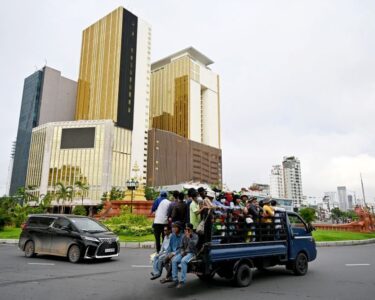
The figures point to a deeper problem than a temporary slowdown in the construction cycle. They raise questions about what Cambodia has been building, who can afford it and the financial assumptions underpinning the sector.
For Turkish firms, falling valuations and stalled projects should not be seen simply as an opportunity to build another luxury condominium, office tower or shopping complex. The stronger opportunities are likely to be in affordable housing, stormwater drainage, drinking-water networks, industrial wastewater treatment and other municipal infrastructure.
Cambodia still needs construction. What it needs less of is construction disconnected from household incomes and the everyday needs of its cities.
Phnom Penh’s property boom relied heavily on foreign capital, rapid credit expansion and the expectation that rising land values would validate new supply. The downturn has exposed the limits of that model. Knight Frank’s review of the first half of 2025 still described weak housing-sector performance, with launches concentrated mainly in additional phases of established developments. A few successful schemes do not create a broad market. Nor can sales to a narrow group of affluent domestic and foreign buyers support a durable strategy for Turkish contractors.
The usual reply is that downturns are the best time to enter. Sometimes they are. But a builder that buys land, assumes sales risk and depends on renewed mortgage growth is no longer simply a contractor; it has become a speculative developer in a market where banks are more cautious and household balance sheets are under pressure.
A cheaper entry price can simply produce a slower exit. Turkish companies have no obvious advantage in predicting Phnom Penh land values or marketing luxury units to buyers they barely know.
The public-service deficit offers a more convincing business case. Cambodia’s Water Security Compact for 2026–2030 commits the government to universal water-supply access by 2030, safely managed sanitation for 60 percent of the population and safe treatment of half of municipal wastewater. It also calls for clean-water networks in city plans, expanded urban flood drainage, stronger municipal utilities and wastewater treatment systems in special economic zones. These are not abstract sustainability ambitions. They describe assets that must be designed, financed, built and maintained.
Development finance is already moving in this direction. The Asian Development Bank announced a $763 million investment programme for water security and urban resilience in December 2025.
Japan’s latest Phnom Penh flood-protection and drainage project extends a long-running effort in the capital. Secondary cities and industrial areas also need sewers, pumping stations, reservoirs, treatment plants and network rehabilitation. These projects are less photogenic than towers, but their demand comes from a measurable service gap rather than hoped-for capital gains.
Affordable housing belongs in the same discussion, provided “affordable” does not become another marketing label.
Cambodia’s Social and Affordable Housing Development Policy 2026 seeks quality, safe and connected housing for low- and middle-income households and vulnerable groups. The useful product may be rental blocks near factories, serviced plots or modest mixed-use neighborhoods, not smaller versions of gated luxury compounds.
Housing contracts should include water, drainage and access to jobs. A cheap unit on the urban fringe is not genuinely affordable when transport and utility costs consume the saving.
Industrial wastewater may be the most commercially durable niche. Cambodia wants more manufacturing, while its water policy requires treatment systems in special economic zones.
Turkish engineering firms can provide compact treatment plants, pumping systems, pipes, monitoring equipment and long-term operating services; Cambodian partners can handle local civil works, permits and labour. Contracts tied to effluent quality would be less exposed to property sales and would help industrial parks offer the reliable utilities that the Council for the Development of Cambodia presents as part of their investment proposition.
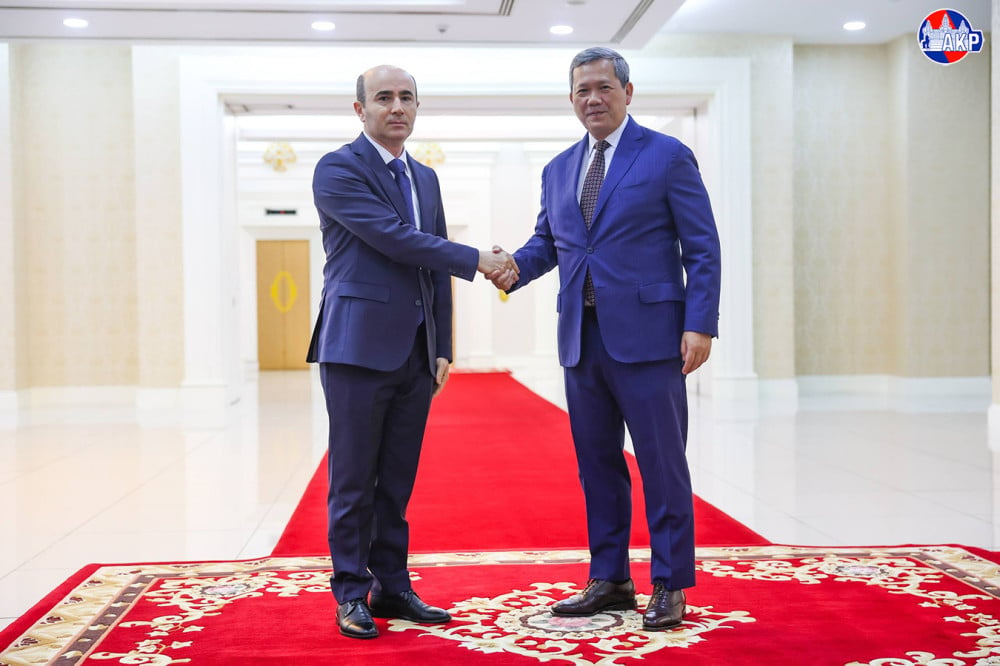
The bilateral machinery exists, but it remains too broad. The fourth Türkiye–Cambodia Joint Economic Commission in November 2025 covered infrastructure and water resources.
Türkiye’s foreign ministry also records an investment-protection agreement, a double-taxation agreement, a commercial counsellor in Phnom Penh and 23 TİKA development projects. The next step should not be another general business forum. Both governments should publish a joint pipeline showing each project’s employer, location, timetable, land status, financing plan and operating model. Contractors cannot price risk from goodwill alone.
Türkiye must also send the right combination of firms. Its international contracting sector has scale: the Ministry of Trade says 45 Turkish companies appeared in ENR’s 2025 Top 250. Yet Cambodia’s needs will include contracts too small for some global giants and too technical for ordinary builders. Ankara should bring together contractors, engineering consultancies, water-technology suppliers and equipment manufacturers, with export-credit support only after project preparation has established a credible payer and revenue structure.
Not every scheme should be forced into a public–private partnership. Municipal tariffs may not cover capital costs; land acquisition can delay works; local authorities may lack maintenance budgets.
Cambodia should use public or concessional finance for low-revenue networks and reserve private finance for projects with believable cash flows. Türkiye should support feasibility studies, local partnerships and operator training rather than encouraging bids on incomplete designs.
A practical first move would be a Türkiye–Cambodia urban-services project preparation facility under the Joint Economic Commission. It should bring a small set of tenders to bankable stage, beginning with drainage in a secondary city and serviced affordable rental housing beside an industrial zone.
Success should be measured by households connected, flood disruption reduced, wastewater treated and rent relative to income—not by square meters sold. Cambodia’s property slowdown has delivered the warning. Turkish contractors should use it to choose the market Cambodia actually needs.
Mehmet Enes Beser is a researcher focusing on ASEAN, and a graduate of sociology in Bogazici University. His work examines Turkiye’s relations with Southeast Asian countries, particularly in the fields of economic development, industrial cooperation, and foreign policy. He’s also the ASEAN Coordinator at Vatan Party (Turkiye) and a member of the Editorial Board of Teori magazine.