
Cambodia Investment Review
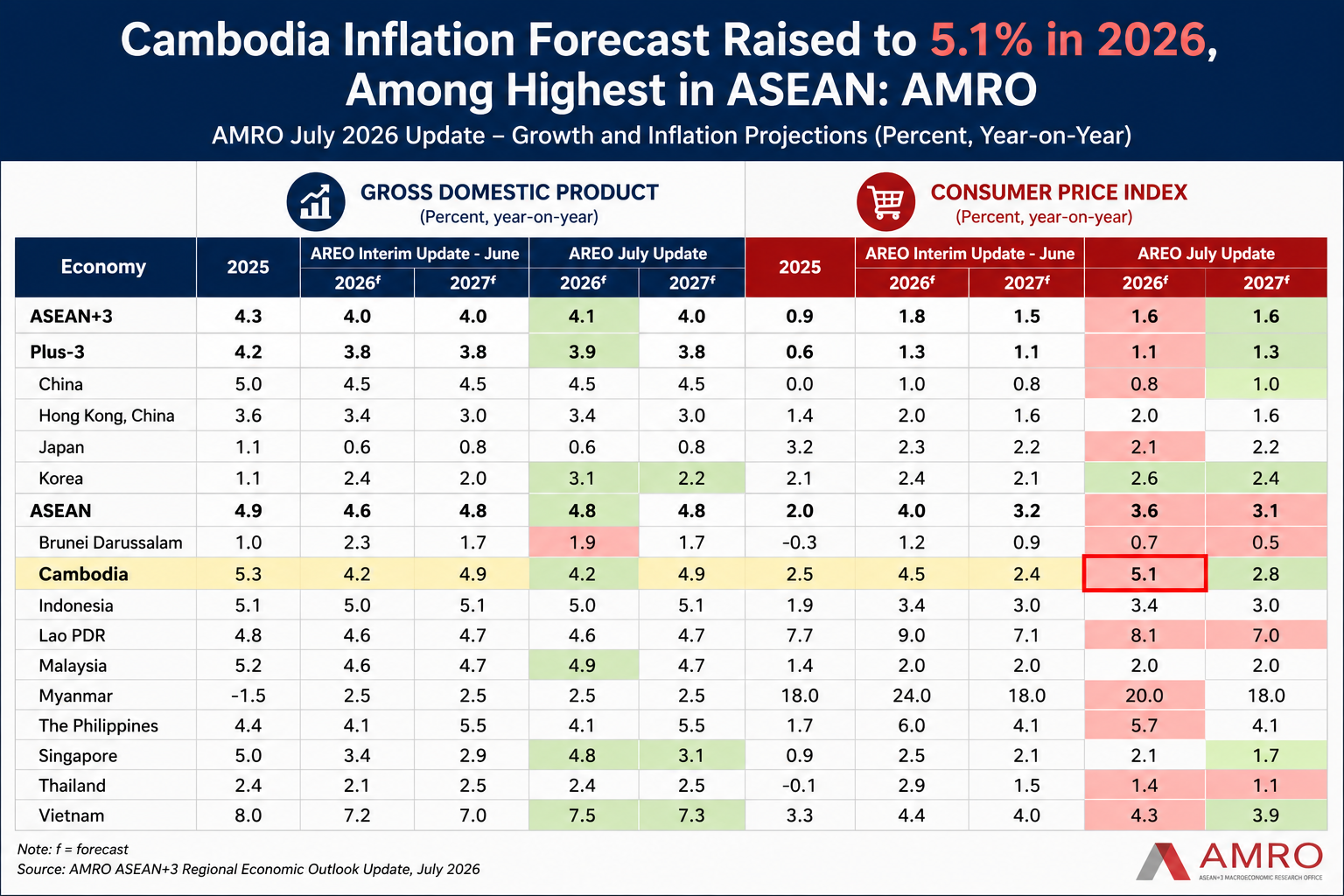
Cambodia is expected to experience one of Southeast Asia’s highest inflation rates this year, with consumer prices forecast to rise 5.1% in 2026 before easing to 2.8% in 2027, according to the latest ASEAN+3 Regional Economic Outlook (AREO) July 2026 Update by the ASEAN+3 Macroeconomic Research Office (AMRO). The 2026 forecast is significantly above both the ASEAN average of 3.6% and the broader ASEAN+3 average of 1.6%.
The updated forecast represents an upward revision from AMRO’s June outlook, which projected Cambodia’s inflation at 4.5% in 2026. However, inflation is expected to slow considerably next year as global commodity prices ease and regional price pressures moderate.
Cambodia Among ASEAN’s Highest Inflation Economies
Among ASEAN economies, only Myanmar (20.0%), Lao PDR (8.1%), and the Philippines (5.7%) are forecast to record higher inflation than Cambodia in 2026. Cambodia’s projected inflation also exceeds that of Vietnam (4.3%), Indonesia (3.4%), Malaysia (2.0%), Singapore (2.1%), and Thailand (1.4%).
Despite the higher inflation outlook, Cambodia’s economic growth forecast remains unchanged at 4.2% in 2026, with growth expected to accelerate to 4.9% in 2027, indicating AMRO expects the economy to continue expanding even as consumer prices remain elevated.
Inflation Expected to Moderate in 2027
AMRO projects Cambodia’s inflation will ease from 5.1% in 2026 to 2.8% in 2027, broadly reflecting an expected moderation in global commodity prices and easing cost pressures across the region.
Across ASEAN+3, headline inflation is forecast to remain at 1.6% in both 2026 and 2027 after being revised lower from AMRO’s June update. The report assumes Brent crude oil prices will average between US$75 and US$85 per barrel in 2026 before easing further to US$65–75 per barrel in 2027, helping reduce transportation and production costs. At the same time, moderate wage growth is expected to keep broader inflationary pressures contained.
Energy and Food Costs Continue to Drive Prices
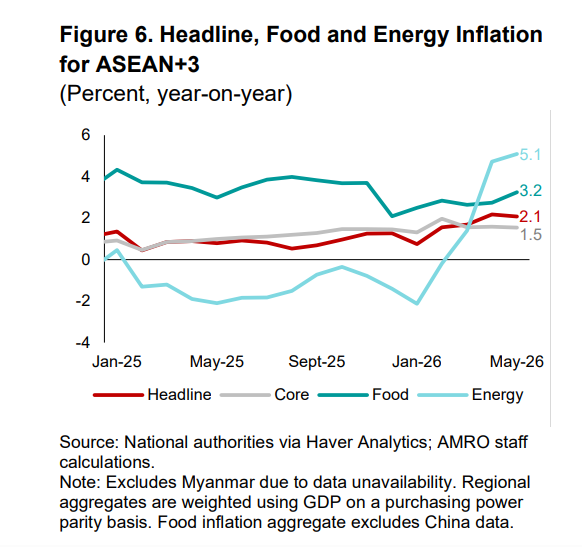
AMRO said inflation across the region has been driven primarily by higher energy-related costs, including electricity and transport, while core inflation has increased only modestly, suggesting underlying inflation remains relatively contained.
The report notes that while crude oil prices have fallen following the June ceasefire in the Middle East, natural gas prices remain more than 40% above pre-conflict levels, keeping pressure on fertilizer and industrial input costs. Food prices, including rice, have also started rising in some economies due to adverse weather and higher transportation costs.
Regional Outlook Remains Positive Despite Risks
Across the ASEAN+3 region, economic growth has been revised slightly higher to 4.1% in 2026, supported by resilient domestic demand, investment and strong AI-related exports.
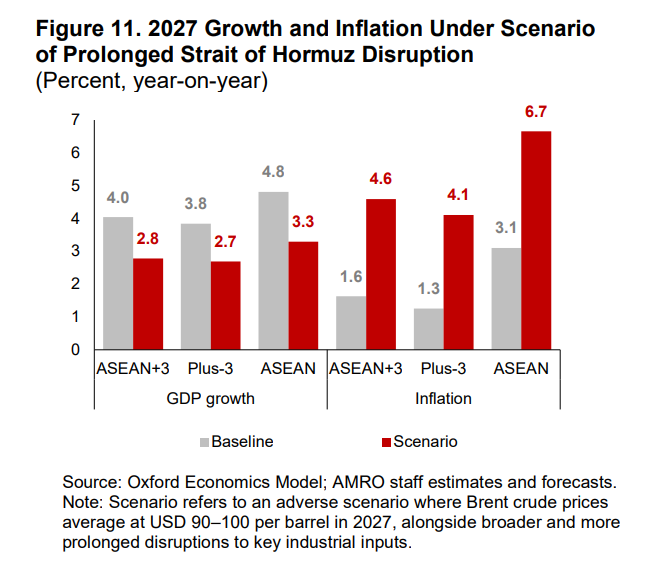
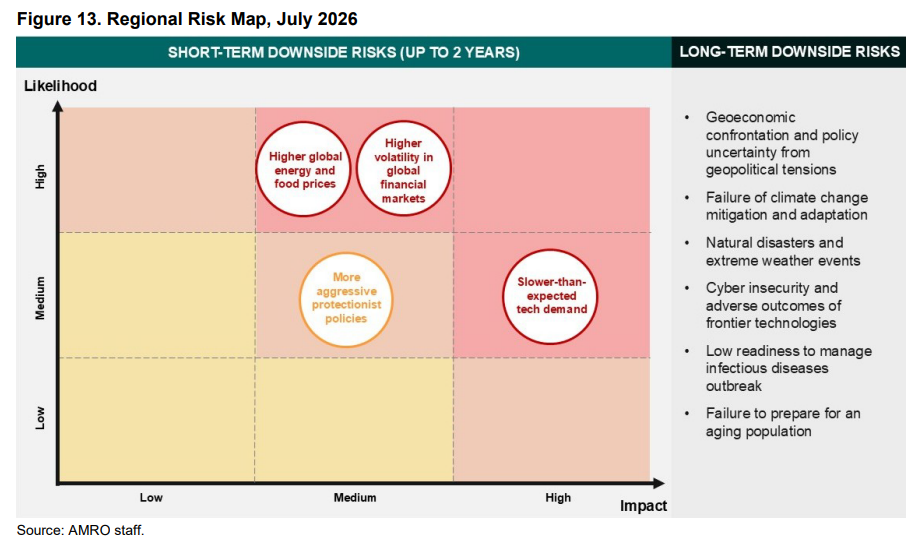
However, AMRO warned that renewed spikes in energy and food prices remain one of the biggest risks to the outlook. Other downside risks include slower-than-expected AI-related demand, increased financial market volatility and rising global trade protectionism. Under a scenario of prolonged disruption to Middle East energy supplies, ASEAN+3 inflation could climb to 4.6% in 2027, while regional growth would slow sharply.
For Cambodia, the latest outlook suggests inflation—not economic growth—will remain the key macroeconomic challenge over the next year. While the Kingdom’s economy is expected to continue expanding steadily, consumer prices are forecast to rise considerably faster than in most neighbouring economies before moderating in 2027 as global cost pressures ease.