
Cambodia Leadership Review
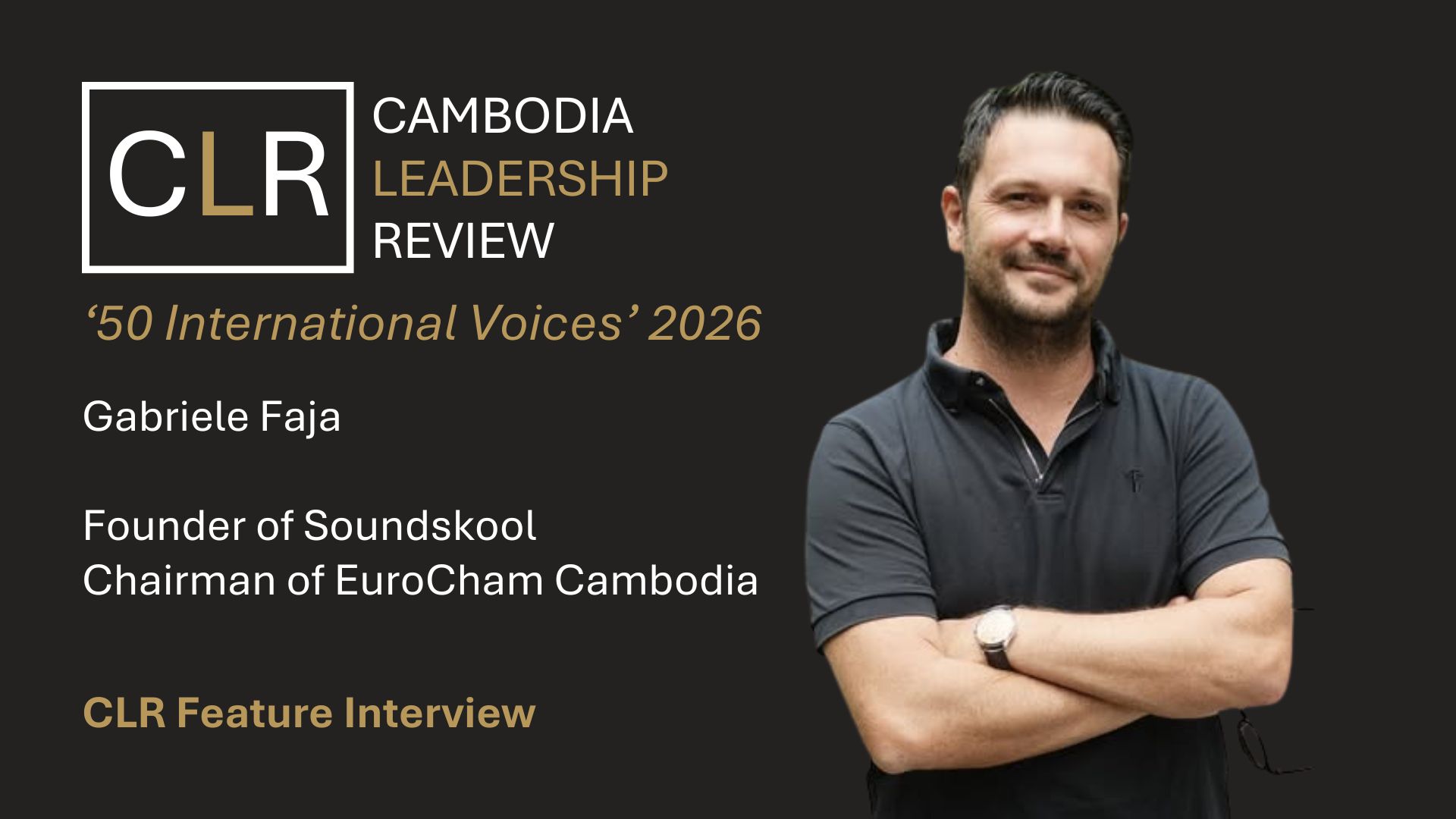
Gabriele Faja is the Founder of Soundskool and Chairman of EuroCham Cambodia. Over more than a decade, he has played a pioneering role in formalising contemporary music education in Cambodia, while also contributing to business advocacy and cross-sector dialogue through his leadership roles.
Operating at the intersection of education, culture, technology, and institutional leadership, Faja brings a long-term, systems-driven perspective to building sustainable organisations in emerging markets. In this interview, he reflects on standards in creative education, the evolution of Cambodia’s music sector, ecosystem development, and leadership across sectors.
Download the 50 International Voices Magazine 2026 here.
Leadership and Pioneering Music Education
CLR: As Founder of Soundskool, you have been a pioneer in music education in Cambodia. How would you describe your leadership approach, and what have you learned about building standards, culture, and long-term institutions while leading a creative education organisation in an emerging market?
When I founded Soundskool, the objective was not simply to open a music school, but to build standards where very few existed. In an emerging market, leadership in creative education requires patience, consistency, and a willingness to think long term, even when short-term results are limited. My approach has always been to lead by structure rather than personality, by laying systems, curricula, and clear expectations in place so that quality does not depend on any single individual.
Standards only matter if they are applied every day, by everyone, and over many years. At Soundskool, this meant investing early in web systems, HR, teacher training, assessment frameworks, and international benchmarking, while remaining sensitive to local context. Building a long-term institution in the arts is slow work, but in my opinion, it is the only way to ensure credibility, continuity, and meaningful impact beyond the founder.
The Evolution of Music Education and the Industry
CLR: From your perspective, how has the music education sector in Cambodia—particularly in Phnom Penh—evolved over the years, and what trends are you seeing today in terms of student expectations, professionalism, technology adoption, and the role of structured music training?
Music education in Phnom Penh has clearly matured. Parents and students today have higher expectations, with greater awareness of structure, progression, and standards. Music education is increasingly seen as a serious form of learning rather than a casual extracurricular activity. It is a discipline.
A key development has been the growth of Khmer teachers entering the professional education workforce, which is essential for sustainability. At the student level, the shift is equally clear—around 80% of our students are now Khmer, reflecting broader access, but also a rise in disposable income.
Structured pathways such as RSL examinations, regular performances, and scholarship programmes have helped formalise training, motivate students, and create credible long-term development routes within the sector.
Cross-Sector Collaboration and Cultural Development
CLR: Soundskool sits at the intersection of education, culture, and the creative economy. How important is collaboration between schools, artists, venues, businesses, and institutions in developing a sustainable cultural and musical ecosystem in Phnom Penh, and where do you see the strongest opportunities for cross-sector partnerships?
When we speak about “the arts,” the business community (and sometimes governments) often interpret this as “not a priority.” In Cambodia, that perception is understandable given more immediate development needs, yet it raises a fundamental question: who sustains galleries, theatres, dance, orchestras, creative education, arts schools, contemporary arts spaces, film, design, community arts, and so on?
No matter how much discipline, talent, or devotion is applied, the arts rarely generate short-term financial returns. This is precisely why private-sector sponsorship remains limited and why public support is essential. In Cambodia, the Ministry of Culture and Fine Arts quite rightly focuses on safeguarding Khmer classical arts, while institutions such as the Royal University of Fine Arts do include Western classical music. However, these efforts remain selective and at an early stage. In other words, the Government cannot do it alone.
Artistic ecosystems require a medium- to long-term approach—one that governments are generally best positioned to provide. In Cambodia, that framework is still developing. This gap is why I established Soundskool over a decade ago: to formalise grassroots music education, create professional learning pathways, and broaden access beyond traditional or elite structures.
I produced Madama Butterfly in 2023 as part of the same exploration—to understand where complex art forms such as opera could realistically reach in the Kingdom, and what conditions are required for them to take root. Whilst it was successful, replicating this at an institutional level remains aspirational.
I believe that at the core of any thriving creative practice there are mainly three pillars:
- Inspiration – understanding purpose and cultural relevance
- Education – mastering technique, discipline, and composition
- Support – the resources, institutions, and communities that allow artistic work to be sustained over time
In my view, when these pillars align, the return on investment is realised in cultural intelligence, creativity, social cohesion, innovation, and ultimately long-term economic resilience. Societies that invest in the arts invest in the foundations of sustainable growth.

Looking Ahead: Leadership Across Sectors
CLR: How have your experiences across technology, culture, and institutional leadership shaped your views on sustainable growth and long-term ecosystem building in Cambodia?
Blue.cc was bootstrapped with minimal investment. In recent years, we received tempting offers from venture capital, but we chose to grow organically. This meant engineering profitability early rather than burning cash to acquire customers. The trade-off was time and long-term commitment. My brother Manny, who is CEO, managed this while pursuing a career at the UN, as Blue quietly grew with a small team—improving gradually and steadily. Today, the platform serves over 18,000 client organisations, and more importantly, we are seeing a rise in high-value enterprise accounts. This reflects the platform’s maturity as a core process engine for manufacturing, e-commerce, logistics, and government agencies worldwide.
In hindsight, bootstrapping was the right approach. Without the pressure of institutional investment, we could take our time. Mistakes also did not cost quite as much, so we made plenty. So, in short, choose any two: Fast, Good, or Cheap.
Bellini is a fun Italian bistro that synergises naturally with Soundskool. We leverage space and the arts, and it is one of the few venues in Phnom Penh capable of rolling out grand pianos (because I have a piano shop). It has become a place for friends, meetings, concerts, and lots of pasta. We do not have a manager. We run it ourselves (with my partner Massi Tropeano). We are helped by a fantastic team, which makes this set-up possible.
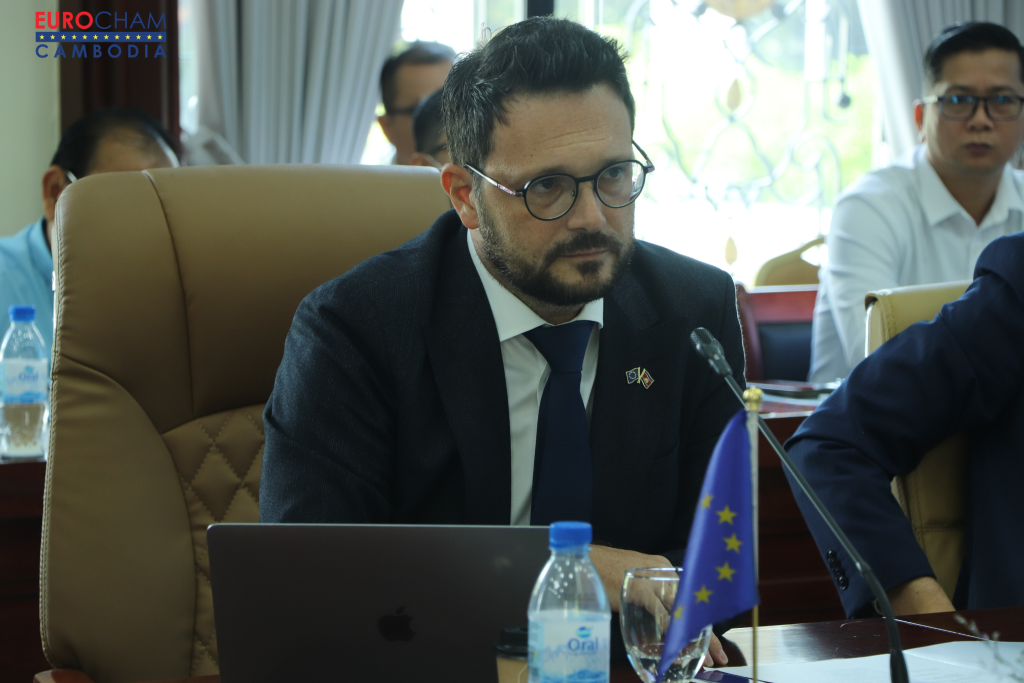
EuroCham Cambodia has been a rewarding learning curve. Leading the largest international chamber in the country has placed me at the centre of policy, advocacy, and dialogue. Being closer than ever to the Royal Government gives me a clear, strategic view of how ecosystems actually function. I find it fascinating, and the chamber is doing critical work for its members. I also chair the much smaller Italian Business Chamber (ItaCham), which is more focused on cultural and bilateral national agendas.