
Cambodia Leadership Review
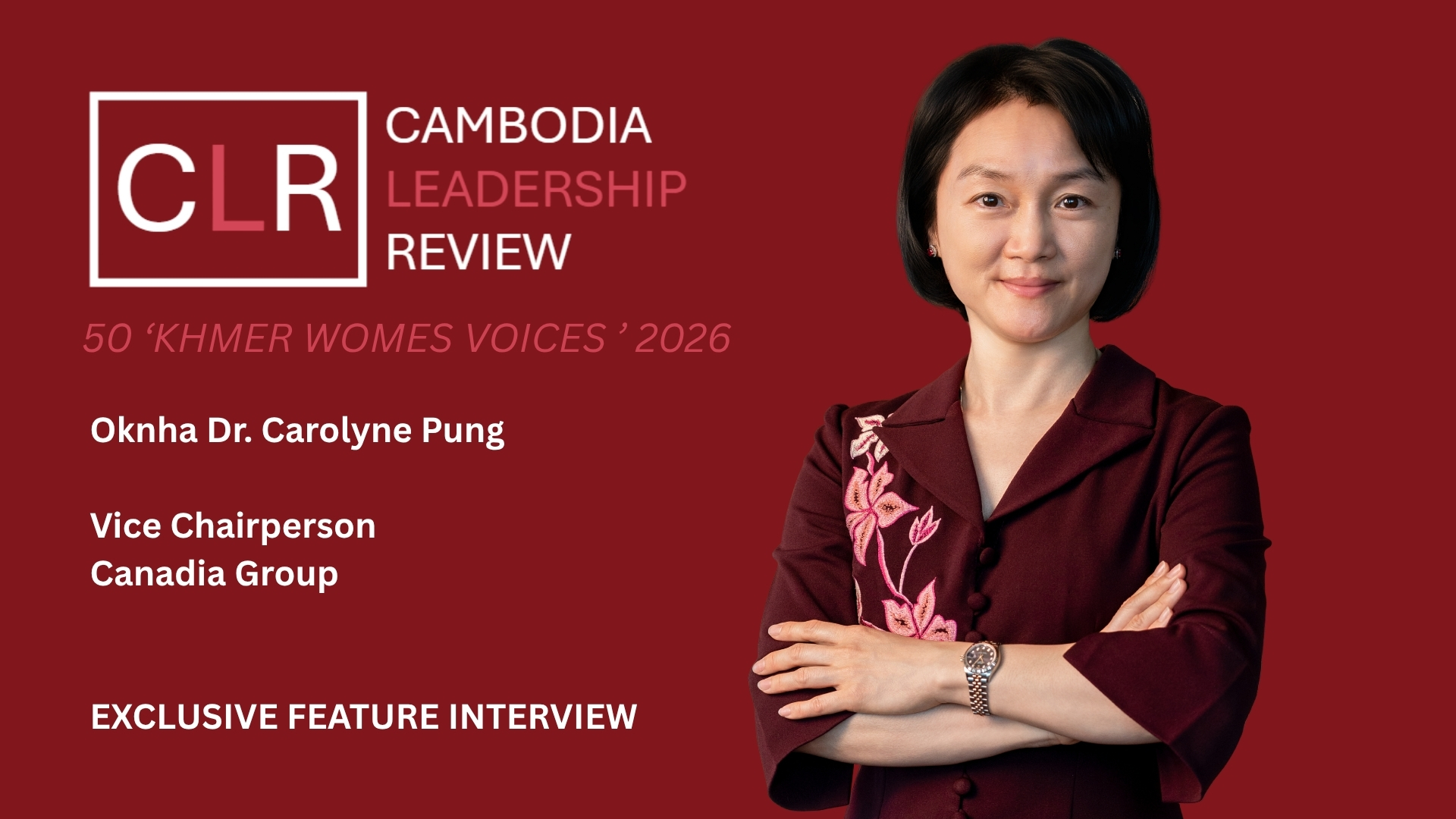
As Vice Chairperson of Canadia Group and Chief Executive Officer of Intercare Hospital, Oknha Dr. Carolyne Pung oversees one of Cambodia’s leading international-standard private hospitals while contributing to the group’s broader investments across healthcare, education, real estate, and infrastructure. Throughout her career, she has helped support projects that are shaping Cambodia’s long-term economic and social development.
Passionate about expanding access to quality healthcare and creating opportunities for women in leadership, Carolyne believes Cambodia’s future will be built through long-term investment, strong institutions, and the development of local talent. She is also a strong advocate for preventive healthcare, international partnerships, and mentoring the next generation of Cambodian leaders.
In this edition of 50 Khmer Women Voices 2026, Oknha Dr. Carolyne Pung reflects on the rise of Khmer women in leadership, strengthening Cambodia’s healthcare sector, advancing women’s health awareness, balancing long-term development with business leadership, and the legacy she hopes today’s women leaders will leave for future generations.
The Rise of Khmer Women in Leadership
CLR: Over the past decade, Cambodia has seen more women step into senior leadership positions across business and society. From your perspective, how has the role of Khmer women leaders evolved, and what more still needs to be done to support the next generation?
Carolyne: When I joined Canadia Group about twenty years ago, the country was a very different place. I can say, I have been fortunate to grow with Cambodia’s development.
Today, many women hold senior leadership positions across Canadia Group and OCIC. Women CEOs lead our insurance division, our malls, our retail, our schools, our real estate sales, our human resources, our blockchain ventures, and several of our property management divisions. Also, we have always prioritized gender equity in compensation and benefits, ensuring every employee, woman or man, has the same opportunities.
The number of women decision-makers and leaders keeps growing, and I am convinced that many more talented women will step into even greater responsibility in the coming years.
Building Cambodia’s Healthcare Future
CLR: Through Intercare Hospital and broader investments in healthcare, OCIC Group has become involved in supporting Cambodia’s growing private healthcare sector. What opportunities and challenges do you see in improving access to quality healthcare services across the Kingdom?
Carolyne: We started Intercare during Covid, at a time when most people in Phnom Penh still believed that serious treatment meant a flight to Bangkok.
Since then, the hospital has treated more than 70,000 patients and built a team of over 200 medical professionals, with doctors and medical practitioners from Cambodia, the US, Australia, Russia, the Netherlands, Malaysia, Singapore, the UK and the Philippines. Partners like Sunway Healthcare Group, ThinkKids and Livingstone have helped us raise the bar for the medical and healthcare industry locally.
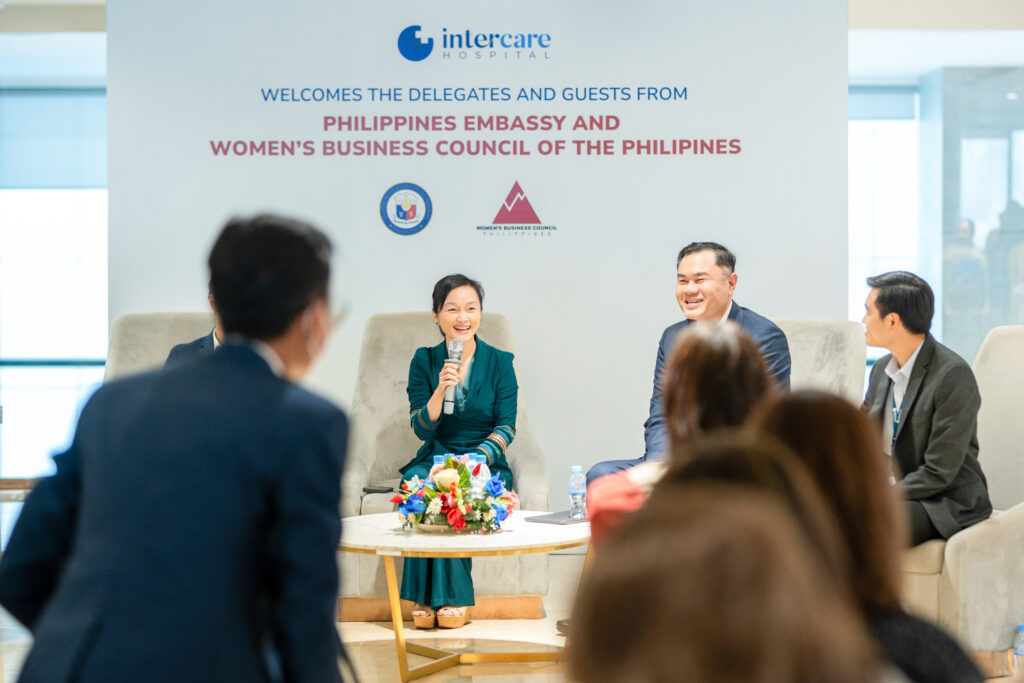
The real challenge remains mindset and perception. The critical success factor is trust in local capability, competency and accuracy. And trust is earned one consultation, one honest diagnosis, one follow-up call at a time. We have built it slowly, improving constantly with our patients’ feedback.
During Covid we were overwhelmed, but it was deeply rewarding to support both the local population and the expatriate community in Phnom Penh with care of international standards.
Where we want to take this journey is towards deeper specialty care and better continuity. We are expanding what we can treat here, with specialists in cardiology, pneumology, psychiatry for mental health and more, so fewer families feel they have to leave the country for anything beyond the basics, and using digital records and telemedicine follow-up so that care doesn’t stop at the hospital door. If we get that right over the next few years, staying in Cambodia for treatment stops being a leap of faith and becomes the obvious choice.
Advancing Women’s Health Awareness
CLR: Women’s health is becoming an increasingly important topic across the region, including preventive care, maternal health, wellness, and mental health awareness. How important is it for Cambodia to continue strengthening education, awareness, and investment in women-focused healthcare services?
Carolyne: Often, we notice that women are waiting until a symptom is impossible to ignore, until the kids are settled, until it’s convenient for everyone but themselves. Changing that timing, getting women into a screening room a year or two earlier, probably saves more lives than almost any single piece of new equipment we could buy.
Our group is committed to prevention and early detection. With Canadia Bank and OCIC, Intercare has been working with our networks to run breast cancer awareness campaigns, maternity health workshops, and complimentary screening drives here in Phnom Penh. These efforts are still modest, with a few hundred women at a time, but we are building something repeatable.
The next step we are pushing for is taking screening outside the capital, with mobile clinics reaching Kampong Cham, Battambang and Siem Reap, where the nearest specialist can be hours away. Closing that distance is where I believe the next real gains will come.
Leadership and Long-Term Development
CLR: OCIC Group continues to play a major role in Cambodia’s urban and economic transformation across sectors including infrastructure, education, real estate, and healthcare. How do you personally approach leadership while balancing long-term national development with the day-to-day realities of managing large projects and teams?
Carolyne: OCIC has always taken the long-term approach. By building infrastructure, bridges, schools and hospitals, we want to create opportunities for our customers. This improves daily life and contributes to the growth of their businesses and their families.
I value staying close to the frontline, to the people actually using what we build: patients at Intercare, families crossing to Chroy Changvar Bay on their way to CamTech University, students earning their International Baccalaureate after ten years at CIS. Our graduates now study in Europe, the UK, the US, Canada, Australia, Singapore and Japan. We are proud to contribute to developing world-class Cambodian students, and we hope they will return with their overseas experience to help shape the future of Cambodia.
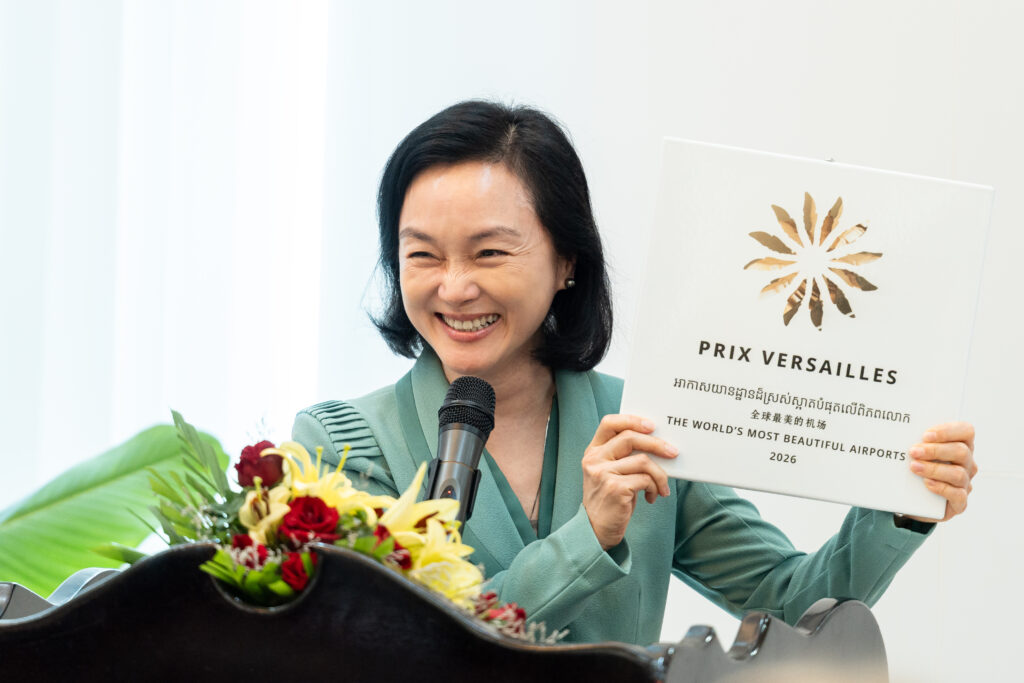
What I find most rewarding today is watching that patience turn into real opportunities, for families and for local and foreign investors.
Koh Pich has real momentum now: with Elysée’s business centers filling up and Diamond Bay Garden nearing completion, what the island needs next is more diversity of retail, restaurants, and supermarkets, the everyday life that makes people want to stay, not just visit.
Norea City is entering its growth phase; condos are selling well, and with Norea International School and the Université Francophone d’Asie opening, an ecosystem is taking shape where families can put down roots.
Chroy Changvar Bay continues to mature, with new office spaces, residential communities such as Chroy Changvar Gardens, and expanding public spaces including Jumnom Park and Coconut Park 3, while CamTech University further anchors the area as an education and lifestyle destination.
And next to Techo International Airport, TIA City is our newest chapter, with industrial park opportunities near the Funan Techo Canal and Kampong Speu for investors who want to be positioned early.
So whether it’s a family looking for a home in Koh Pich or Norea City, or an investor considering office space or industrial land, there is something at every stage of the pipeline right now.
Legacy and the Next Generation
CLR: Looking ahead, what kind of impact or legacy would you hope today’s Khmer women leaders can leave for the next generation of Cambodian women entering business, healthcare, and leadership roles?
Carolyne: I think we can count on today’s generation of women leaders to set an example, so that the next generation of young women grows up feeling confident, strong, capable and ambitious.
Concretely, we must continue investing in mentorship now, and provide guidance and open doors. Cambodia already has capable women across business, healthcare, education and public service.
My wish for the 2030s is simple: that Cambodian women fulfil their dreams, whatever they choose to build.