

EuroCham Cambodia
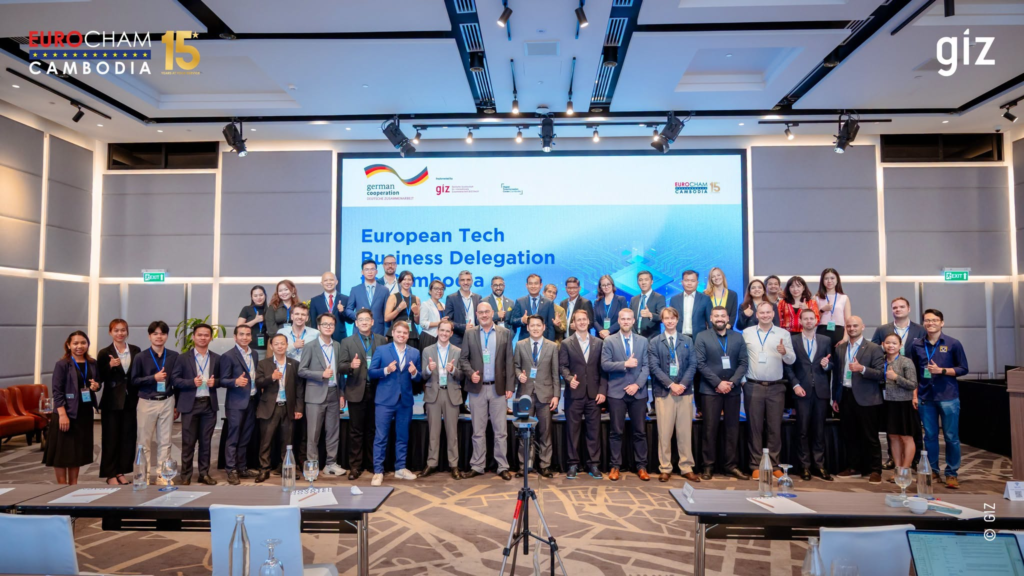
In this interview, EuroCham caught up with Emmanuel Lickel-Skiba, Founder & CEO of Polish renewable energy firm Dobry Prąd during the first day of the European Tech Business Delegation to Cambodia.
Speaking at the Regulatory Landscape Meeting, Emmanuel shared how Power Purchase Agreements could support the Kingdom’s green energy ambitions, what inspired him to join the delegation, and what he hopes to achieve during the four-day visit.
Can you tell us a bit about your firm Dobry Prąd, what it specialises in, and you role in the company?
Emmanuel: With over a decade of energy market experience, including delivering technical assistance as a sustainability advisor for the World Bank, I help partners navigate the complexities of green energy transitions. Our advisory firm specialises in structuring bankable Power Purchase Agreements (PPAs) that bridge the gap between institutional capital, ministries, and private off-takers to securely finance and de-risk renewable assets.
Read More: Opinion: In The Age of The Digital Grid, Who Will Govern Cambodia’s Power Data?
Cambodia is one of several fast-growing markets competing for European business interest in Southeast Asia. What drew your organisation to this delegation specifically?
Emmanuel: Cambodia represents one of the most dynamic economic landscapes in Southeast Asia, and its forward-looking commitment to integrating sustainable infrastructure into its national growth strategy is highly compelling. As a renewable advisory firm, we recognise that sustaining high GDP growth requires a resilient, cost-effective, and diversified energy matrix.
Over my 10+ years managing energy markets and delivering technical assistance—including advising on large-scale sustainability frameworks for the World Bank—I have learned that the foundation of any scalable green transition is bankability.
We joined this EuroCham delegation specifically because Cambodia is at a pivotal juncture where strategic Power Purchase Agreements (PPAs) can serve as a bridge. We stand fully ready to assist the government in establishing such a framework to ensure long-term market stability. By establishing robust PPA structures, Cambodia can de-risk energy assets, seamlessly connect institutional investors with local projects, and offer private offtakers the stable, clean energy they need to stay globally competitive.
Today you’ll be hearing directly from government ministers and senior industry figures about Cambodia’s digital economy roadmap. What are the key questions you’re hoping this day helps you answer?
Emmanuel: A booming digital economy is inherently energy-intensive, as data hubs, smart infrastructure, and high-tech manufacturing require an absolute guarantee of uninterrupted, 24/7 power.
We are eager to learn more about how the Ministry of Mines and Energy and Electricité du Cambodge (EDC) plan to balance this surging power demand with the nation’s clean energy targets.
From an advisory and technical perspective, our primary focus is understanding the evolving regulatory appetite for private sector participation in the energy matrix. We are looking to answer how we can best support the government in optimising grid stability through private-public collaboration, and what mechanisms are being prioritised to facilitate bankable corporate PPAs.
Understanding these parameters allows us to better educate international financiers on how to safely align global institutional capital with Cambodia’s specific grid requirements and sovereign energy goals.
You have four days of meetings, site visits and matchmaking sessions ahead of you. What outcomes would make this a genuinely worthwhile trip for your organisation?
Emmanuel: We want to establish open lines of technical dialogue with the Ministry and EDC to demonstrate how our advisory expertise can help streamline the PPA process to protect grid integrity while unlocking investment. For the private sector and potential offtakers present, a great outcome would be initiating frameworks for corporate PPAs that secure their future energy costs.
Ultimately, if we leave Phnom Penh having demonstrated to institutional investors that Cambodia possesses both the political will and the technical pathways to de-risk green infrastructure, it will be an incredibly worthwhile trip.