
Cambodia Leadership Review
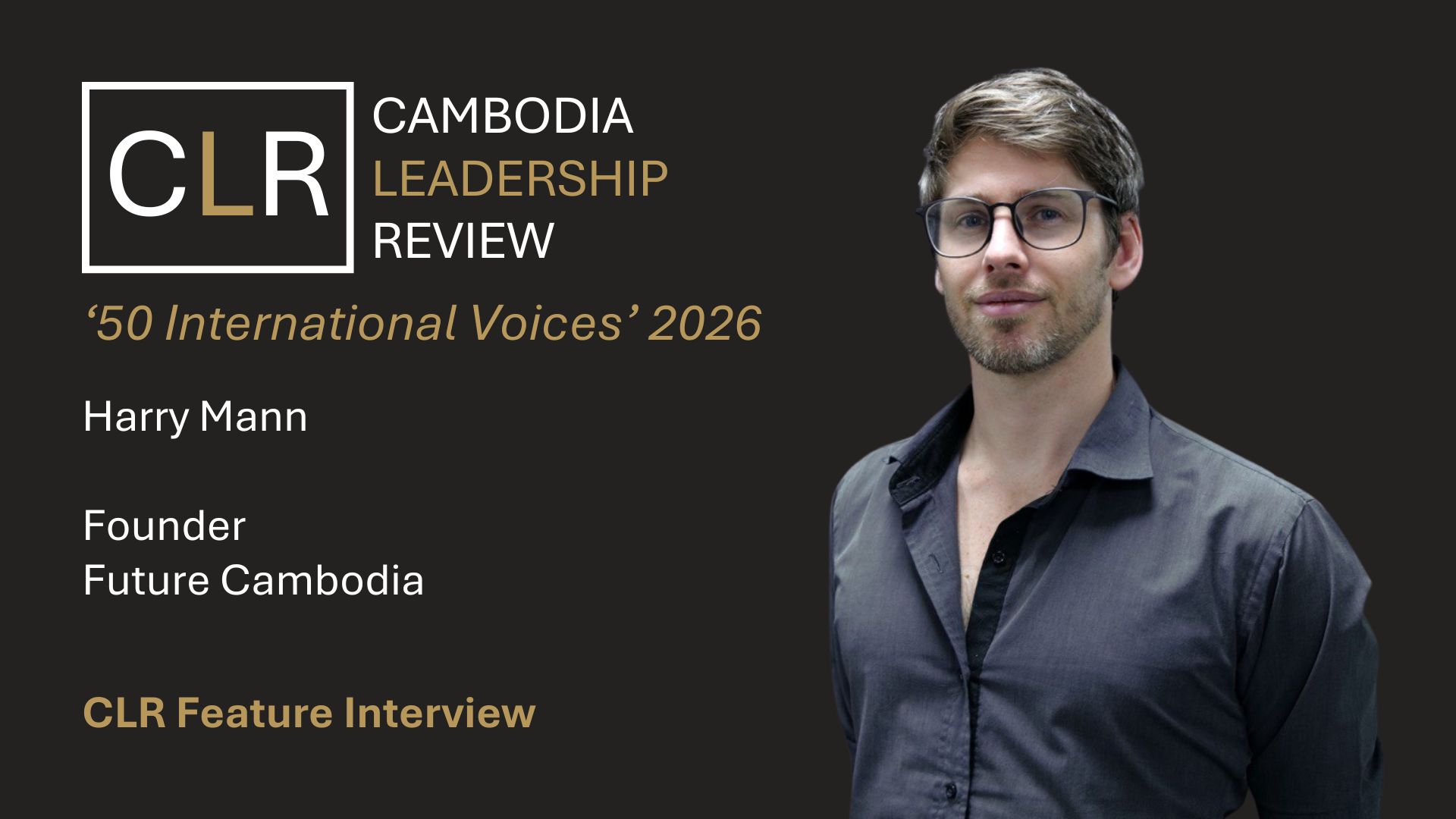
Harry Mann is the Founder of Future Cambodia, an architecture and design firm established in 2019 during one of the most challenging periods for Cambodia’s property sector. With professional experience across Australia and Europe, he brought an international perspective to a market undergoing rapid expansion, correction, and structural change.
Since founding Future, he has focused on building a practice grounded in global standards, technological adoption, and long-term capability development. Operating across both Cambodia and Australia, the firm has positioned itself at the intersection of design excellence, delivery systems, and professional development.
In this interview, Mann reflects on leadership through market downturns, the evolution of Cambodia’s architectural profession, the role of BIM and emerging technologies, and how adaptive reuse and industry diversification will shape the country’s built environment in the years ahead.
Download the 50 International Voices Magazine 2026 here.
Leadership and Founding Future in Cambodia
You founded Future in 2019 after building experience across Australia and Europe, and during a period of significant uncertainty for Cambodia’s property sector. How has your global background shaped your leadership style, and what lessons from establishing a firm in Cambodia during a market downturn have most influenced how you lead today?
Starting at a large corporate style firm in Australia gave me great insights into macro-strategy and corporate structures of an architecture firm – this had both its pros and cons which were the building block for Future. Our industry is infamous for having a toxic work culture, expectation of significant overtime, and generally low salaries. So when founding Future, I had the fortune of being able to take the best ideas of the best, whilst also knowing exactly what we dont want.
But I would say that it was the downturn itself that established my leadership style, not so much my background. We had to overcome a lot in the past few years, make hard decisions but also trust a lot in the broader vision and strategy. This has resulted in me being less of a design architect – less micro-managing the team – and focusing more on the bigger picture, whilst trusting my team to do what they are great at.

Raising Standards Through Global Best Practice
Future has built its reputation by applying international standards, advanced technologies, and structured delivery systems to local projects. From your perspective, how is Cambodia’s architecture and construction industry maturing, and what role can firms like Future play in raising professional standards across the sector?
We have seen an enormous growth in the capability of the local architectural profession over the past few years. This has happened on two fronts – firstly, with the increased level of education, professionalism and growing experience, and secondly from the profession becoming more respected, resulting in architects being able to charge reasonable fees and not rely on making money through construction or procurement. I see these two elements as symbiotic, we cannot expect architects to improve if they can’t be paid properly, and we can’t expect clients to pay properly if we don’t offer real value. Ive had the pleasure of seeing the profession and the broader construction industry evolve exponentially over the past several years.
Read More: Future Brings Australian Innovation To Cambodia’s Architecture & Design Sector
I do think firms like Future have an important role in this. Evolution cannot happen in isolation, and what we have attempted to do by having presence in both Australia and Cambodia is use the experience and standards of a very mature and advanced profession in Australia to develop our team to operate at that level, which in turn brings that expertise and knowledge growth back into our Cambodian projects. It’s been a win-win, with a huge focus on the development of our teams skills and our internal capabilities and standards. This has a trickle down effect, where our drawings and systems are seen (i hope) as somewhat of a benchmark, helping other firms to also push the boundaries of what they are doing in a constant pursuit of higher quality and as a result higher value.
Technology, Talent, and Industry Transformation
Future has been BIM-only since its founding and an early adopter of AI and virtual reality, while also investing heavily in training Cambodian talent. How important is the combination of technology adoption and human capital development in transforming Cambodia’s construction industry, and where do you see the biggest gains being made today?
I greatly appreciate that we are being seen that way – we have always tried to operate at the edge of what our profession can offer in terms of technological to maximise our teams capabilities and our value to clients.
Cambodia is quickly emerging in the region economically, and we are seeing it becoming a powerhouse of professionals – able to offer things like outsourcing services globally as Phnom Penh becomes more tech savvy and competitive. Without constant training and development, professionals simply cannot grow to meet the demands globally, but with online tools and systems as advanced as they are, and access to information (particularly through AI) having never been easier, there is no reason that professionals in Cambodia cannot operate at the highest levels internationally. This is resulting in our profession as well as many others becoming highly proficient and competitive, meaning that we can enter and compete in other markets globally (such as Australia, China, USA, Europe etc), which will in itself result in another wave of knowledge growth and development.
Currently I would say the biggest improvements directly in our profession is in architects understanding how buildings really go together. Architects are typically seen as just being able to make a building look pretty while the builders figure out the rest. Remembering that the word architect used to mean “master builder”, we are seeing young architects understand construction systems, meaning they are now able to design and deliver buildings that are highly efficient, highly coordinated. This is resulting in faster construction times, less problems on site during construction, as well as safer, longer lasting and more user-friendly buildings.
Looking Ahead: Market Cycles and the Built Environment
Looking ahead, how do you assess Cambodia’s property and construction outlook across sectors such as education, infrastructure, hospitality, and adaptive reuse, and how is Future positioning itself to navigate market cycles while contributing to a more sustainable, innovative, and globally connected built environment?
These sectors all should see steady growth over the coming years even whilst the residential and commercial sectors stay relatively quiet. We are seeing a steady increase in tourism and industry which will push the other sectors and general industry forward. The one you’ve listed here is critical – adaptive reuse – and we are going to see this become a more and more important topic in Cambodia over the next decade. Many of the under-utilised or unfinished buildings will eventually face a question – find a new purpose or be demolished. We should be getting about 60-70 years of use out of large buildings, so there is significant cost and energy savings from adapting older buildings to new functions.
Future has maintained its position in both Cambodia and Australia, and we will continue with that strategy for diversified revenue as well as the great opportunity for skills and knowledge sharing that we talked about earlier. We are generally optimistic about the coming years as the property cycle should see a continued upturn, and it is my belief that we must keep pushing our capabilities, keep innovating and keep growing to maintain the momentum we have and staying at the forefront of the profession.