
Henry Henderson
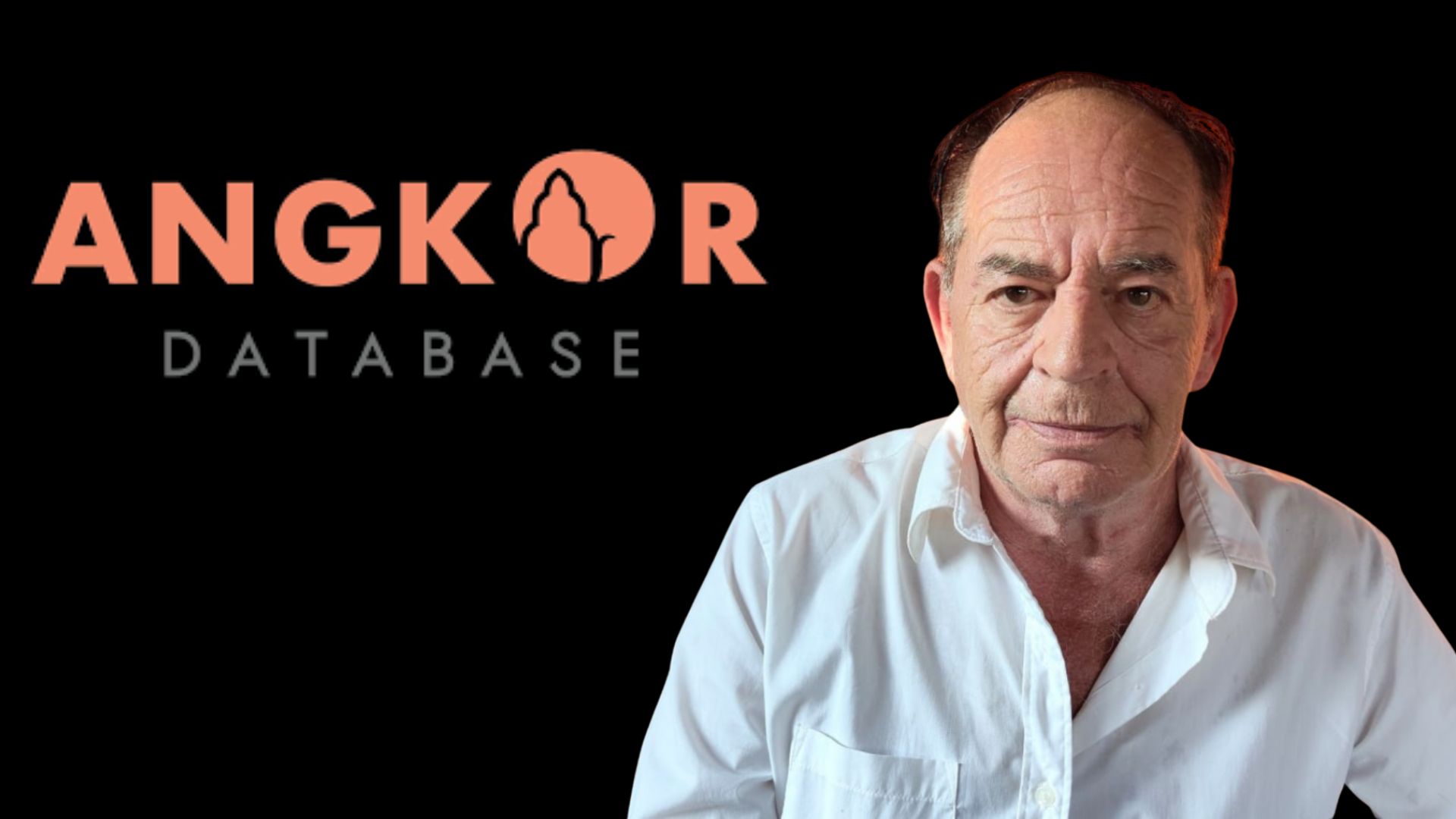
Junior Communications Officer Henry Henderson spoke with Bernard Cohen, founder of Angkor Database, reflecting on a career that spans war reporting, journalism, and literary translation across multiple continents.
Now based in Cambodia, Bernard shares how his deep interest in history and culture led him to establish Angkor Database, a nonprofit platform positioned at the intersection of cultural preservation, tourism, and education. Developed as both a digital resource and physical library, the initiative aims to make Cambodia’s rich historical and cultural knowledge more accessible to both visitors and local communities.
Through the conversation, Bernard explores how reliable and well documented cultural information can enhance Cambodia’s tourism offering, support sustainable development, and contribute to the country’s growing role as a hub for research and knowledge. He also reflects on the importance of accessibility, accuracy, and long term commitment in preserving cultural heritage in an increasingly digital world.
Henry: You’ve had a remarkable career spanning war reporting, literary translation, and journalism across multiple countries. Looking back, what drew you toward Cambodia, what inspired you to create Angkor Database?
Bernard: After decades of travels, at times risky, at times disturbing yet always inspiring, I discovered Cambodia kind of late in my life, in 2003, and I immediately felt it could be my last, most rewarding stopover. Climate, nature, people and their culture, everything concurred to point to that.
Here I found peace, started a new family without cutting ties with my past, and I really wanted to understand what was making this country so lovable. Everywhere I’ve been, I have tried to learn more about the local history, and here I discovered so many layers of it that I got hooked.
Henry: Angkor Database was developed as a nonprofit, knowledge-driven platform, yet it sits at the intersection of culture, tourism, and education. What opportunity did you see in building a resource like this within Cambodia’s broader tourism and knowledge economy?
Bernard: When the owner and the operator of Templation Hotel both came to me in 2016 as they were looking for an atypical, ambitious, but not in-your-face CSR project, I immediately thought – this is a new hospitality development as close as possible to the temples, quite perfectly integrated to the environment – let’s develop an online resource and a physical library that would help discerning visitors discover the cultural richness here. At the same time, we wanted to make published documents and images more accessible to the younger generations in Siem Reap.
So yes, it was, as you said, a project combining these three lines of action. Since we were eager to gather rare or forgotten books, to make academic works and resources in several languages, we also realised that developing a consistent, user-friendly and ever-expanding database meant we had to build a specially tailored online platform.
Henry: As Cambodia continues to position itself as a leading cultural tourism destination, how can platforms like Angkor Database enhance the visitor experience, particularly for more informed, experience-driven travelers?
Bernard: The Angkor area, as well as many other historic sites across Cambodia and the entire region— even if recent developments have unfortunately restricted the scope — is also remarkable for the pull it has on open-minded people regardless of their background. There is ongoing research in archaeology, material culture history, the regional and even transcontinental flux of ideas, beliefs, customs, and we have added another facet to that essential endeavour, which I would call the history of the enduring fascination and hold this culture has exerted on artists, creators from all around the world and from Cambodia proper.
Another aspect of our contribution is to close the gap between the scholarly approach to Angkor that developed in a colonial context — even if most of the researchers of the last two centuries weren’t embracing a colonialist viewpoint — and the study of how these sites are deeply inscribed in the Cambodian collective memory, how the Cambodians perceive them and can at last express their perception.
If you look at Angkor Archaeological Park as it was before Covid and as it is now, you’ll agree that it is even more attractive than before. It is really a “living site”, as conservation experts have labelled it since the early 1990s, thanks to the historic villages in its realm and thanks to all the people converging here during festivals or going for a stroll on weekends.
Henry: From a business perspective, how do you see access to reliable, high-quality cultural information influencing sectors such as tourism, hospitality, and even investment in Cambodia?
Bernard: Knowledge websites are faring well on the web for two main reasons: AI [systems are] avidly searching for it in order to grow and to redistribute what they learn. I hope that hidden activity will be regulated somehow. But the other reason is, I think, people are looking for more practical and reliable ways to get information and history is information. That is why, for instance, we’re digitising documents that are hard to find, or were scanned at a time when technology was lagging.
As we reflect the richness of multidisciplinary approaches on the historical and cultural substrate of modern Cambodia, we are just doing our bit within the much larger and comprehensive [work] undertaken by the respective ministries and by educators. Then, our online presence, with no paywall and no ads, is beneficial to Cambodia as a whole. It’s a contribution that by no means intends to substitute for official initiatives aiming at attracting more attention from visitors or investors.
Henry: Cambodia’s tourism sector is evolving, with increasing focus on sustainability and cultural preservation. In your view, what role can digital knowledge platforms play in supporting this shift?
Bernard: It all depends on how you build your platform. Just one example: there are now tens of thousands vintage photos labelled ‘Cambodian dancers’ circulating on the net. If you don’t state the provenance of these photographic documents, when they were published first and, ideally, when they were created, the location, ideally the photographer’s name, they’re mostly without historical value. Unreliable indexing leads to confusion and, alas, too often in these times of volatile nationalist crispation, to cultural appropriation attempts.
The more documented your material is, the more you input reliable data, the more you’re helping further research and enticing people to come over and see for themselves. This is of course assuming international travel will be accessible again soon, and the world veers away from its dangerous course. When we hear major leaders swearing to erase whole civilisations, when we see the recent damages inflicted to Preah Vihear and other historic monuments, we can legitimately worry for the prospects of cultural tourism.
Henry: Looking ahead, what is your vision for Angkor Database, and how do you see it contributing to Cambodia’s positioning, not only as a tourism destination, but as a hub for cultural knowledge and research?
Bernard: I always remember what Prof. Ang Choulean remarked during an interview one day: learning and mastering the ropes of research in history is essential for Cambodian students. Our ambition is to make accessible resources for that [purpose]. We’re working towards having more and more documents in the Khmer language published on our platform, more 19th century classic French studies on Cambodia translated, at least into English. And at our modest level, we encourage budding Cambodian researchers who are working with us to develop their research skills.
We also exchange with libraries around Cambodia; they often have much larger collections than ours but they appreciate our endeavour in bringing back to Cambodia works that were lost during the war years. Incidentally, kudos to the wonderful Centre for Khmer Studies library in Siem Reap for fostering inter-library dialogue within Cambodia.
As for becoming a hub of cultural knowledge, there is still a long road ahead. We do invite researchers from ASEAN countries to share their work on our platform, and we already have a quite substantial coverage of publications related to the history of ancient Cambodia from Japan, China, India, Russia…This is a rather lengthy process, editing and enriching our platform, simply because we strive to put into perspective every single publication or image we publish online, to give as much background as possible, to write our own biographical notices related to their creators. Since we’re working on long-term history, we’re engaged in a long-term labour of love, too.
That said, Happy Khmer New Year!