
By Stew Post
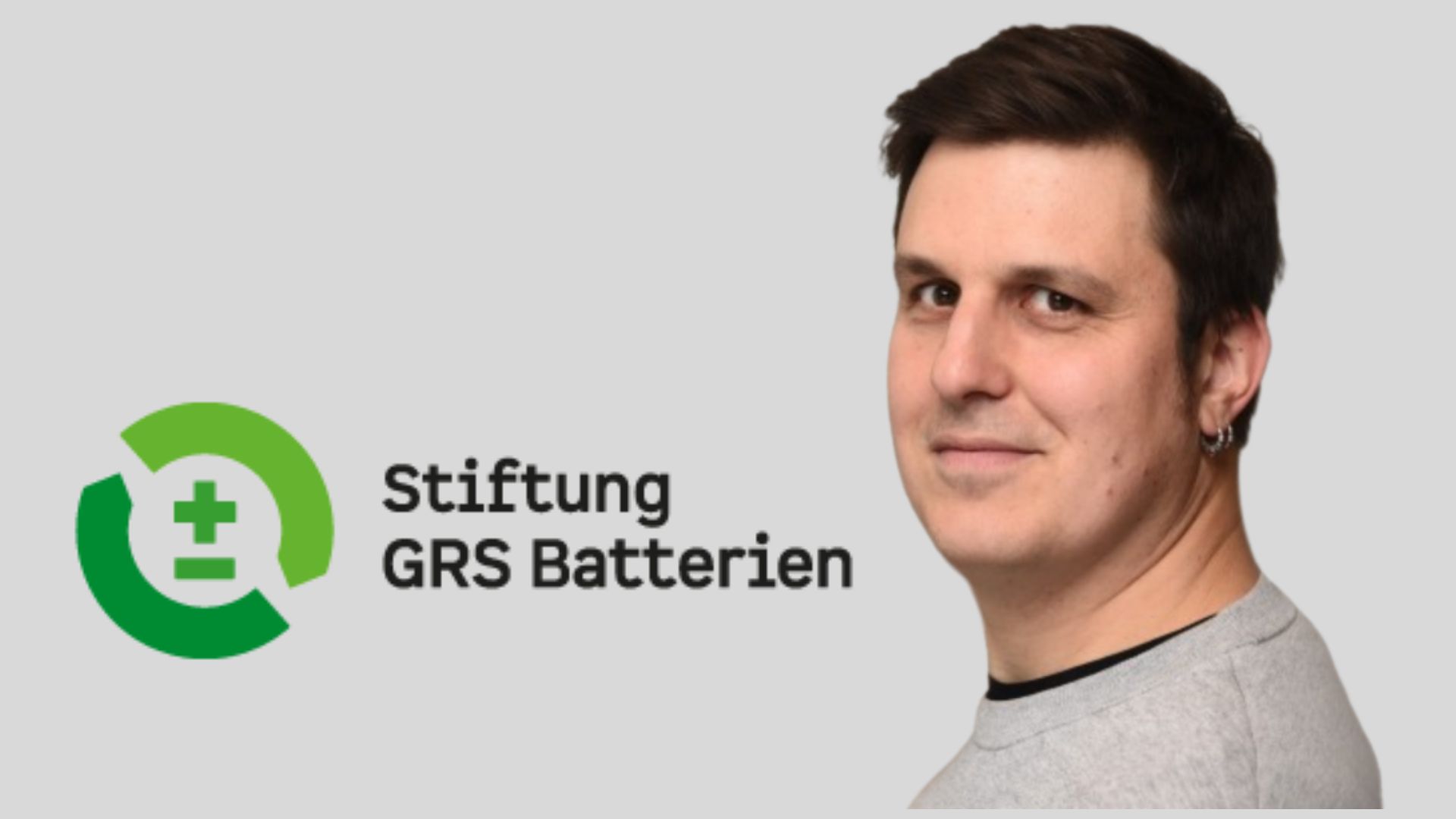
Senior Communications Officer Stew Post spoke with Christoph Melzer, Project Engineer at Stiftung GRS Batterien, from his home in Germany.
Christoph recently joined ECOLOGICON in conducting a study – funded by the German Ministry for the Environment, Nature Conservation and Nuclear Safety – on the professionalisation of battery takeback to support environmental protection in Cambodia, setting the stage for a conversation on e-waste in the Kingdom.
Through correspondence, Christoph shared his journey into the world of circularity, explored the current landscape of battery waste in Cambodia, and the business case for supporting the development of battery recycling in the country.
Through correspondence, Christoph shared his journey into the world of circularity, explored the current landscape of battery waste in Cambodia, and the business case for a battery-recycling economy in the country.
Battery Waste Management and Circular Economy Initiatives
Stew: To begin, could you share a bit about your professional background and how you became involved in battery waste management and circular economy initiatives in Cambodia and the region?
Christoph: I studied environmental engineering, which provided a strong foundation for understanding the importance of improving the circular economy. Through my academic and professional journey, I have come to recognise that extended producer responsibility offers a practical pathway to achieving a sustainable impact in waste management and resource conservation.
In my current role at Stiftung GRS Batterien, a collection scheme for portable batteries since 1998 and a think tank in circular economy and producer responsibility, I am actively engaged in initiatives that strengthen the circular economy. My work goes beyond implementation of battery legislation in Germany and Europe; I am committed to supporting other countries in enhancing their environmental laws. Since 2024, we have had the opportunity to contribute to the development of Cambodia’s circular economy, working in partnership with ECOLOGICON to promote sustainable practices and regulatory improvements. ECOLOGICON had several years of experience in Cambodia and developed a network amongst waste management stakeholders in the past. They also participated successfully in the Cambodian Waste Summit as speakers. So, when the opportunity arose to hand in project ideas for funding, we developed the project idea together as a consortium in close collaboration with the Ministry of Environment of Cambodia.
Stew: Cambodia currently imports all of its batteries and lacks formal recycling infrastructure. How do the BATTPRO findings, such as the high landfill rate and minimal formal collection, shape the urgency and direction of national policy and private‑sector engagement?
Christoph: The findings from our project provide valuable support to policymakers by offering actionable insights that can help reduce the landfill rate associated with battery waste. Through these results, we are able to outline a clear roadmap for stakeholders in the political sector, guiding them toward effective strategies for minimising environmental impact and fostering sustainable battery management practices. Additionally, the business cases we developed during the project can be used by all stakeholders to get started in the battery waste management sector in Cambodia and other countries.
Stew: With the introduction of a Prakas on E‑waste EPR, Cambodia is shifting responsibility onto producers and importers. What practical changes do you foresee this triggering in terms of collection systems, compliance requirements, and operational standards?
Christoph: The introduction of extended producer responsibility (EPR) requirements marks an important step toward establishing a circular economy within Cambodia’s battery sector. This approach aims to enhance the sustainability of a rapidly growing industry by encouraging producers to take greater accountability for their products throughout the entire lifecycle.
The shift is positive, as it places responsibility on manufacturers and importers to manage e-waste and battery waste more effectively. However, achieving full implementation of an EPR scheme will require significant additional efforts. There remain numerous tasks and challenges to address before a comprehensive, functioning system is established that truly supports circularity and environmental protection.
24 Million Battery‑Containing Devices Are In Circulation
Stew: BATTPRO’s modelling suggests around 24 million battery‑containing devices are in circulation. How could a structured take‑back system or early-stage pre‑processing hub unlock wider opportunities for Cambodia within regional battery recycling value chains?
Christoph: Establishing a robust battery collection scheme is essential not only for protecting the environment, but also for supporting the development of a local e-waste management industry. By implementing such a system, Cambodia can lay the groundwork for a broader value chain that benefits both sustainability and economic growth.
The introduction of a collection scheme for portable batteries represents a crucial initial step towards protecting the environment and public health. In addition to managing battery waste, it is essential to focus on the collection and treatment of end-of-life electric devices, especially those containing batteries. Proper separation and handling of lithium-ion batteries from these devices help minimise environmental risks and improve safety throughout the recycling process.
Stew: Circularity is often framed as an environmental initiative, but it also drives economic value. In Cambodia’s context, rising consumption, growing industrial sectors, and ongoing digitalisation, what economic impacts do you expect from building a more formalised battery collection and recycling ecosystem?
Christoph: The safe collection of waste batteries is a crucial step for Cambodia, aiming to significantly improve the quality of life, public health, and environmental conditions. Proper handling and disposal of batteries reduces the risk of hazardous chemical exposure, protects natural ecosystems, and supports a cleaner living environment for communities.
Establishing battery collection systems will stimulate job growth across multiple sectors. Logistics companies will require additional personnel to manage the transport and collection of batteries. Furthermore, the implementation of sorting facilities will open further employment opportunities, as these centres will need staff to ensure efficient and safe processing of collected materials. Management companies overseeing battery waste processes will also contribute to job creation, supporting the overall infrastructure of the recycling ecosystem.
Potential Challenges Facing The Prospect
Stew: Looking ahead, what are some of the first steps to establishing this type of system and what are the potential challenges facing this prospect?
Christoph: The initial establishment of sorting facilities will lay the foundation for future expansion into recycling operations. As the system matures, more recycling facilities can be developed, enabling Cambodia to process greater volumes of battery waste internally and advance toward a more circular economy.
In addition to local benefits, the export of recycled intermediate products and secondary materials can provide Cambodia with access to regional and international markets. This export activity supports economic growth, encourages investment in recycling technologies, and strengthens Cambodia’s position within the broader battery recycling value chain.
However, it’s important to recognise that these economic opportunities depend on the implementation of an EPR system. Without such a system, the entire value chain for battery waste management remains unprofitable. Profitability is achieved only when downstream operators—such as collectors, transporters, sorters, pretreatment facilities, export services, or recyclers—receive funding from EPR fees paid by battery importers.