
Cambodia Leadership Review
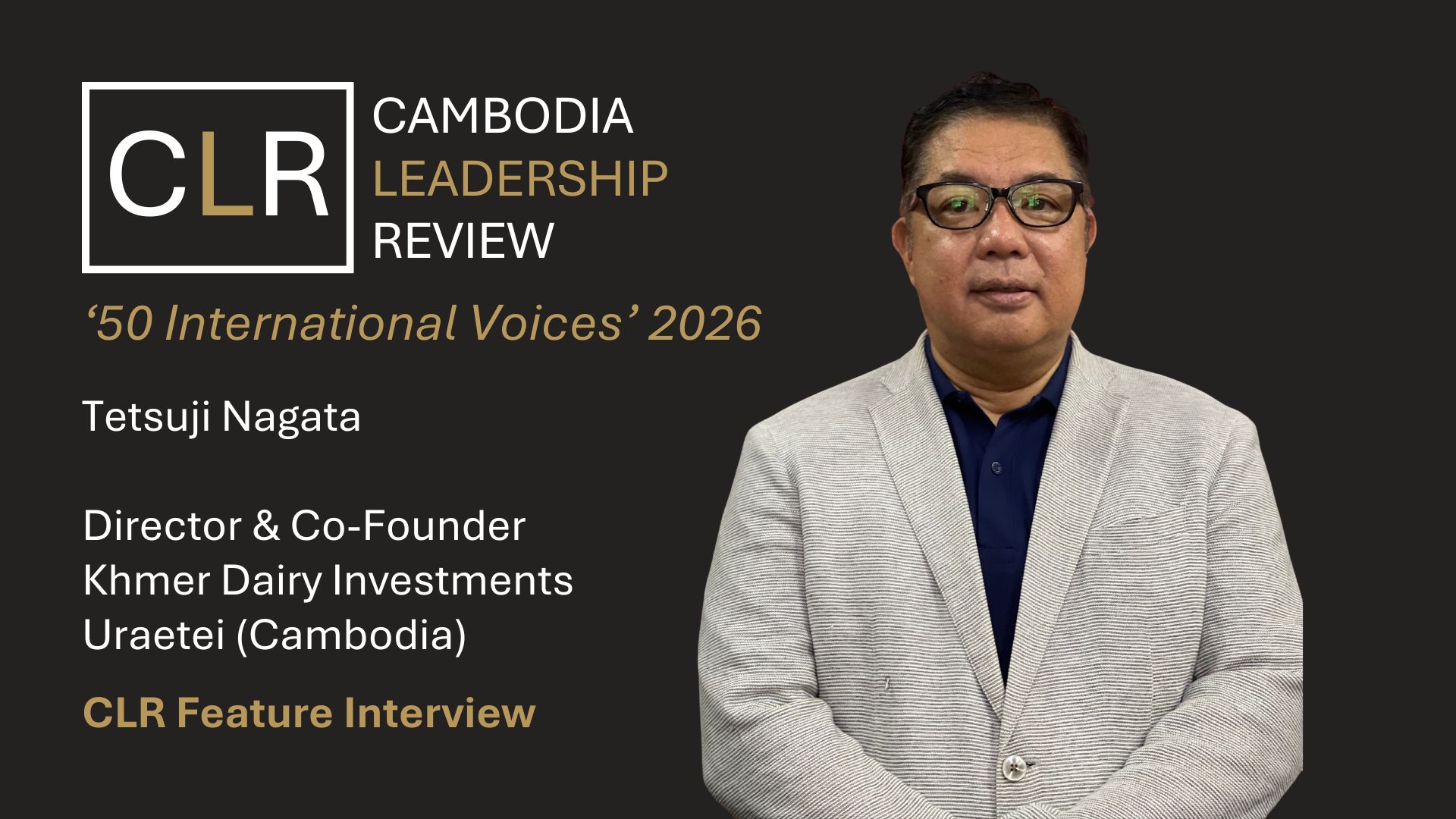
Tetsuji Nagata is a cross-border entrepreneur and investor with more than three decades of experience across finance, asset management, real estate, agriculture, and hospitality in Japan and Cambodia. Beginning his career in Japan’s financial sector before moving into global markets with Bloomberg L.P., he later founded East Wing Group and launched an investment fund managing approximately JPY 2 billion in assets.
Since co-founding SONATRA GROUP in 2010, Nagata has led the growth of a diversified Cambodian conglomerate spanning microfinance, land banking, construction, agriculture, serviced apartments, and investment. Beyond SONATRA, he plays strategic roles in Nexasia Holdings, Khmer Dairy Investment, METRA, BCC Co., Ltd., and operates multiple Japanese restaurants in Phnom Penh.
Across industries, his work reflects a consistent philosophy centered on long-term value, institutional trust, and Japan–Cambodia economic collaboration. In this interview, he shares his perspective on leadership, food systems, agriculture, and building enduring value across sectors.
Leadership Philosophy Across Industries
CLR: You operate across hospitality, investment, and agriculture. How do you connect these industries under a single leadership philosophy?
For me, hospitality, investment, and agriculture are not separate businesses. They are platforms to implement sustainable value in society.
A restaurant delivers trust directly to customers. Investment is the responsible allocation of capital toward the future. Agriculture builds the foundation of a nation.
The industries differ, but the core philosophy remains the same: long-term vision, trust-building, and disciplined execution.
Cambodia is a high-growth market. However, if we pursue only short-term returns, we fail to create real value. Every major decision I make is guided by one question: what will remain in 10 or 20 years?
My approach is not to enter, profit, and exit. It is to take root, localize, and grow together with the country.
The Value and Responsibility of Japanese Food Culture
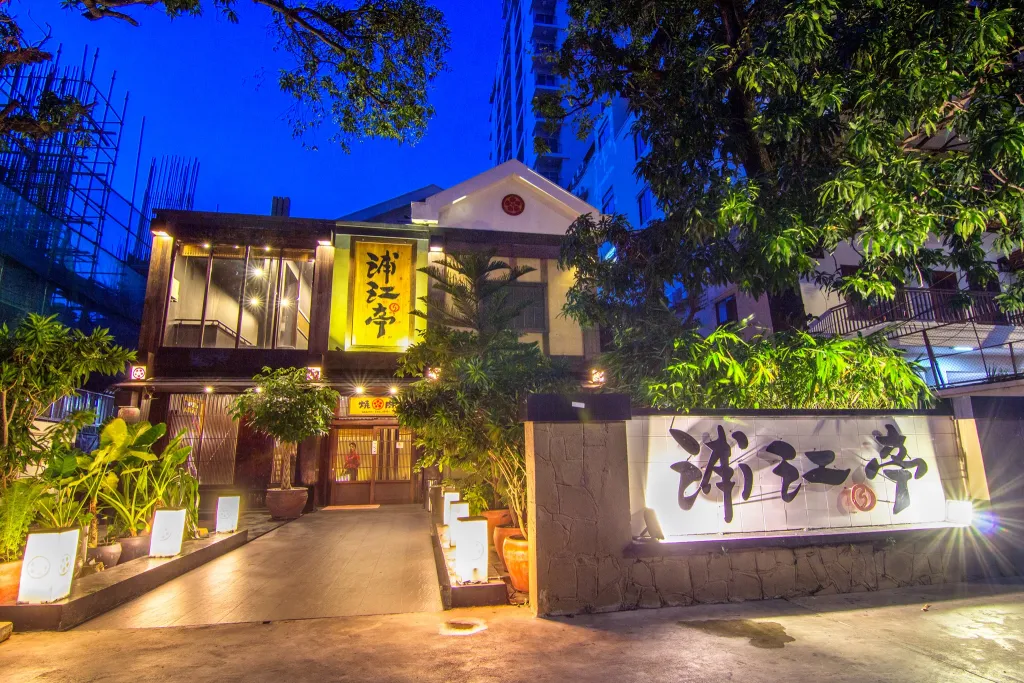
CLR: Your involvement in Uraetei goes beyond operating restaurants. What does Japanese food culture represent in Cambodia?
Our journey with Uraetei has never been only about operating restaurants. It has been about introducing Japanese craftsmanship and hospitality.
The essence of Japanese cuisine extends beyond taste. It includes respect for ingredients, uncompromising hygiene and safety standards, attention to detail, and consistency in quality. These principles elevate not only a single restaurant but the broader standards of an industry.
Operating Japanese brands overseas also carries responsibility. We must balance authenticity with localization. Authenticity does not mean refusing to change. It means protecting the core philosophy while allowing thoughtful evolution.
As a Japanese business leader operating abroad, I see it as my responsibility to preserve the essence of the brand while ensuring it integrates meaningfully into local culture.
A National Perspective on Dairy Investment
CLR: Your involvement in Khmer Dairy Investment reflects a move into agriculture. What is the broader significance of this investment?
Our involvement in Khmer Dairy Investment is not merely commercial. It reflects a commitment to strengthening Cambodia’s food sovereignty and industrial development.
Cambodia still relies heavily on imported dairy products. With population growth and the expansion of the middle class, establishing domestic production capacity becomes increasingly important.
The challenges are clear: infrastructure limitations, inconsistent technical standards, underdeveloped quality control systems, and consumer trust in locally produced goods.
However, I view these as opportunities. Agriculture does not generate short-term returns. It requires patient capital, technology transfer, and operational discipline.
Trust cannot be built through advertising. It is earned through consistency, transparency, and reliability.
Our objective is to help create a future where Cambodian consumers confidently choose domestically produced dairy products.
The Future of the Japan–Cambodia Food Ecosystem
CLR: Looking ahead, how do you see Japan and Cambodia collaborating in the development of a modern food ecosystem?
Cambodia’s food ecosystem will inevitably become more integrated and sophisticated, linking farms, processing, logistics, retail, and hospitality into structured value chains.
Japan can contribute meaningfully to this transformation through advanced quality management systems, productivity-enhancing agricultural technologies, traceability frameworks, food safety standards, and human capital development.
Japan has developed high-value food industries under resource constraints. Cambodia possesses land, a young population, and strong growth momentum. I aspire to serve as a bridge between these complementary strengths.
Food is not merely an economic sector. It directly impacts public health, education, and social stability. Strengthening the food ecosystem ultimately strengthens a nation.
Across all my ventures, one principle remains constant: trust. Trust in quality, trust in corporate integrity, and trust in long-term partnership.
I remain committed to building that trust together with Cambodia for the decades ahead.