


By Brad Jones
How the skeptics got it spectacularly wrong — and what the unbanked revolution teaches us about vision, courage, and the future of finance.
It was sometime in early 2009. We were at an offsite in Singapore, the kind of meeting where grand strategy gets discussed over an excess of PowerPoint slides. I was there as founder of Wing, a fledgling mobile money business in Cambodia, at that time owned by ANZ. We were trying to do something genuinely new: bring financial services to millions of people who had never held a bank account in their lives.
Then the Managing Director of Retail Banking, my direct boss, the person I reported to at ANZ, looked at what we were building and delivered her verdict with the easy confidence of someone who had never had to question her own assumptions.
“This isn’t banking business!”
The head of retail for Indonesia laughed and echoed the sentiment. Two senior executives from two of the most dynamic emerging markets in Asia, cheerfully dismissing the business model that would go on to transform the financial lives of hundreds of millions of people across their own region.
I remember the feeling. It’s a particular kind of loneliness, being told in public that the thing you’ve given everything to build isn’t real, isn’t legitimate, by the very people who hold the keys to your resources, your budget, your runway. I kept going. But I never forgot that room.
With the benefit of hindsight, I want to say clearly: they were wrong. Not slightly wrong. Spectacularly, historically, embarrassingly wrong.
The World They Chose Not to See
In 2009, roughly 2.5 billion adults globally had no access to formal financial services. In Cambodia, that figure was closer to 97% of the population. These weren’t people who didn’t want banking. They were people banking had decided weren’t worth serving. No branch networks in rural provinces. No credit history. No collateral. No minimum balance they could meet. Traditional banking looked at them and calculated, correctly, that they wouldn’t be profitable under a traditional model.
What the skeptics missed (what they couldn’t or wouldn’t see) was that “not profitable under a traditional model” and “not a banking business” are two entirely different things. The unbanked weren’t a charity case. They were an untapped market of extraordinary scale, waiting for a model that fit their lives rather than demanding their lives fit the model.
What “Not Banking Business” Actually Built

Let’s talk about what happened next — in the very region those executives came from.
In the Philippines, GCash and Maya (formerly PayMaya) became two of Southeast Asia’s most valuable fintech companies. GCash alone reached over 81 million registered users by 2023 and achieved a valuation exceeding $5 billion. In Indonesia, the country whose retail head laughed in that Singapore meeting room, GoPay, OVO, DANA, and LinkAja collectively transformed how hundreds of millions of people pay, save, and borrow. GoPay processed transactions worth tens of billions of dollars annually. Bank Jago, backed by Gojek, attracted over 10 million customers within years of launching.
In Africa, M-Pesa, the gold standard of mobile money, now moves more money annually than the Kenyan government’s budget. Its parent company Safaricom is one of the most profitable businesses on the continent. Across sub-Saharan Africa, mobile money accounts outnumber traditional bank accounts.
Wing itself grew to become Cambodia’s largest financial institution by customer count. Wave Money, which I subsequently co-founded in Myanmar, became the country’s dominant mobile financial services provider and highly profitable within a very short period of time. These weren’t small experiments. They became critical national infrastructure.
The Economics the Skeptics Refused to Model
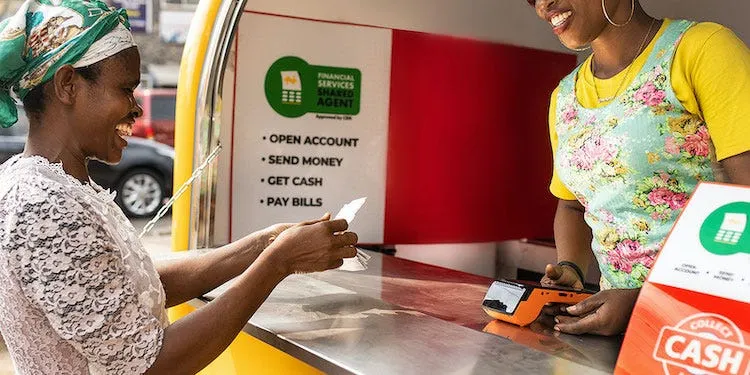
Here is what the traditional banking mindset got fundamentally wrong: it evaluated the unbanked through the lens of branch economics. High fixed costs. Compliance overhead. Low transaction values that didn’t justify the infrastructure.
Mobile money inverted every one of those assumptions. Agents replaced branches, turning capital costs into variable costs and putting distribution points in every village market. Mobile infrastructure replaced back-office systems. Airtime and cash-in/cash-out fees replaced minimum balance requirements. The unit economics, properly understood, were not worse than traditional banking. In many respects, at scale, they were better.
When you are the first financial institution someone has ever trusted, the loyalty you earn is not transactional. It is foundational.
And the customer lifetime value calculation? When you are the first financial institution someone has ever trusted — when you are the account where their first paycheck lands, where they send money to their mother in a village three hours away, where they save for their child’s school fees — the loyalty you earn is not transactional. It is foundational. That is not a bad business. That is the best possible business.
The Cost of Institutional Myopia
I want to be precise about what was lost when leaders like those at that Singapore offsite chose dismissal over curiosity. It wasn’t just market share, though ANZ ceded enormous value by never fully committing to the model. It was something harder to quantify: the cost of discouragement.
How many founders in emerging markets heard similar things from their backers and stopped? How many years of development were lost because the people controlling capital had decided, from the comfort of well-banked lives, that serving the unbanked wasn’t serious? The irony is profound: the executives most confident in their dismissal were from Indonesia and the Philippines, markets that would become global showcases for exactly what they were laughing at.
This is what institutional myopia costs. Not just money. Momentum. Time. And in the case of financial inclusion, it costs real people real years of living outside the formal economy, unable to build credit, hold savings securely, or access the basic dignity of being seen as a bankable human being.
What This Means for Anyone Building Something New
If you are reading this as a founder — especially one building in markets or verticals that powerful people have written off — I want you to take something from this story.
The people laughing in that room were not stupid. They were experienced, well-credentialed, and genuinely believed what they were saying. That is precisely what makes institutional skepticism so dangerous. It doesn’t announce itself as narrow-mindedness. It arrives dressed as wisdom. It speaks in the confident register of people who have seen many ideas fail and learned, incorrectly, that their pattern-recognition is infallible.
The tell — the thing that should make you dig in rather than fold — is when the skepticism isn’t based on the numbers, or the model, or a specific identified flaw in your thinking. When it’s based on category. When the objection is not “here is why this won’t work” but “this isn’t what we do” — that is not analysis. That is identity. And identity is a terrible reason to leave hundreds of millions of people without financial services.
The Verdict of History
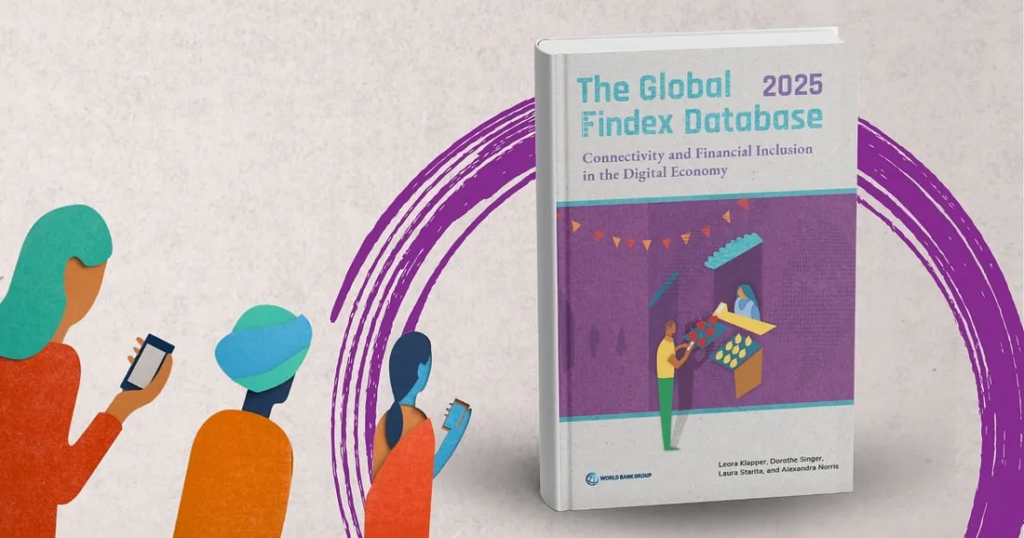
Digital financial services for the unbanked are now among the most compelling investment theses in global finance. The World Bank’s Global Findex reports that between 2011 and 2021, 1.2 billion previously unbanked adults gained access to financial accounts — with mobile money driving much of that growth. Investors who bet early on M-Pesa, on GCash, on the model that was supposedly “not banking business” generated extraordinary returns.
The institutions that dismissed it? Some caught up. Many didn’t. ANZ divested Wing in 2011. The digital financial services landscape in Asia and Africa is now dominated by telecoms, tech companies, and purpose-built fintechs. Not by the traditional banks that had the relationships, the regulatory standing, and the head start, and chose to laugh instead.
So yes: this is banking business. It always was. It just required the imagination to see customers that the old model had trained itself not to see — and the courage to keep building when the room stopped taking you seriously.
I’m glad I stayed in that room, and stayed committed to the vision of financial services for the unbanked. And I’m glad, in the end, the work spoke for itself.
Brad Jones is a three-time fintech CEO with over 20 years of experience in financial services. He has founded and scaled several fintech companies, focusing on digital payments and financial inclusion across Asia’s developing and developed markets. His career has centered on navigating complex regulatory environments and driving the growth of innovative financial services in dynamic regional markets.