
Cambodia Leadership Review
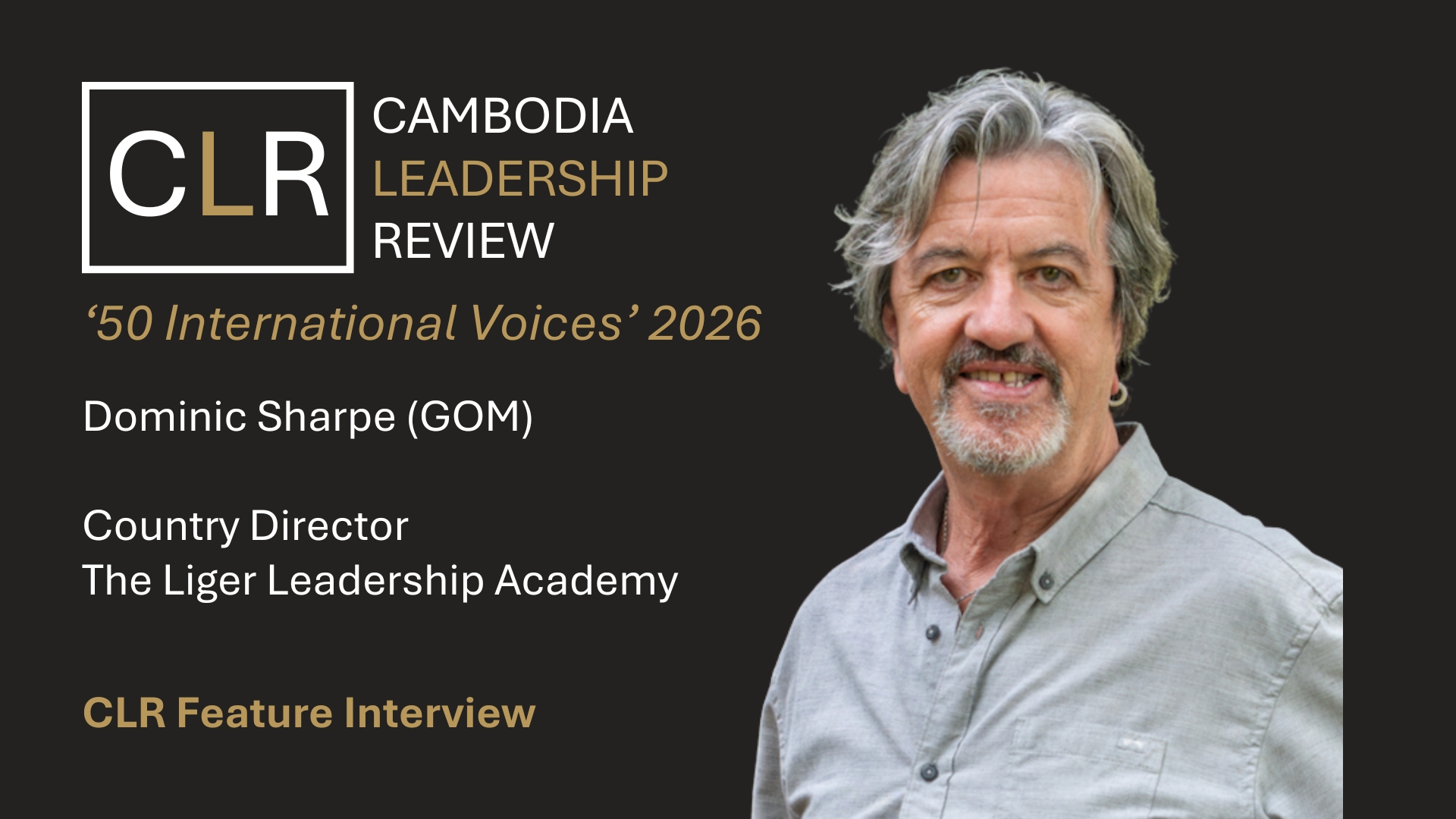
Dominic Sharpe (GOM) has served as Country Director of The Liger Leadership Academy for more than a decade, guiding the institution through its evolution into AUPP Liger Leadership Academy. Under his leadership, Liger has become nationally and internationally recognized for its experiential, interdisciplinary, and opportunity-based education model.
In this interview, Williams reflects on leadership in a school environment, curriculum innovation, institutional evolution, and the future of education in Cambodia and beyond.
Leadership in a School Environment
CLR: As Country Director of The Liger Leadership Academy for more than a decade, how do you define leadership within a school setting, and how have leading educators and students shaped your views on culture, accountability, and long-term impact?
“Leadership is standing up when you know you have to, and sitting down when you know you can.”
My core philosophy is that leadership is not a position of authority, but rather a demonstration of values that must be modeled by every person working at the institution. This approach is paramount to building a strong school culture, which in turn determines student performance, engagement, and the supportive relationships essential for growth.
Big messages do not always have to mean grand gestures. One of the first things I did was have the traditional organization chart on the wall removed and replaced with headshots and job titles of every employee, randomly placed into an organization picture frame—a small gesture but a clear message to all staff, students, and parents that whilst we all have different jobs and responsibilities, we are all valued and respected.
The culture is built on a community of trust and support, where staff must first embody these principles to instill them in students. Children model behavior.
A central component of this philosophy is embracing mistakes at all levels. Failure is often praised, but no one tells you it does not feel good, and it is this aspect that makes it crucial for students to learn how to recover from setbacks. This is demonstrated through the leadership’s own accountability. Many times, I have publicly accepted personal mistakes in front of staff and the student body to model learning and improvement. Accountability is an essential foundation of a healthy culture.
Regarding long-term impact, we need to move away from simple numerical metrics to focus on the profound, “cellular-level” effect on each individual student and the positive influence they will in turn have on their peers, community, and country. Focusing on this will bring wider real long-term impact as every student, through their own growth, understands the relevance of what they are doing and feels empowered to help others.
Curriculum, E-STEAM, and 21st-Century Learning
CLR: Liger’s curriculum has expanded from STEM to E-STEAM while maintaining a strong emphasis on experiential, entrepreneurial, and opportunity-based learning. How important is this interdisciplinary approach in preparing students for the realities of the modern world, and how do you ensure academic rigor remains central?
This interdisciplinary approach is “critical” for preparing students for the realities of a modern world where very little occurs in isolation. The curriculum is designed to help students find connections and crossovers between subjects, engaging in “dot connecting” and networking of ideas.
This method allows students to understand not just what they are learning, but why they are learning it and how to apply their knowledge in practical ways. A key example is a student learning statistics in a mathematics class and then directly applying that knowledge to conduct a survey for a real-world community project.
By making education relatable and applicable, the interdisciplinary model ensures students are equipped with versatile and meaningful skills and the eagerness to gain more knowledge in order to become more effective in the “real world,” thus ensuring academic rigor remains central.
The Evolution of the Liger Model
CLR: After more than a decade operating as a foundation with national and international recognition, Liger has now transitioned to AUPP Liger Leadership Academy and is now a yearly intake model offering placements for fee-paying students. What drove this shift, and how does it strengthen the sustainability and reach of Liger’s mission?
The evolution is all thanks to the American University of Phnom Penh (AUPP), having the vision and courage to invest long-term, ensuring this education remains in Cambodia and is now accessible to an increasing number of students.
The Foundation created, developed, and received global recognition for the curriculum, and the initial mission was to “lessen a country’s dependence on international aid.” With AUPP now as the owners, this mission has been realized.
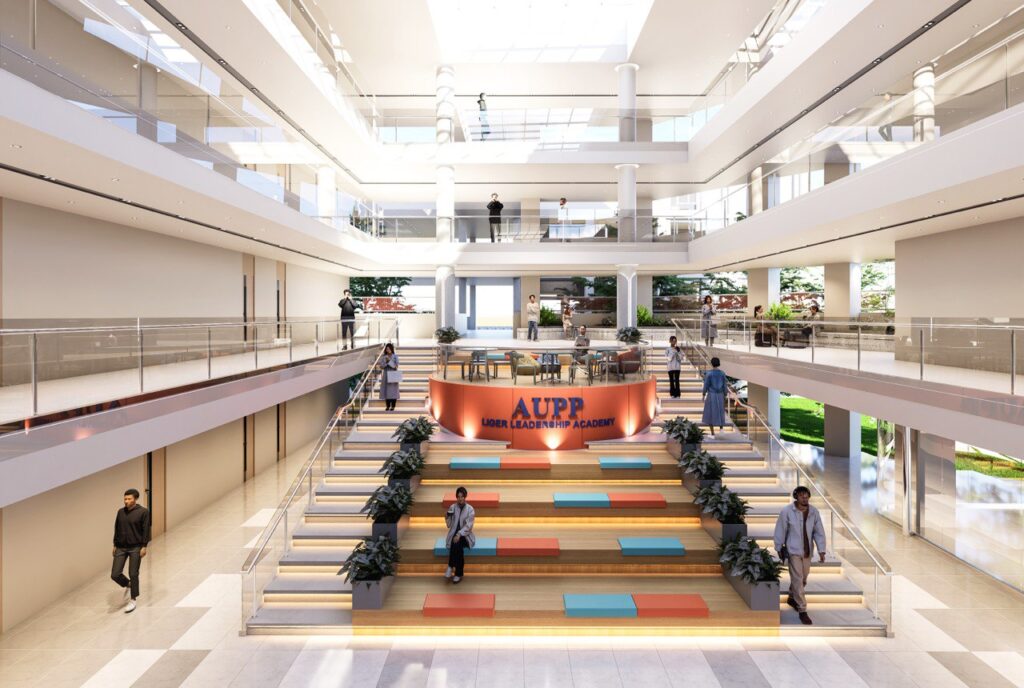
AUPP has constructed a brand-new, state-of-the-art campus in Chroy Changvar with a residential capacity for 400 students. This residential facility is crucial for maintaining our status as a nationwide opportunity academy, allowing it to retain a diverse student body from across the country. Currently, students at the academy represent 24 of Cambodia’s 25 provinces.
The move into this new campus is scheduled for early March, while H.E. Dr. Hang Chuon Naron (Deputy Prime Minister and Minister of Education) will preside over the “Grand Opening Ceremony” of the new AUPP Liger Leadership Academy on March 23.
Looking Ahead: Future Outlook
CLR: Looking ahead, what key changes do you believe will shape education over the next decade, and how is Liger positioning itself—through initiatives such as Personal Organization and Wellness (POW) and its evolving academic model—to prepare students for an increasingly complex and fast-changing future?
Looking ahead, the academy anticipates a future where the rise of Artificial Intelligence will make experiential learning and emotional intelligence (EQ) increasingly vital in education. Liger positions itself as “ahead of the game” in this area through more than a decade of delivering and continuously developing experiential project-based learning and, since 2024, implementing our Personal Organization and Wellness (POW) program.
This mandatory EQ-focused class is held every academic day, teaching students to balance their academic, social, emotional, and physical well-being and learn how to set, prioritize, and achieve short-, mid-, and long-term goals in each of these areas.
Education must constantly challenge students to question who they are, discouraging them from labeling themselves too quickly and preparing them for non-linear career paths. Education cannot stand still and must equip students to find the knowledge they need when they need it. Parents are increasingly seeking this model, wanting their children to become independent, ethical, and in control of their lives rather than technology controlling them.
With the world changing so rapidly, tomorrow is the future. Currently, I am developing a credentialing program to certify educators in our project-based learning pedagogy. This has the support of the Ministry of Education and will provide opportunities for more educators both in Cambodia and internationally. We are also in the process of WASC accreditation, and we are now affiliate members of the Boarding Schools’ Association (BSA), leading to full membership.
The future vision for AUPP Liger includes expanding its student body and its international collaborations, believing the exchange of cultures and experiences through global projects is life-changing. I have a strong personal belief that “what you learn inside the classroom can change your life, but what you learn outside the classroom can change the world.” CLR