
Cambodia Leadership Review
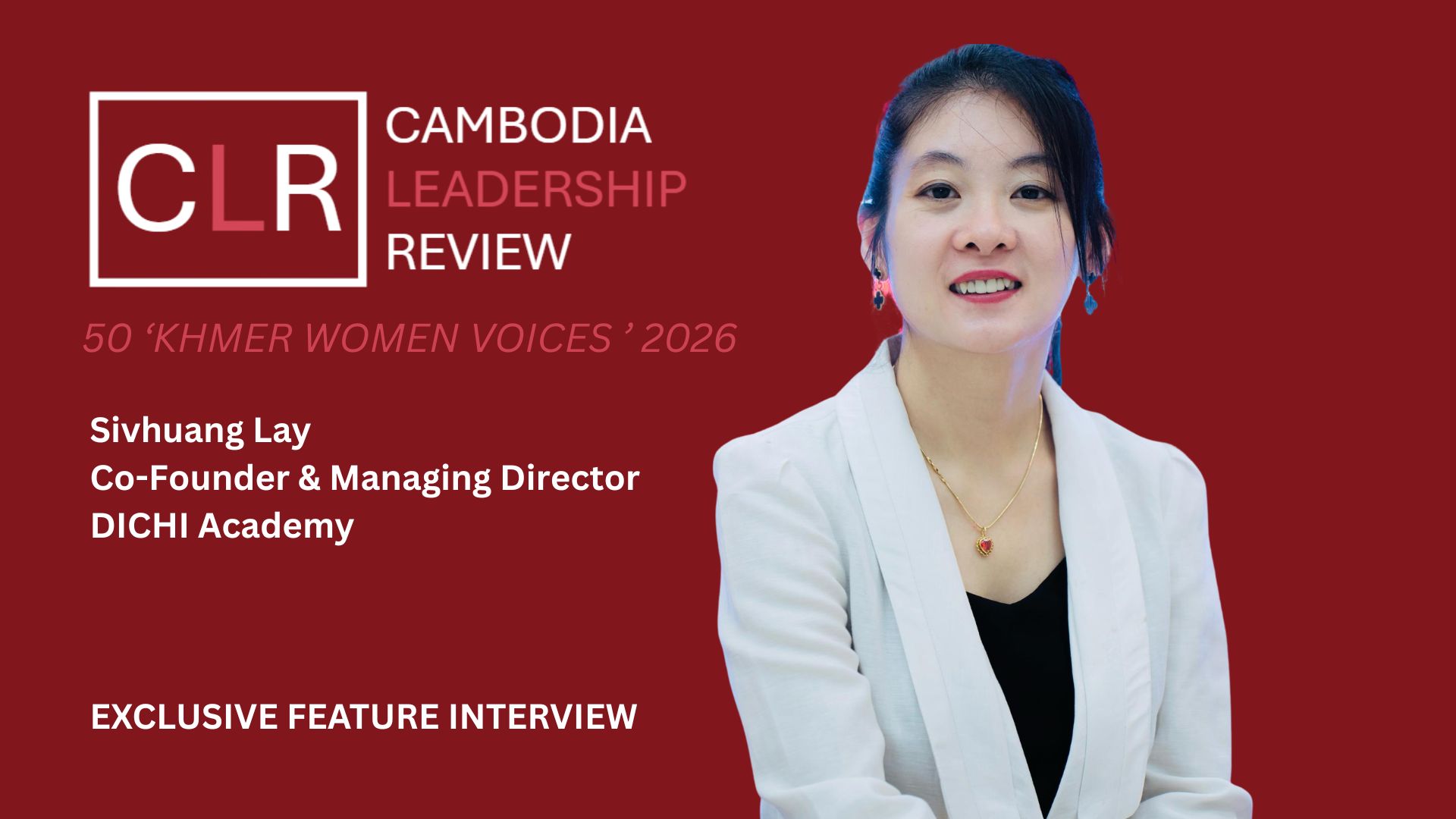
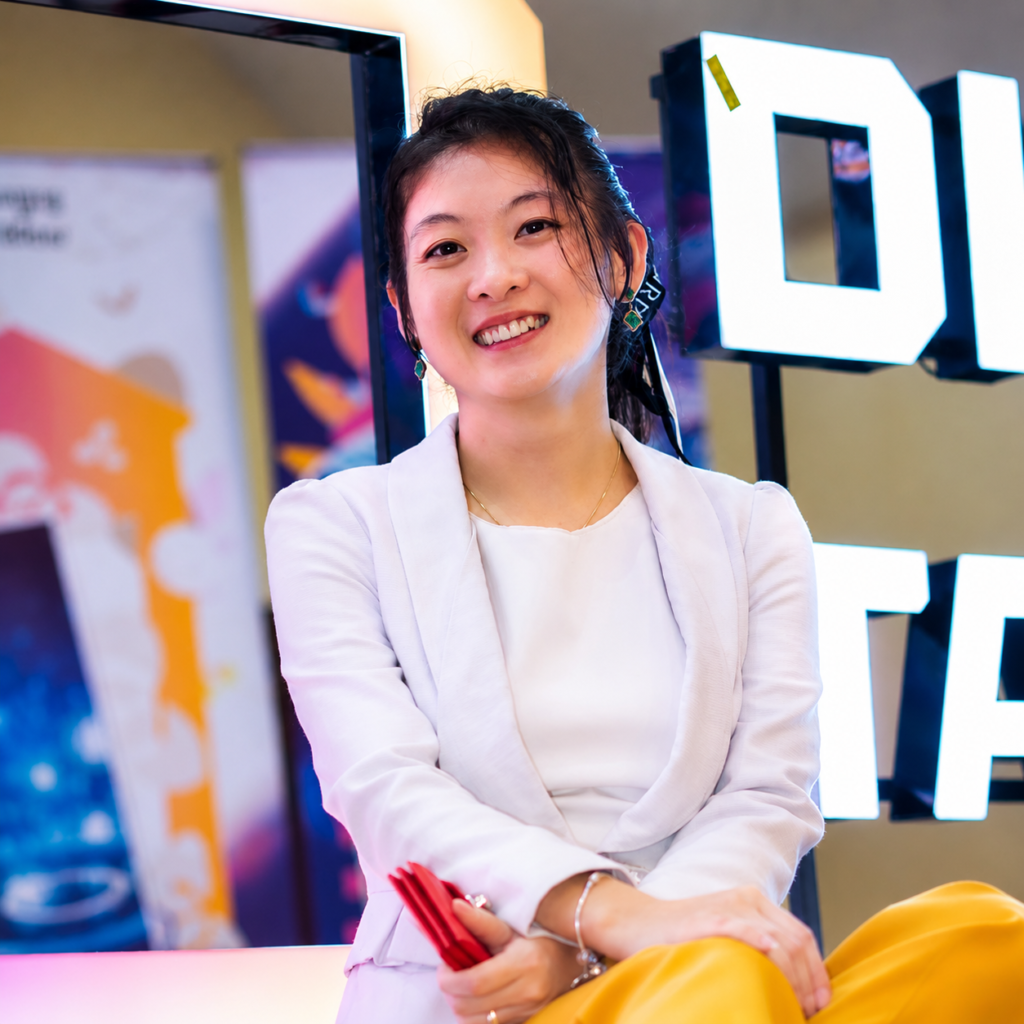
As Co-founder and Managing Director of Dichi Academy, Lay Sivhuang is helping prepare Cambodia’s next generation of digital talent through industry-led education, technology, and innovation. Drawing on international academic and professional experience, she works to bridge the country’s digital skills gap and strengthen its digital economy.
A strong advocate for women in technology and digital education, Sivhuang believes practical, industry-focused learning is essential to Cambodia’s future competitiveness and creating greater opportunities for young Cambodians.
In this edition of 50 Khmer Women Voices 2026, Sivhuang discusses women in technology, building Cambodia’s digital talent pipeline, expanding access to digital education, leading an innovation-focused education platform, and her advice for the next generation of women pursuing careers in tech.
Women in Cambodia’s Tech and Education Sectors
CLR: Cambodia’s digital economy and education landscape are evolving rapidly. From your perspective, how are these changes creating new opportunities for Cambodian women in technology, innovation, and leadership?
Sivhuang: Cambodia’s digital economy is accelerating faster than most people anticipated — and with it, a genuinely new landscape of opportunity is opening up for women. Five years ago, the conversation around women in technology was largely aspirational. Today, it is increasingly real. We are seeing more women entering digital roles, leading technical teams, founding ventures, and shaping policy in ways that were simply not visible a decade ago.
What excites me most is not just the numbers — it is the shift in what feels possible. When young women see other women leading in technology and education, it changes their sense of what they are allowed to want for themselves. That visibility is powerful in ways that are hard to quantify but impossible to overstate.
The expansion of Cambodia’s digital economy has also created a practical opening. Industries that once required traditional gatekeeping — finance, marketing, data, software — are now accessible through skills that can be learned and deployed from anywhere.
That democratization of access is one of the most significant opportunities for women in our generation. But opportunity without preparation is just potential. The challenge is making sure women are equipped with the right skills, the right networks, and the right belief in themselves to step into these spaces with confidence. That is what Dichi Academy is built to do.
Building Cambodia’s Digital Talent Pipeline
CLR: As demand grows for digital and technology skills across the Kingdom, what do you believe Cambodia still needs to do to better prepare young people for the future workforce?
Sivhuang: Cambodia still has significant structural work to do — and we need to be willing to name that clearly rather than celebrate progress prematurely.
Only 10% of university students study ICT, and even among them, fewer than 10% are considered workforce-ready by industry standards. The gap between what our education system produces and what employers actually need is not just wide — it is widening. As long as we are teaching theory that was relevant a decade ago and calling it digital education, we are setting young people up to fail in a market that has moved on.
What Cambodia needs is a fundamental shift in how we design, deliver, and measure education. Curricula must be built with industry — not just approved by academics. Learning models must foster active thinking and problem-solving, not passive absorption of content. And we must invest in our trainers — because you cannot deliver world-class digital education with educators who have never worked in the industry they are teaching.
Cambodia has the ambition and the government support. What we need now is the courage to redesign the system from the inside out — not just add technology to an old model and call it innovation.
Technology, Education, and Inclusion
CLR: Access to technology and digital education can help create opportunities for students from many different backgrounds. How important is digital education in helping empower the next generation of Cambodian youth, particularly young women?
Sivhuang: Digital education is one of the most powerful equalizers available to us today — and I mean that with full conviction, not as a slogan. A young woman from a provincial town, without access to elite networks or international connections, can develop a skill and compete for opportunities that her geography would otherwise have locked her out of. That is genuinely new. And it is why making digital education accessible, affordable, and relevant is not just an economic priority — it is a social justice issue.
For young women specifically, the stakes are even higher. Many girls grow up internalizing the belief that technology is not for them. Digital education, when designed with inclusion in mind, pushes back against that narrative directly. When a young woman masters data analytics, builds her first application, or presents a solution to a real business problem, something shifts in her. Her confidence changes. Her sense of what is possible expands. That is not just education — that is transformation.
At Dichi Academy, programs like UP:SKILL — focused specifically on women professionals and digital skills — are not a side initiative. They are central to our mission. Closing the gender gap in digital literacy is one of the highest-return investments Cambodia can make — for its economy, its communities, and its future.
Leading an Education and Innovation Platform
CLR: As Founder and Managing Director of DICHI Academy, how do you balance innovation, business growth, and long-term educational impact within Cambodia’s fast-changing tech ecosystem?
Sivhuang: Balancing innovation, growth, and long-term impact is perhaps the defining tension of building Dichi Academy — and I do not think it ever fully resolves. You learn to hold it.
The temptation in a fast-moving tech ecosystem is to chase what is new and call that innovation. But real innovation in education is slower and more human than that. It means asking: does this actually help the learner? Does it produce a measurably better outcome? Those questions anchor us when the market is loud and the pressure to scale is high.
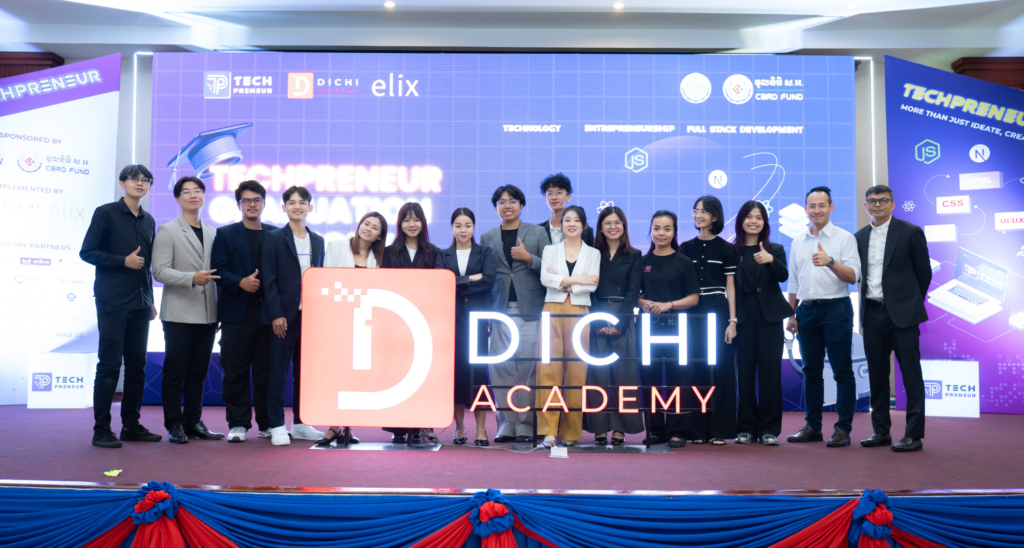
On the business side, sustainability and impact are not in conflict — they are interdependent. A program that changes lives but cannot sustain itself will not change lives for long. So we take revenue seriously, track our margins, and make commercial decisions with the same rigor we bring to curriculum design. That discipline has allowed us to grow from less than 100 learners in our first year to over 1,500 trained individuals in just one year, and the number keeps growing rapidly — while maintaining the quality that our learners and partners trust us to deliver.
What keeps me grounded through all of it is staying close to the students. When the complexity of running an institution feels overwhelming, I come back to the individual — the learner whose trajectory is changing because of something we built. That clarity of purpose is not a luxury. It is a necessity.
Advice for Future Women Leaders in Tech
CLR: What advice would you give to young Cambodian women who are interested in building careers in technology, digital entrepreneurship, and innovation?
Sivhuang: I want to give advice that is practical, not just inspiring. Be patient with your learning. The digital economy moves fast and the competition is real — but depth of knowledge will always outlast surface-level speed.
Take the time to develop genuine competency that compounds over time. Mastery is slow. It is also irreplaceable. Develop your ability to solve problems creatively. The world does not need more people who follow instructions well. It needs people who can look at a broken system or an unmet need and find a way through that nobody else has tried. Cultivate that instinct and practice it daily.
Let your purpose be louder than your doubt. There will be days when the barriers feel structural and the room feels unwelcoming. On those days, come back to why you started — the problem you care about and the people you are building for. That clarity is the most durable fuel I know. Cambodia needs your voice, your ideas, and your leadership. Do not keep us waiting.
Explore the complete Cambodia Leadership Review – 50 Khmer Women Voices 2026 featuring exclusive interviews with Cambodia’s Top 50 Khmer Women leaders. Discover their journeys, leadership lessons, and vision for the Kingdom’s future.