
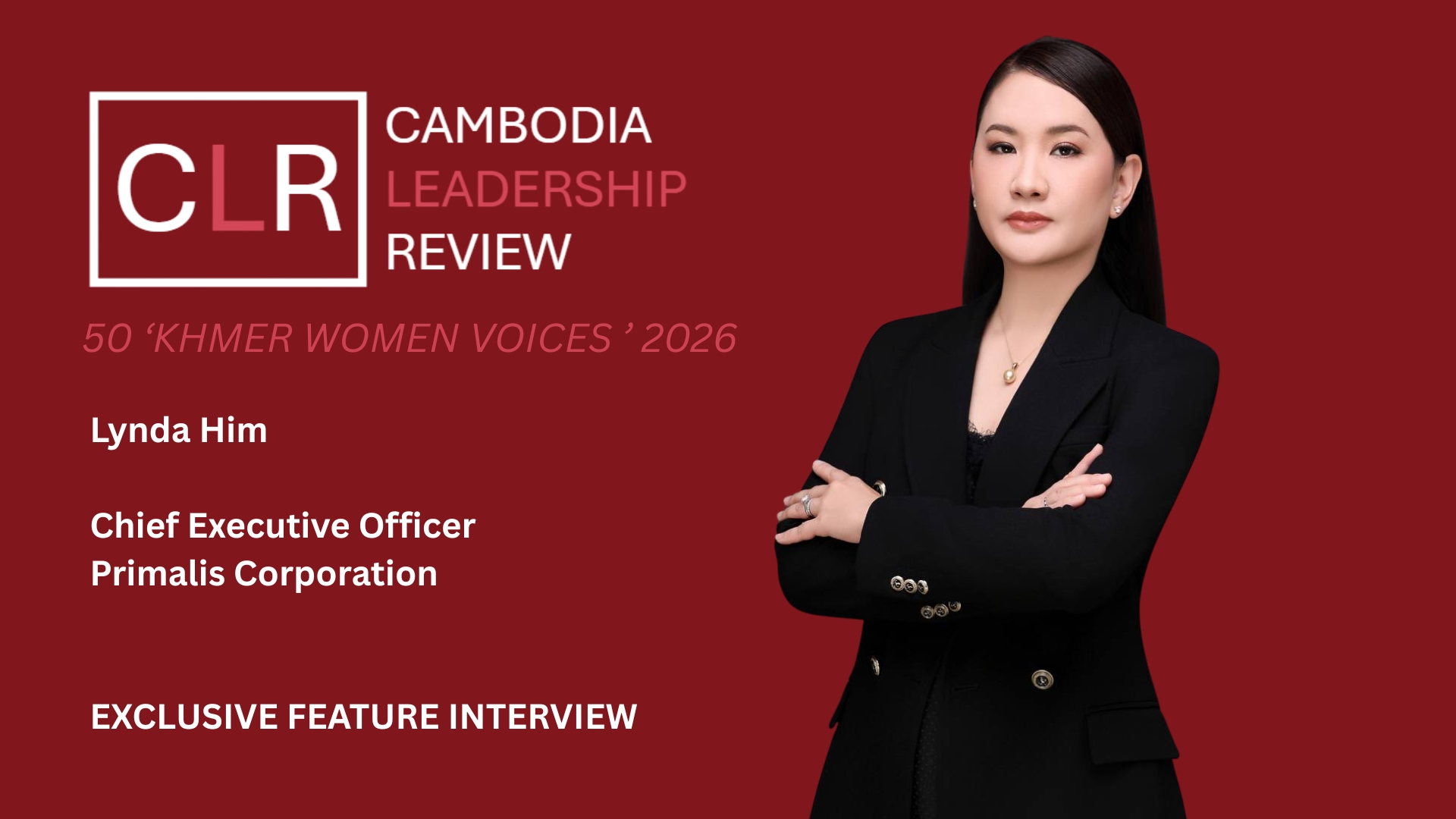
With an international career spanning Cambodia, Singapore, and Africa, Him Lynda, Chief Executive Officer of Primalis Corporation and Vice Chairwoman of the Cambodia Rice Federation, is helping strengthen Cambodia’s position as a leading exporter of premium rice. She leads one of the Kingdom’s largest rice milling and export companies while supporting the long-term competitiveness of Cambodia’s agricultural sector.
Passionate about promoting Cambodian rice to global markets, Lynda believes the future of agriculture lies in quality, value-added production, innovation, and stronger international branding. She is also a strong advocate for increasing women’s leadership across agribusiness and international trade.
In this edition of 50 Khmer Women Voices 2026, Lynda reflects on women in agriculture, building the ‘Brand Cambodia’ story, creating greater value through exports, leading in a competitive global market, and inspiring the next generation of Cambodian women leaders.
Women in Cambodia’s Agriculture Sector
CLR: Agriculture remains one of Cambodia’s most important industries, with women playing a major role throughout the value chain. How have you seen the role of women in agriculture and agribusiness evolve over the years?
Lynda: When I started in this industry over a decade ago, women were largely under represented in agribusiness leadership. They were present everywhere in the fields, planting, harvesting, sorting, but rarely at the boardroom table, rarely in export negotiations, rarely setting the strategy.
That has changed, and the change is real. Today, I see women running cooperatives, leading processing facilities, negotiating directly with international buyers. The shift is partly generational, younger Cambodian women are better educated, more confident, and less willing to accept a ceiling that was never justified to begin with. But it is also structural: programs supporting women farmers, access to microfinance, and initiatives within the Cambodia Rice Federation have opened doors that were previously closed.
What has not changed enough is representation at the highest levels of decision-making. We still have too few women shaping national agricultural policy, leading the largest exporters, or sitting on the boards of industry associations. I am conscious that my role carries a certain visibility, and I take that responsibility seriously.
It is not enough to succeed quietly, the point is to make the path more visible for those who come after. Agriculture in Cambodia is not a traditional industry waiting to modernize. It is a strategic sector with global ambition. And that ambition will only be realized if we draw on the full depth of our talent, which means women, fully and unapologetically, at every level of the value chain.
Building the ‘Brand Cambodia’ Story
CLR: Cambodian rice has gained international recognition for its quality and has become one of the country’s flagship exports. How important is it to continue building the ‘Brand Cambodia’ story in global markets, and what opportunities do you see ahead?
Lynda: The recognition is the result of years of investment in quality standards, export infrastructure, and deliberate brand-building by exporters and the Federation. However a reputation is fragile, and we need to continue to improve the Cambodian Rice Brand.
‘Brand Cambodia’ must be continuously improved, through consistent quality, through traceability that importing countries increasingly demand, and through storytelling that connects the product to its origin in a way that resonates with conscious consumers globally. The opportunity ahead is significant. As middle classes grow across Asia, Europe, and the Gulf Countries, the appetite for premium, origin-specific food products grow with them.
Cambodia can position its rice the way France positions its wines or Japan its beef or fish. They are not just commodity, but an experience with a story and a terroir behind it. What this requires is coordination: between government, exporters, farmers, and institutions like the Federation. And it requires patience, for brand equity to be built over the years.
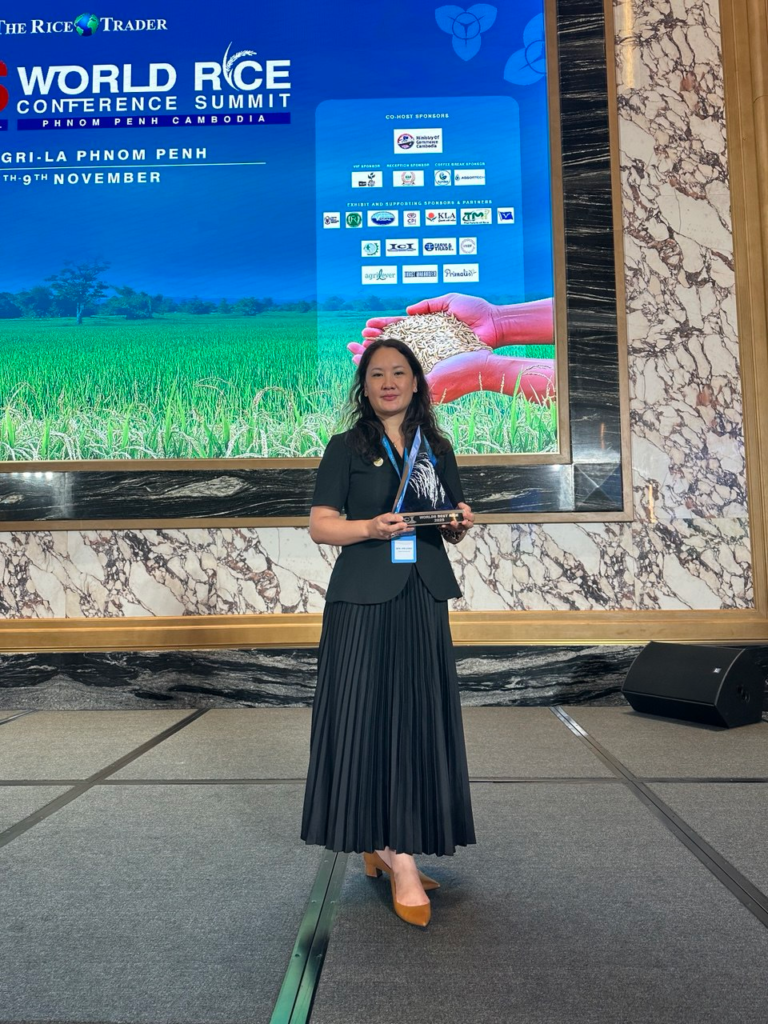
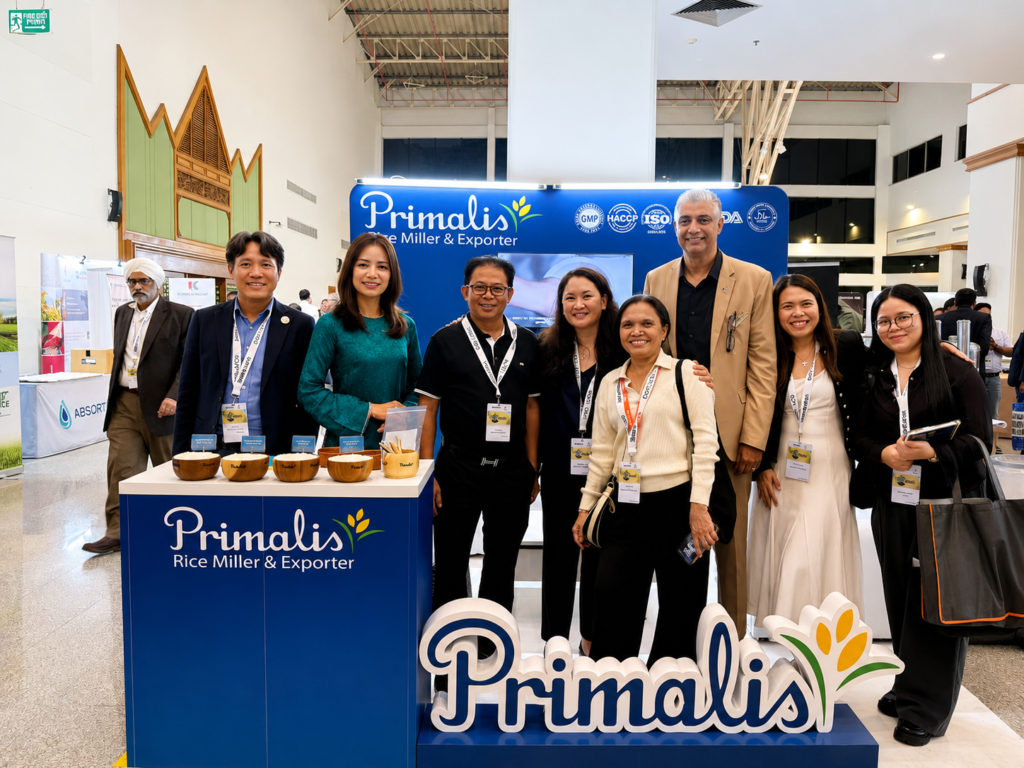
Primalis has made this, a strategic priority, with investments in high efficient technology capacity to produce premium quality products for our customers around the globe. Primalis is certified for food safety standards including FDA, HACCP, ISO 22000, HALAL, BRC, GMP. The factory features extensive warehouse facilities for loading, storing and connectivity.
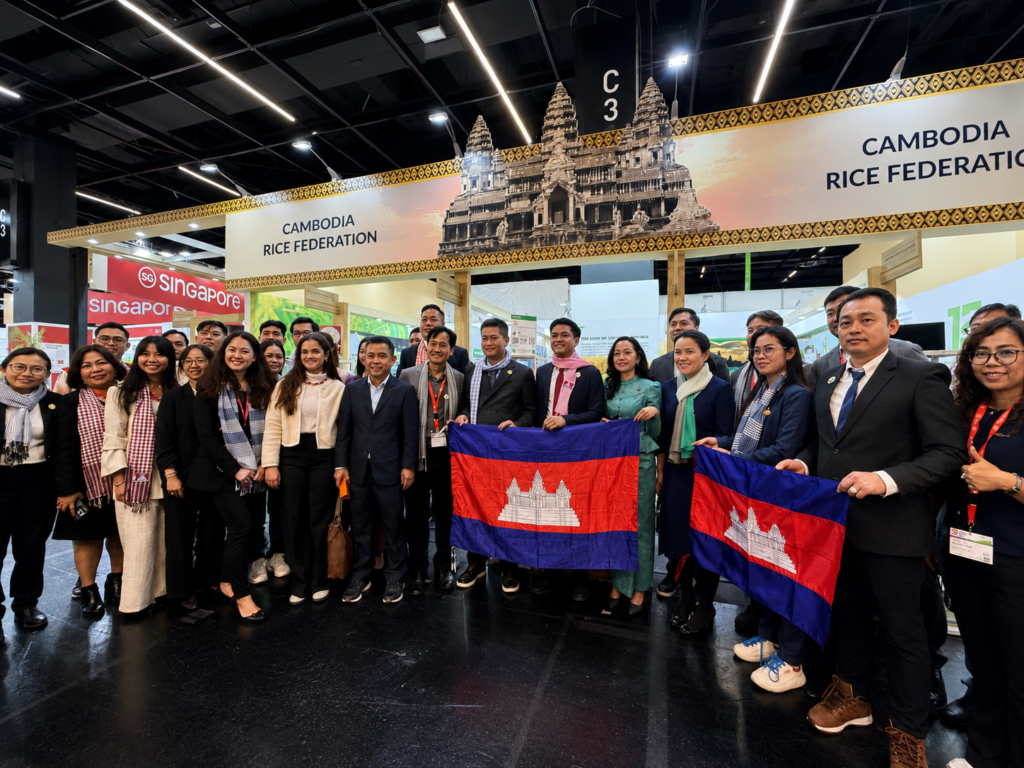
Primalis has also collaborated with strong international providers like Buhler, Satake, Maersk or anchor institutions such as the Agricultural and Rural Development Bank of Cambodia. We are not simply selling rice. We are representing Cambodia’s agricultural identity in global markets, and we treat that as both a commercial and a national responsibility.
Adding Value to Cambodian Agriculture
CLR: As Cambodia seeks to move beyond exporting raw commodities, how important is value-added processing, branding, and product development in strengthening the country’s agricultural sector?
Lynda: Exporting raw paddy is the least rewarding position in the value chain. Farmers work, land produce but the majority of the margin is captured somewhere else, in the milling, the branding, the distribution, the retail shelf abroad.
Cambodia has been comfortable with this, for too long. Value-added processing is now an economic imperative. Every kilogram of rice that leaves Cambodia as a finished, milled, packaged, and branded product rather than raw commodity represents a multiple in revenue, more jobs, and a stronger signal to global buyers that Cambodia is a serious, reliable supplier.
At Primalis, we have invested in quality and efficient milling capacity, in quality control at every stage, and in developing product formats that match the requirements of international buyers. The broader challenge is scaling this mindset across the sector. This is where policy support matters. We need more incentives for investment, access to financing, and technical assistance for small cooperatives to meet the quality thresholds that premium markets require.
Cambodia has raw material. What we need now is the capability to convert raw material into lasting economic value, for farmers, businesses, and for the country’s long-term trade position.
Leading in a Global Export Industry
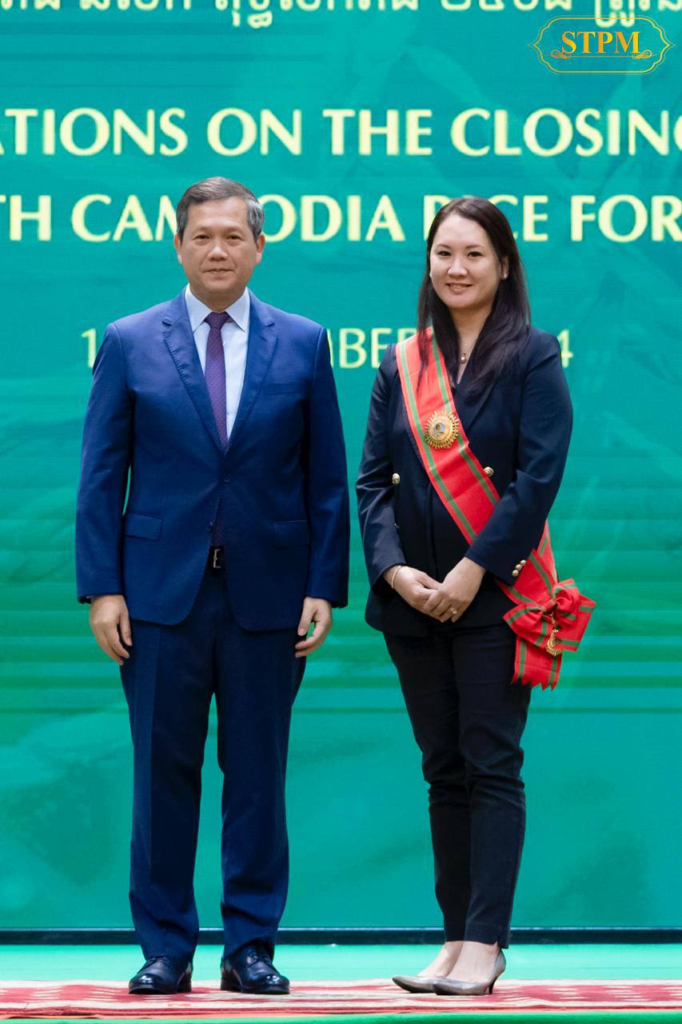
CLR: As CEO of one of Cambodia’s largest rice exporters and Vice Chairwoman of the Cambodia Rice Federation, how do you approach leadership in an industry that must balance farmers’ interests, international competitiveness, and long-term sustainability?
Lynda: Leadership in this industry requires several key aspects.
Farmers are the foundation. Without them, there is no rice, no export industry, no Federation, no Primalis. Every decision we make at the commercial level has consequences that travel back down the chain to the smallholder who planted in the hope of a fair return. It is a daily reality that shapes how we think about pricing, about purchase commitments, and about the relationships we build with farming communities.
International competitiveness is key. Our buyers in Europe, China, and the Middle East have options. They source elsewhere when Cambodia cannot deliver on quality, consistency, and reliability. Sentiment does not win tenders, performance does. So the discipline of running a commercially rigorous operation is critical to continue uplifting our farmers for the long term.
Sustainability is no longer a differentiator but a baseline requirement. Environmental standards, carbon footprint, water usage, chemical inputs, are questions our buyers ask, and the regulatory environment will only tighten. We must get ahead, not just catch up.
My approach to leadership has always been to be direct, to stay close to the operational reality, and to build teams that challenge me. The complexity of this industry demands honest feedbacks of what is working, what is not, and where we need to invest to remain competitive.
Inspiring the Next Generation of Women Leaders
CLR: What advice would you give to young Cambodian women who are interested in building careers in agriculture, agribusiness, international trade, or industry leadership?
Lynda: Go for it! In my view, industries such as agriculture, trade, finance, technology do not have a lot of space for women unless women create it themselves.
Work Hard and Work Smart. To build credibility in male dominated industries, it is very important to be confident in our own expertise, knowledge and strengths. We have to work twice as hard but so be it, let’s do it. We cannot wait for perfect moments.
Mentorship. I was fortunate to have role models early in my career at Airbus, and then in my family business. I could learn and show what I was capable to do. It enabled me to believe in my potential through failures and successes. Today, I train younger Cambodian women in my teams, provide them opportunities to travel with me to trade shows, conferences, seminars and join high level negotiations with international customers or partners.
Women from the province demonstrate even stronger mindset and eagerness to learn fast.
Purpose and ambition. I believe it is important to know why you are working hard and fighting to change the status quo. Whether we are building for ourselves, our families, our children, or our parents, we have to always remind ourselves that women carry a lot of responsibilities. Cambodia’s agricultural sector has a genuine role to play in the nation’s development and in feeding populations around the world.
The next generation of Cambodian women leaders will operate in a more connected, more competitive, and I hope more equitable world. What I want to pass on, is a world class brand, structure, culture, model build from Cambodia, in Cambodia that is creating world class value recognized globally. We come from very far, but we are only at the beginning of the Cambodian Rice story.
Explore the complete Cambodia Leadership Review – 50 Khmer Women Voices 2026 featuring exclusive interviews with Cambodia’s Top 50 Khmer Women leaders. Discover their journeys, leadership lessons, and vision for the Kingdom’s future.