

Cambodia Investment Review
Amnesty International has raised questions about the effectiveness of Cambodia’s ongoing crackdown on online scam operations, while the Cambodian government has defended its enforcement efforts and highlighted continued action against criminal networks.
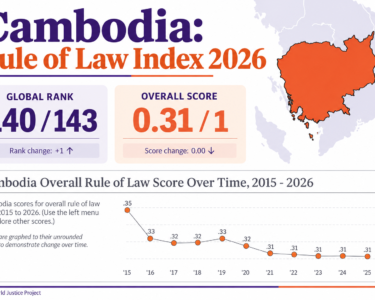
The discussion comes at a time when governance, human rights, and supply chain transparency are becoming increasingly important considerations for international investors, particularly those from markets with stringent Environmental, Social and Governance (ESG) requirements.
In a report released on June 8, Amnesty International said it found evidence of government intervention at 24 of 86 scam compounds identified by the organization. The report, titled Falling Through the Cracks: Cambodia’s “Crackdown” on Scamming Compounds, is based on interviews with 73 survivors from 16 countries who said they had been held in scam compounds during Cambodia’s anti-scam campaign, which began in July 2025.
According to Amnesty, authorities have announced the closure of more than 200 scam centers and the arrest of several alleged gang leaders since the campaign was launched. However, the organization said its findings suggest that a significant number of compounds may have avoided enforcement action and called for greater transparency around the results of the crackdown.
Montse Ferrer, Amnesty International’s Co-Regional Director, said stronger victim protection measures and greater public reporting would help build confidence in enforcement efforts.
The report also raised concerns about victim identification procedures, alleging that some trafficking survivors were not formally recognized as victims and therefore did not receive adequate support following their rescue or escape.
Governance and ESG Increasingly Important for Investment Decisions
While the issue is primarily a law enforcement and human rights challenge, it also has broader implications for Cambodia’s investment environment.
Globally, institutional investors, multinational corporations, and development finance institutions are placing greater emphasis on ESG considerations when evaluating markets and business partners. Governance standards, anti-corruption measures, labour protections, and efforts to combat human trafficking are increasingly viewed as factors that can influence investment decisions alongside traditional economic indicators.
For Cambodia, which continues to attract foreign direct investment into sectors such as manufacturing, logistics, technology, renewable energy, and real estate, demonstrating effective action against illicit activities is becoming an important component of maintaining international confidence.
Many global brands operating in Cambodia have also strengthened supplier due diligence requirements in recent years, reflecting growing expectations from consumers, shareholders, and regulators in major markets including Europe, North America, Australia, Japan, and South Korea.

Government Defends Progress
Cambodian authorities rejected Amnesty’s conclusions, describing the report as politically motivated and emphasizing that the government remains committed to dismantling scam operations.
Interior Ministry spokesperson Touch Sokhak said Cambodia has conducted major raids, arrested suspects linked to criminal networks, and worked closely with foreign governments and international law enforcement agencies to rescue and repatriate victims.
According to Sokhak, enforcement pressure has disrupted larger scam networks, forcing many groups to fragment and relocate.
“Cambodia is persistently targeting scam operations, leading these networks to fragment into smaller groups across various provinces,” he told local media.
Sokhak added that authorities have established national and sub-national committees to coordinate anti-scam efforts and are continuing to monitor suspected criminal activity throughout the country.
Balancing Growth and International Confidence
As Cambodia continues its push to attract higher-quality investment and strengthen its position within regional supply chains, analysts note that progress on governance, transparency, and human rights issues will remain important alongside economic reforms and infrastructure development.
While opinions differ regarding the effectiveness of current enforcement measures, both international organizations and Cambodian authorities agree that online scam operations remain a serious challenge requiring continued action and international cooperation.
For investors, particularly those subject to rigorous ESG screening requirements, the effectiveness of efforts to combat human trafficking, forced labour, and organized crime will likely remain an area of ongoing interest as Cambodia seeks to strengthen its reputation as a competitive and responsible destination for investment.