

Cambodia Investment Review
Cambodia’s workforce is entering a critical transition period as artificial intelligence accelerates changes across industries, with business leaders and policymakers warning that skills gaps, limited understanding of AI, and weak education-industry alignment remain key challenges to long-term competitiveness.
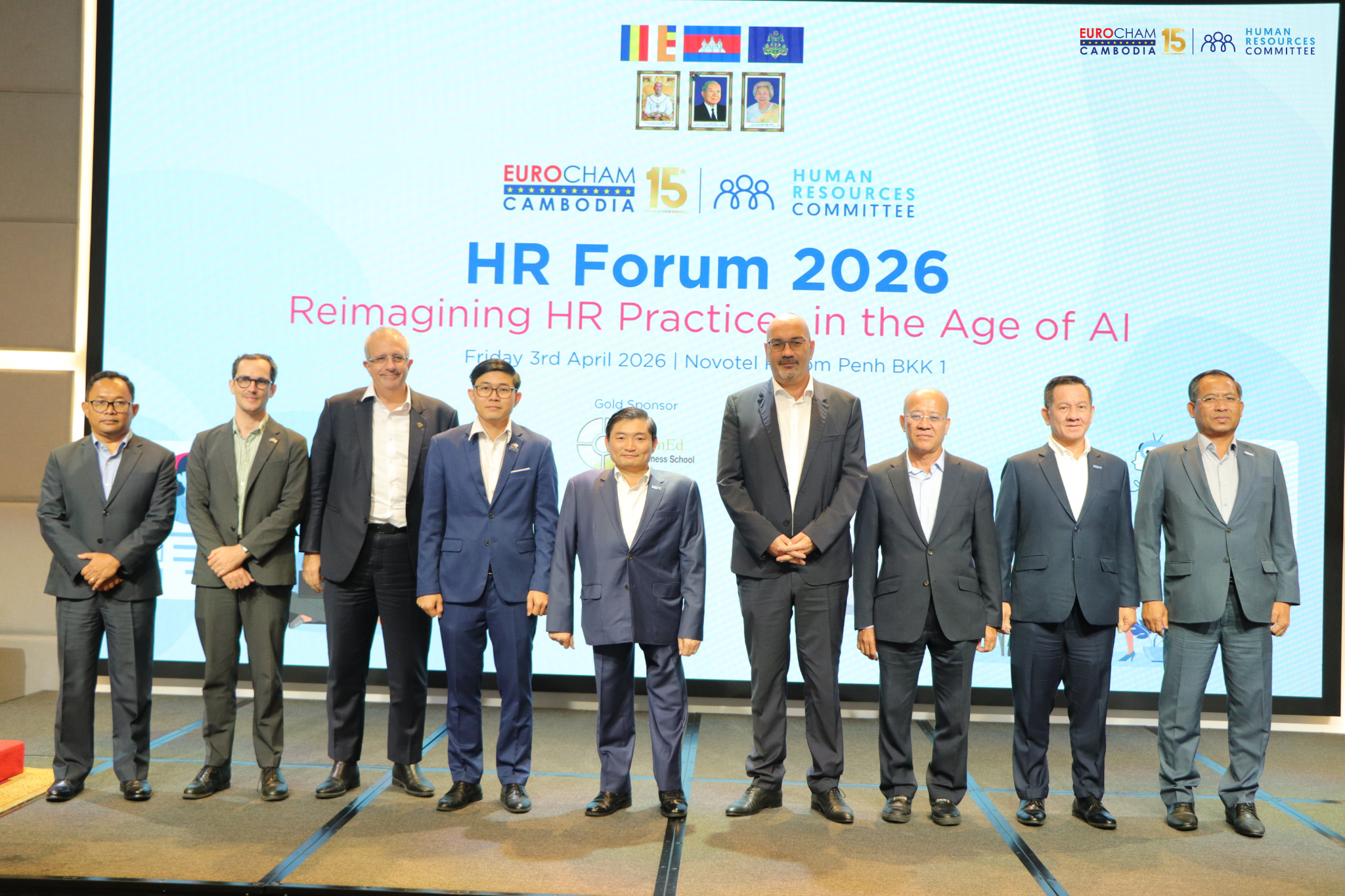
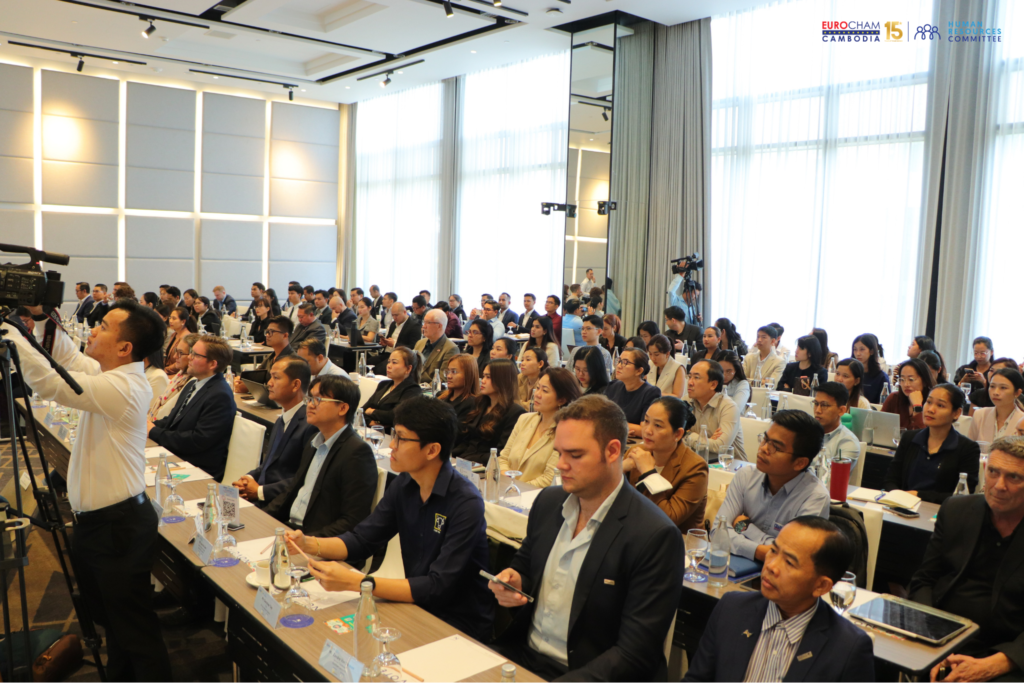
These themes were central to discussions at the EuroCham HR Forum 2026, held at Novotel Phnom Penh BKK1 on April 3, where senior representatives from government, academia, and the private sector gathered to examine how human resource practices must evolve in response to rapid technological change.
Government highlights need for workforce adaptation
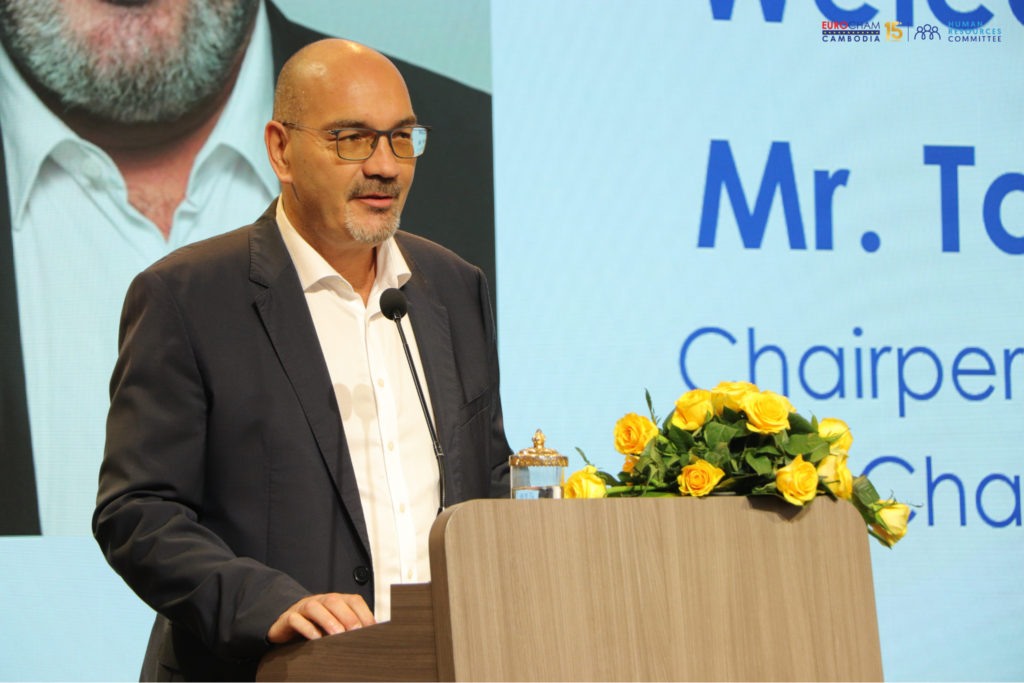
Opening the forum, Tassilo Brinzer, Chairperson of EuroCham Cambodia, emphasized the growing pressure on HR leaders to respond to digital transformation while maintaining compliance and strengthening workforce capabilities.
He noted that cross-sector collaboration will be essential to ensure Cambodia’s workforce remains competitive, particularly as businesses integrate more advanced technologies into their operations.
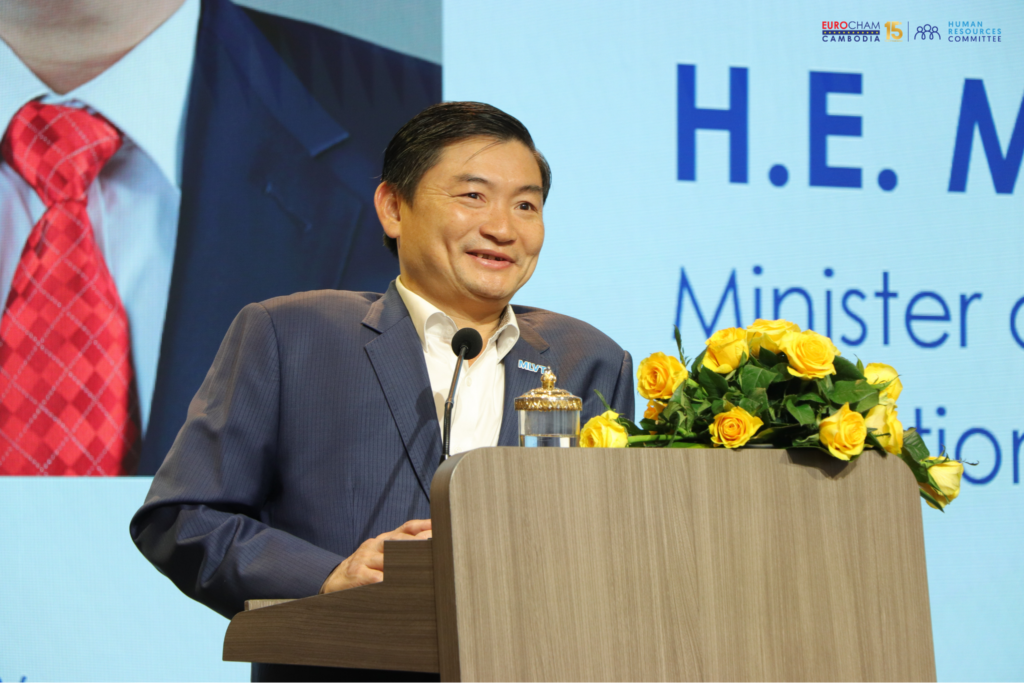
Representatives from the Ministry of Labour and Vocational Training, including Minister Heng Sour and Secretary of State Som Chamnan, outlined ongoing efforts to align labour policies with technological developments, including updates to regulations and a continued focus on skills development.
Despite these efforts, participants acknowledged that Cambodia still faces structural challenges in preparing its workforce for a more digital and automated economy.
Skills gap and education alignment remain key constraints
A key area of concern raised during the forum was the disconnect between education systems and industry needs, particularly as companies seek more job-ready graduates with practical experience.
Dr. Riccardo Corrado, EuroCham Board Member and Associate Professor at CamEd Business School, highlighted the importance of strengthening partnerships between universities and businesses to address this issue.
“The HR Forum was a great opportunity to connect HR representatives, educators, and government stakeholders, bringing together both the supply side and the demand side,” he said. “AI should not be seen as a threat… however, if it is not properly understood, it may be feared.”
Corrado added that concerns around job losses should not dominate the conversation, noting instead that “the way we live and work is changing at an increasingly fast pace due to technology, and we must adapt accordingly.”
Discussions also pointed to structured apprenticeships and work-based learning as practical solutions to bridge the skills gap, allowing students to gain hands-on experience while helping companies develop talent pipelines aligned with real-world needs.
AI brings efficiency gains but raises ethical and practical concerns
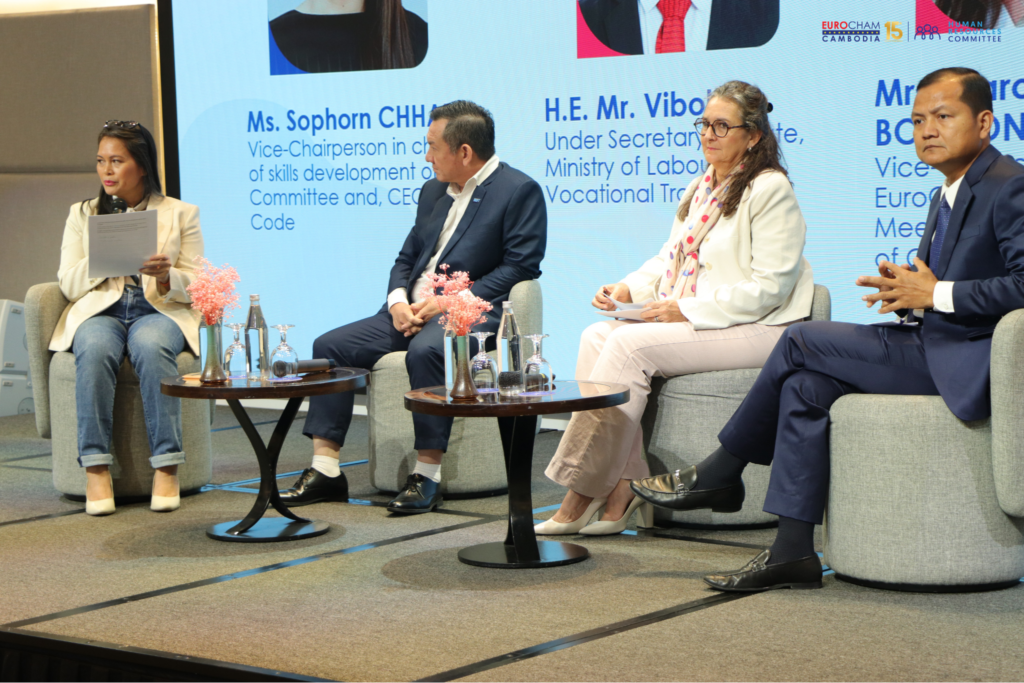
Artificial intelligence was identified as both an opportunity and a challenge for Cambodia’s HR sector, with panellists highlighting its potential to improve efficiency across recruitment, assessment, and workforce management.
However, speakers cautioned that adoption must be carefully managed to avoid unintended consequences, particularly in areas such as data privacy, ethics, and over-reliance on automated decision-making.
Narath Chheav, Chairperson of the EuroCham HR Committee, said the forum underscored the importance of balancing technological adoption with human oversight.
“AI can bring real benefits to HR and education by making work faster and more efficient, but there are still important concerns around data privacy, ethics, and the limited understanding of how to use these tools correctly,” he said.
He added that closer collaboration between the private sector, education institutions, and public stakeholders will be essential to align efforts and build a workforce capable of adapting to future demands.
The forum concluded with a broader call for coordinated action across sectors, with participants emphasizing that Cambodia’s long-term economic growth will depend on how effectively it can address these challenges while leveraging the opportunities presented by AI.
The strong turnout and engagement reflected increasing recognition among stakeholders that the intersection of technology, education, and workforce development will be a defining factor in the Kingdom’s economic trajectory.


