
Sonny Inbaraj Krishnan
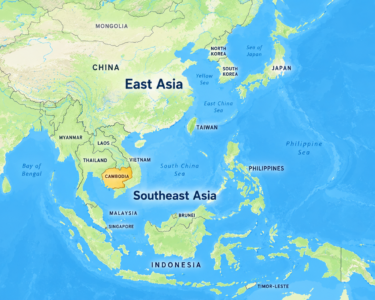
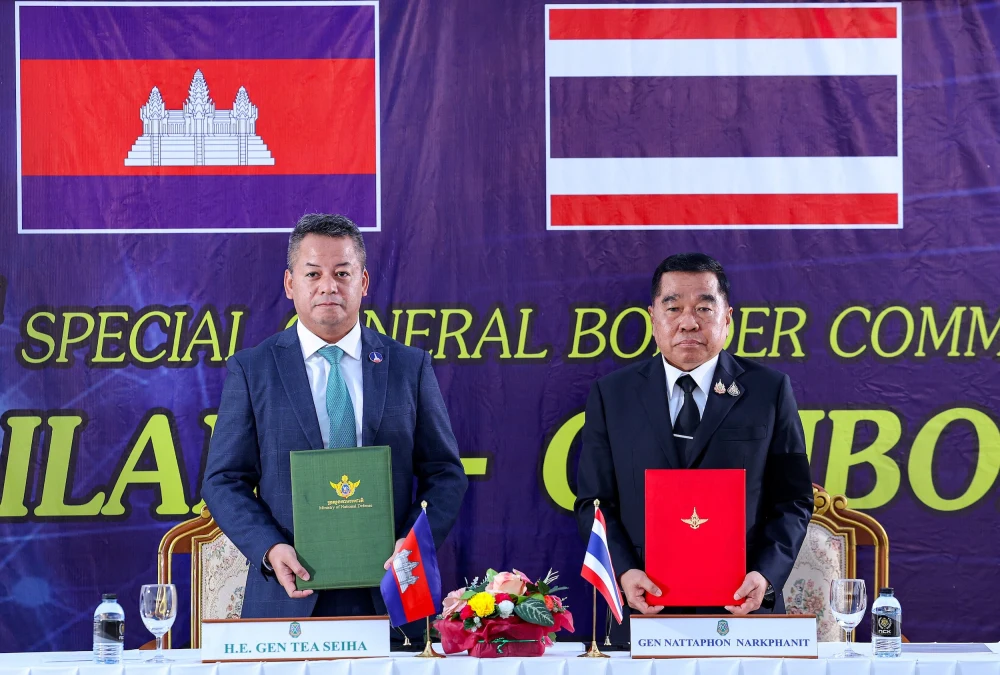
As tensions simmer along the Cambodia–Thailand border, a war thousands of kilometers away is quietly raising the cost of escalation. Rising oil prices driven by conflict in the Middle East could turn a local dispute into a far more expensive gamble for both Phnom Penh and Bangkok.
The looming energy shock threatens to magnify the economic consequences of tensions along the Cambodia–Thailand frontier. Oil prices have already climbed amid fears that instability in the Middle East could disrupt key shipping routes such as the Strait of Hormuz, through which roughly 20 percent of the world’s oil supply passes each day.
Even modest disruptions could push prices above $100 per barrel, according to several energy analysts.
For Cambodia and Thailand—both heavily dependent on imported fuel—such a spike would quickly raise the cost of transportation, electricity, and military operations. And it would arrive at a time when border tensions are already putting pressure on economic stability.
For two neighboring economies closely connected through trade, supply chains, and migrant labor, the convergence of regional conflict and global energy volatility raises an uncomfortable question: how long can either side realistically afford escalation?
The Immediate Economic Shock
Even relatively limited border clashes leave economic scars, and the Cambodia–Thailand tensions have been no exception. The effects were felt almost immediately—through disrupted trade routes, displaced communities, and a sharp decline in cross-border tourism.
Thailand is one of Cambodia’s most important trading partners. Bilateral trade between the two countries has expanded steadily in recent years, reaching roughly $9 billion annually. Thailand exports machinery, petroleum products, construction materials, and consumer goods to Cambodia, while Cambodia exports agricultural commodities such as cassava, maize, and mangoes.
When fighting erupted in 2025, several key border checkpoints were temporarily closed, cutting off vital trade corridors in provinces such as Oddar Meanchey, Banteay Meanchey, and Surin. Farmers were among the first to feel the shock. In northwestern Cambodia, many rely heavily on Thai traders who purchase cassava and maize for export and processing.
When those traders disappeared almost overnight, farmers were forced to sell elsewhere—often at prices 20 to 30 percent lower than before.
The disruption did not stop at agriculture. Thailand’s manufacturing sector is deeply integrated into regional supply chains that extend into Cambodia. Delays at the border can interrupt production networks supporting industries from agricultural processing to electronics components.
Tourism has also taken a hit. Thailand has long been one of the largest sources of regional visitors to Cambodia, particularly to the Angkor temples in Siem Reap. As border crossings closed and security concerns rose, visitor arrivals from Thailand dropped sharply.
That matters because tourism plays a vital role in Cambodia’s economy. Before the pandemic, the sector contributed roughly 8 to 10 percent of GDP and supported more than 600,000 jobs, directly and indirectly. Even short disruptions can ripple through hotels, restaurants, transport services, and small businesses.
The Growing Price of War
Trade disruptions are only part of the picture. The more enduring economic strain may come from the cost of sustaining military operations.
Thailand maintains one of Southeast Asia’s largest armed forces, with defense spending estimated at around $5.7 billion, roughly 1.3 percent of its GDP. Cambodia’s defense budget is far smaller—about $1.3 billion in 2024, or around 1.5 percent of GDP.
Yet the cost of military operations rises quickly once conflict begins. Deploying troops, transporting equipment, maintaining armored vehicles, and conducting air patrols all require extensive logistical support and fuel.
Modern fighter aircraft, for example, can cost $20,000 to $40,000 per hour to operate when fuel, maintenance, and personnel are included. Armored vehicles, artillery systems, and troop deployments add further expenses.
Defense analysts often estimate that wartime spending can climb to two to five times normal peacetime levels.
For Cambodia, whose fiscal resources are far more limited, prolonged operations could place serious strain on public finances. Thailand’s larger economy gives Bangkok greater room to maneuver, but even there the costs would mount steadily if tensions turned into sustained clashes.
Oil Prices: The Strategic Multiplier
The emerging crisis in the Middle East introduces another layer of uncertainty.
Global oil markets are highly sensitive to instability in the region because of its central role in energy supply. The Strait of Hormuz alone carries roughly 21 million barrels of oil per day, representing about one-fifth of global petroleum consumption.
Even the possibility of disruption can drive prices upward.
History offers clear reminders. Oil prices surged during the 1990 Gulf War and again during the 2003 invasion of Iraq, triggering inflation and economic disruptions across energy-importing countries.
If the current conflict pushes prices above $100 per barrel, the effects will be felt quickly across Southeast Asia.
For Cambodia and Thailand, higher oil prices translate directly into higher transportation costs, more expensive electricity generation, and rising production costs across industry.
Military operations are especially fuel-intensive. Fighter jets, naval patrol vessels, and armored vehicles consume enormous quantities of fuel. As global energy prices climb, the cost of maintaining these deployments rises alongside them.
Put simply, an oil shock can make conflict far more expensive.
Cambodia’s Structural Energy Risk
Cambodia is particularly exposed to rising fuel costs. The country imports nearly all of its petroleum products, and Thailand has historically been one of its key suppliers, accounting for roughly 30 percent of Cambodia’s fuel imports in recent years.
However, following the June 2025 ban on fuel imports from Thailand amid escalating border tensions, Phnom Penh moved quickly to diversify its energy procurement, turning to suppliers in Singapore, Vietnam, and Malaysia.
Even so, Cambodia remains structurally vulnerable to external fuel shocks. Any disruption in supply can quickly ripple through the economy, affecting transportation, manufacturing, and agriculture.
Higher fuel prices also feed directly into inflation: as transport and production costs rise, the price of everyday goods — including food — tends to follow.
For Cambodian households already facing economic pressures — from declining remittances or unstable employment — these increases can be difficult to absorb. At the same time, Cambodia’s limited fiscal space makes it harder for the government to cushion the impact through subsidies or emergency spending.
Thailand’s Economic Buffer—But Not Immunity
Thailand’s economy is far larger and more diversified than Cambodia’s. With a GDP of roughly $500 billion, compared with Cambodia’s $45 billion, Bangkok has greater resilience in the face of economic shocks.
But Thailand is not immune. Tourism is one of the country’s most important industries, contributing close to 20 percent of GDP when both direct and indirect effects are included. Even localized tensions can influence how international travelers perceive safety and stability. That includes visitors from the Middle East, a growing source of high-spending tourists for Thailand, whose travel patterns could shift as conflict and rising oil prices reshape regional mobility.
Thailand’s export-driven manufacturing sector also depends heavily on smooth regional logistics. Disruptions along the Cambodian border can affect supply chains, labor mobility, and cross-border trade.
Border provinces on the Thai side often feel these effects first, experiencing immediate economic losses when movement slows or stops.
Why Escalation May Prove Economically Unsustainable
Taken together, these pressures create strong economic incentives for restraint.
For Cambodia, the fiscal burden of sustained military operations could escalate quickly. For Thailand, the broader economic risks—from tourism losses to rising energy costs—would also deepen over time.
But the real pressure may come from outside the region. If instability in the Middle East continues to push global oil prices higher, the cost of sustaining border tensions could rise far faster than either government anticipates.
What began as a territorial dispute along a remote stretch of frontier is increasingly shaped by forces far beyond it.
In a world of volatile energy markets and tightly interconnected economies, even a localized conflict can carry a global price—and that price may ultimately make escalation the most expensive option of all.