
By Suon Mach
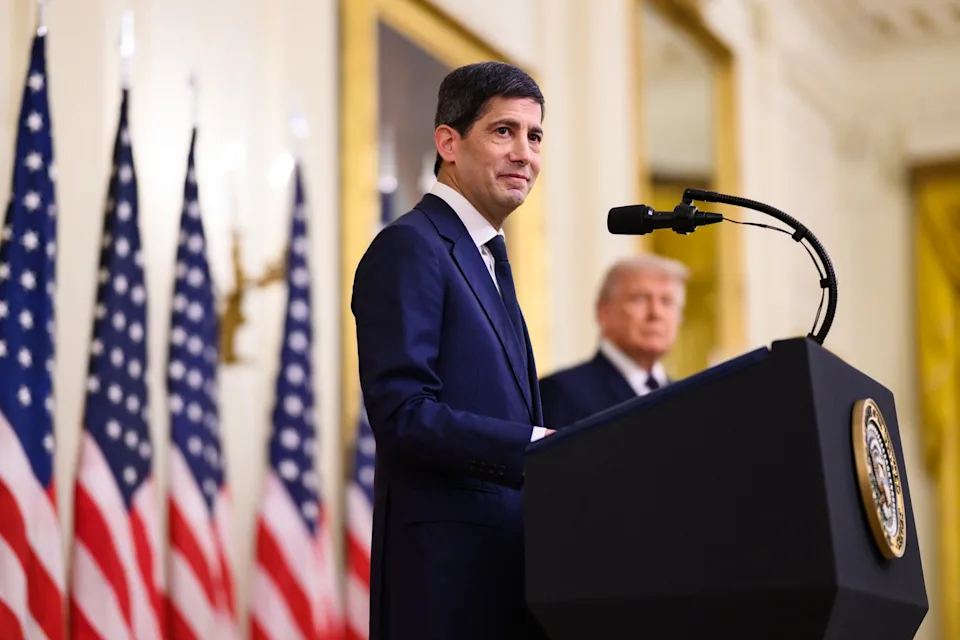
The appointment of Kevin Warsh as the new chair of the U.S. Federal Reserve is attracting attention far beyond the United States. The Fed’s main job is to run the U.S. economy, but its decisions about interest rates, inflation and monetary policy can often have knock-on effects around the world financial system, even affecting the smallest of economies.
Warsh is an American economist, lawyer and financier who became Chair of the U.S. Federal Reserve on May 22. He was a member of the Board of Governors of the Federal Reserve from 2006 to 2011 and played a leading role during the global financial crisis of 2008. After leaving the Board in 2011, he was the Shepard Family Distinguished Visiting Fellow in Economics at Stanford University’s Hoover Institution and a lecturer at the Stanford Graduate School of Business.
Warsh steps into the role at a time of mounting uncertainty surging inflation, rising mortgage rates, and historic lows in consumer sentiment, alongside rising political pressure on the central bank’s independence. He arrives with a list of changes he wants to make, though he may face resistance from other policymakers and the weight of institutional tradition. Among his stated goals is reducing the Fed’s balance sheet, which remains well above pre-2008 levels.
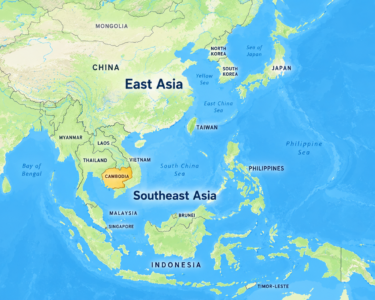
For Cambodia, these dynamics are not abstract. The country sits in an unusual position: given the high degree of dollarization of the Cambodian economy, shifts in U.S. monetary policy transmit more directly here than in most countries in the region.
The most immediate concern is capital flows. If Warsh keeps interest rates elevated or signals tighter monetary conditions ahead, investors may pull money out of emerging markets in favor of higher-yielding U.S. assets. Cambodia, which saw investment approvals surge to $10 billion in 2025 a 45 percent year-on-year increase and has been deepening its integration into global supply chains, could find that momentum harder to sustain in a high-rate global environment.
Trade is the other major channel. Cambodia’s garment, footwear, and travel goods exports reached $15.5 billion in 2025, up 15.7 percent year on year, and together account for around 50 percent of the country’s total export value. The United States alone absorbs roughly 36 percent of Cambodia’s merchandise exports making it by far the single most important destination market. If tighter Fed policy slows U.S. consumer spending, demand for Cambodian-made goods could soften, squeezing factory employment and government revenues at the same time.
Import costs add another layer of pressure. Cambodia relies heavily on fuel, machinery, construction materials, and industrial inputs priced in U.S. dollars. When global dollar conditions tighten, those costs can rise even without a change in the exchange rate itself compressing the margins of manufacturers and raising prices for ordinary Cambodians.
The picture is not entirely negative, however. Warsh has articulated a stronger, not hotter economic thesis, arguing that productivity gains particularly from artificial intelligence (AI) could allow the Fed to achieve price stability without severely damping growth.
If he succeeds in bringing down U.S. inflation without triggering a sharp slowdown, global financial conditions could become more stable and predictable. That kind of environment tends to support investor confidence and sustain demand for exports from countries like Cambodia.
Economic growth in Cambodia is projected to decelerate to around 4.0 percent in 2026, with risks tilted to the downside amid financial sector vulnerabilities and external shocks. Whether Warsh’s tenure at the Fed adds to those headwinds or helps stabilize the global conditions Cambodia depends on will be one of the more consequential questions for the country’s economy in the years ahead.
Cambodia has limited power to influence what happens in Washington. What it can do is ensure its own economic foundations export diversification, financial sector resilience, and the gradual deepening of the riel’s domestic role are strong enough to weather whatever decisions come out of the Federal Open Market Committee.
The Fed sets policy for America. But small, open economies like Cambodia are the ones that live with the consequences.
Suon Mach is a second-year master’s degree student in Development Studies at the Royal University of Phnom Penh.