
Cambodia has rapidly advanced its digital transformation, with public administration reform at its core. The Digital Government Policy 2022-2035 envisions a connected, citizen-centric state, aiming to modernize services, cut corruption, boost efficiency and foster sustainable growth and happiness.
Despite clear policy direction, implementation of digital public administration remains uneven.
Fragmented systems, data silos, complex administrative procedures, and capacity constraints challenge the effectiveness of reform.
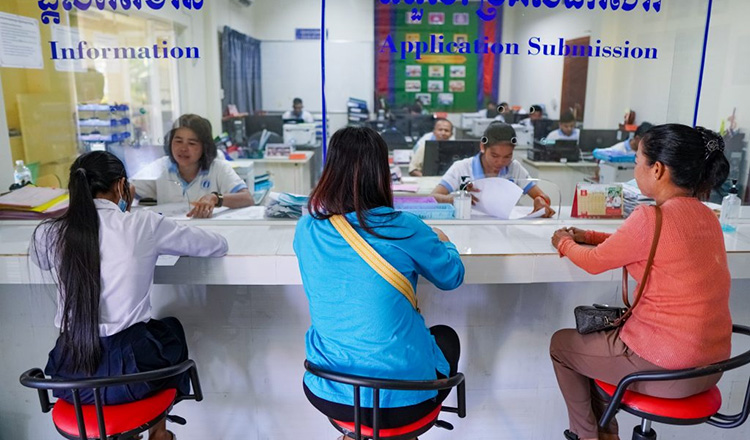
Cambodia has introduced initiatives such as One Window Service Offices (OWSOs), online business registration, a digital land management service, and digital civil registration services, yet integration and standardization remain limited.
A Structural Transformation In State-Society and State-Market Relations
Digital public administration reform in Cambodia constitutes a structural transformation in state-society and state-market relations rather than a purely technological upgrade.
Persistent inefficiencies in service delivery are characterized by lengthy procedures, inconsistent administrative requirements and complex bureaucratic processes. They continue to constrain business activity and undermine public confidence in public institutions.
Paper-based administrative systems increase exposure to corruption risks by enabling flexible practices and informal payments. In contrast, digitalization can mitigate these risks by enhancing transparency through standardized procedures, reducing direct interactions, and enabling traceable audit mechanisms.
Reform efforts are further obstructed by institutional fragmentation, as line ministries frequently operate isolated and non-interoperable digital systems, resulting in duplicated processes and inconsistent data management.
These systemic constraints are particularly pronounced at the subnational level, where provincial administrations and One Window Service Offices often face disparities in digital infrastructure, human resource capacity, and financial support, underscoring the importance of a coordinated, inclusive national approach to digital governance reform.
China’s rapid transformation of digital governance offers valuable comparative insights. At the national level, authorities have recognized Fujian province for its innovative, citizen-focused digital governance models. Cambodia can use lessons from this province to inform its transition to digital public administration.
Since the early 2000s, China has implemented significant digital governance reforms. National-level policymakers have guided the digitalization of administrative services with the Overall Layout Plan for Digital China Construction (2023), which provides a comprehensive top-level design for digital transformation.
The plan adopts a “2522” strategic framework that prioritizes digital infrastructure and data systems, coordinates the development of digital government with the digital economy and society, and urges reforms for institutional and technological innovation systems.
Within this framework, digital government is a key pillar. It emphasizes integrated online service platforms, data sharing across agencies, and citizen-oriented service delivery.
This national strategy has enabled provinces such as Fujian to innovate locally, while keeping unified standards and governance principles.
Accessibility, Convenience, and Efficiency Of Public Services
Two notable initiatives are Fujian’s integrated government service platform “Wanghaoban” and its “One Matter” integrated service packages. Both aim to improve the accessibility, convenience, and efficiency of public services, directly supporting the daily lives of citizens and businesses.
A key lesson from Fujian is the prioritization of administrative simplification before digitalization. The province conducted systematic reviews of service workflows, eliminated redundant procedural requirements, and standardized administrative forms before introducing integrated digital platforms.
For Cambodia, similar efforts in process mapping and regulatory streamlining are essential to avoid the risk of “digitalizing inefficiency” and to ensure that digital tools genuinely enhance service delivery.
Fujian’s construction of integrated digital service platforms demonstrates the benefits of a unified entry point for public services. Provincial authorities have linked their systems with municipal innovations in cities such as Xiamen and Fuzhou, which increased service accessibility, enabled real-time application tracking, and improved inter-agency coordination.
Cambodia can likewise move toward a unified national digital portal, integrating it with One Window Service Offices to boost administrative efficiency and accountability.
Moreover, Fujian has a coherent data governance framework. The province established standardized data protocols, interoperability arrangements, and secure data-sharing mechanisms across administrative levels, ensuring consistency while allowing local governments flexibility in service delivery.
These institutional arrangements underscore the importance of clear data governance and privacy safeguards as prerequisites for sustainable digital reform in Cambodia.
Fujian’s reforms show that subnational administrative capacity is crucial. Local officials receive ongoing training, with performance monitoring to support the implementation of digital services. Cambodia could use this approach.
Targeted training for One Window Service Office staff, with performance indicators and citizen feedback, can strengthen accountability and drive continuous improvement.
In conclusion, digital public administration reform is a critical enabler of efficient governance and economic development for Cambodia, particularly by attracting foreign direct investment and optimizing the benefits from free trade agreements.
The experience of Fujian province illustrates that successful digitalization depends not on technology alone, but on prior administrative simplification, coherent data governance and sustained investment in subnational capacity.
By selectively adapting these lessons to its own institutional context, Cambodia can strengthen service delivery, enhance transparency and foster a more conducive environment for economic development and the well-being of its people.
Kong Pitou is international relations manager at Youth House for Cambodia-China Friendship