

Cambodia Investment Review
EuroCham Cambodia has convened government officials, telecom executives and private-sector leaders for a high-level discussion on the country’s 5G rollout, highlighting both the rapid progress since launch and the structural challenges that could determine its long-term economic impact.
The Breakfast Talk, held on February 26 at TRIBE Phnom Penh, brought together regulators, operators, financial institutions and digital platforms under the theme “5G in Cambodia: Bottlenecks, Opportunities, and the Way Forward.”
The event follows Cambodia’s official nationwide 5G launch on January 1, 2026, marking a significant milestone in the Kingdom’s digital transformation agenda.
Government Signals Strong Start, Emphasises Standards
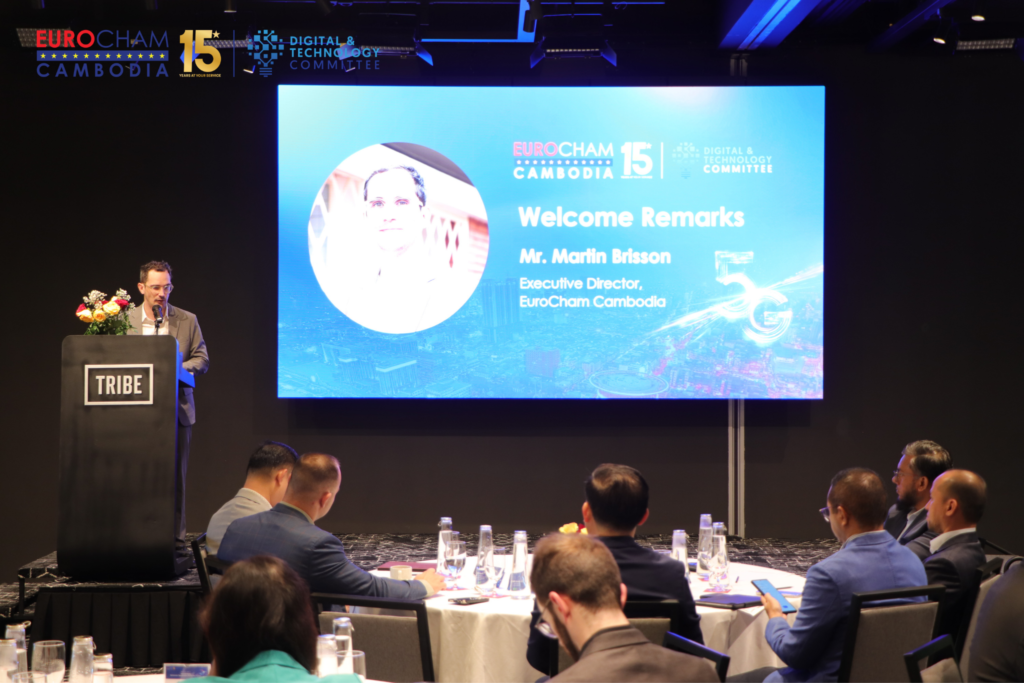
Opening the event, Martin Brisson, Executive Director of EuroCham Cambodia, described 5G as more than a connectivity upgrade, pointing to its potential to transform productivity, public services and industry.
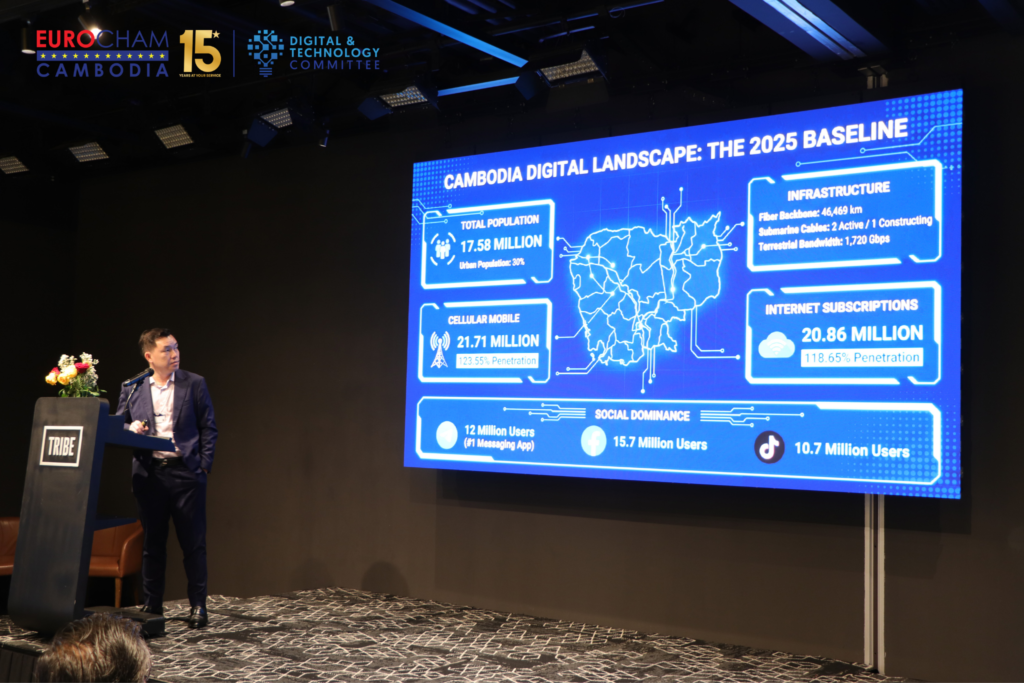
A keynote presentation by H.E. Srun Kimsann, Commissioner at the Telecommunication Regulator of Cambodia, outlined the current state of deployment. He noted that Cambodia’s competitive telecom market and high mobile penetration rates have supported a relatively swift rollout.
According to the regulator, more than 1,494 5G stations are already operational nationwide. Operators are required to continue expanding coverage in line with regulatory commitments in the coming years. Kimsann stressed that safety, compliance and service quality remain central pillars of the government’s approach, seeking to reassure stakeholders amid global debates around spectrum management, infrastructure security and public health standards.
“Our priority has always been to introduce 5G in a way that ensures quality, safety, and national readiness. Cambodia now has one of the most competitive telecom markets in the region, supported by strong penetration rates and a regulatory framework designed for long‑term stability. With the foundations in place, our focus is on expanding coverage, strengthening trust, and ensuring that 5G drives meaningful transformation for businesses, communities, and the broader digital economy.” H.E. Mr. Srun Kimsann, Commissioner, the Telecommunication Regulator of Cambodia said.
The regulator framed the launch as the product of coordinated groundwork, including spectrum allocation and regulatory preparation, aimed at positioning Cambodia to remain regionally competitive in digital connectivity.
Industry Flags Site, Energy and Data Gaps
While early adoption indicators appear positive, telecom operators highlighted practical constraints that could slow expansion if left unaddressed.
Muhammad Adeel Israr, Chief Technology and Information Officer at Smart Axiata, said device readiness and user migration to 5G networks have progressed quickly. However, he pointed to infrastructure bottlenecks including site availability, backhaul capacity and energy reliability.
He also underscored the importance of strengthening local data infrastructure to support advanced 5G applications, including enterprise solutions and industrial use cases.
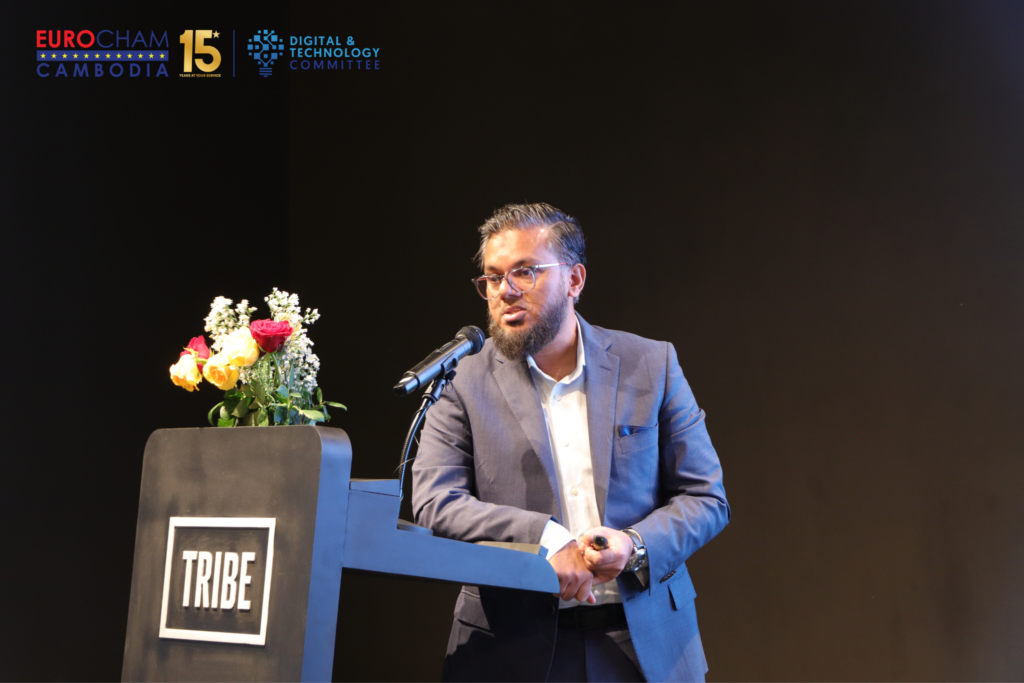
These constraints, he argued, represent opportunities for Cambodia to “leapfrog” if regulators and operators remain aligned on investment and long-term planning.
The discussion reflects broader regional dynamics, where 5G success increasingly depends not only on radio access networks but on data centres, fibre backhaul, cloud infrastructure and stable power supply.
Focus Shifts To Monetisation And Ecosystem Readiness
A panel discussion moderated by Kenneth Tang, Vice-Chairperson of EuroCham’s Digital & Technology Committee, expanded the conversation to commercial viability and ecosystem readiness.
Panelists included H.E. Srun Kimsann, Sharif Lukman Mahfoedz of Smart Axiata, Kang Sovannarot of Grab and Chim Poly of Canadia Bank.
Speakers examined how 5G could unlock new revenue streams through industrial applications, data-driven services and platform-based innovation, rather than relying solely on consumer mobile upgrades.
Tang said Cambodia’s 5G rollout represents a strategic opportunity to reshape industries and accelerate economic growth, but stressed that collaboration between regulators, operators and the private sector would determine whether that potential is realised.
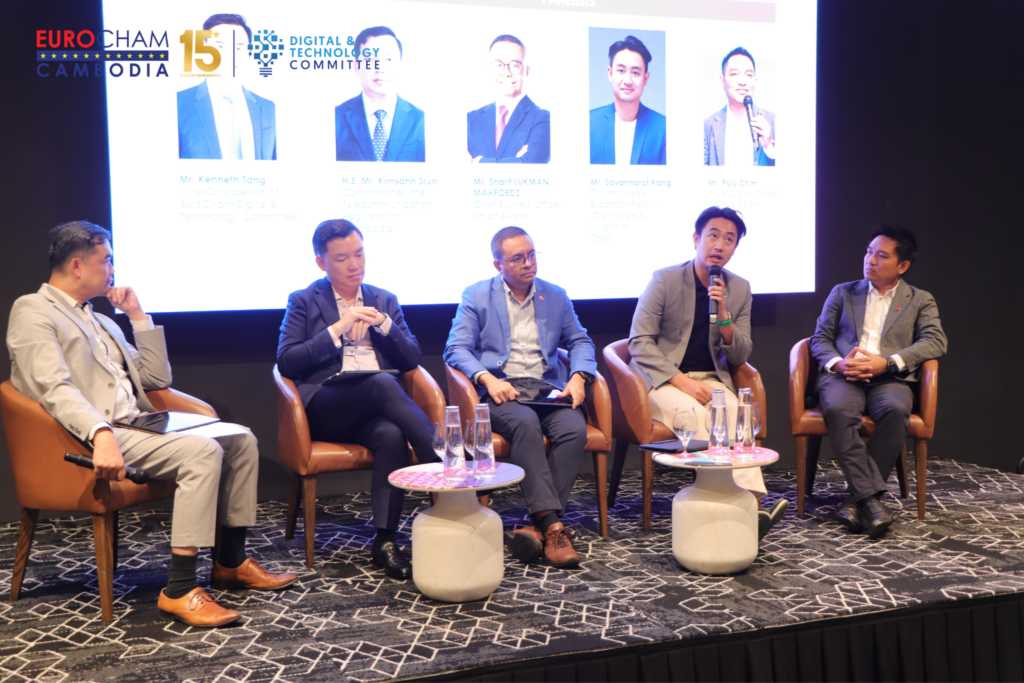
Panelists agreed that monetisation pathways would depend on use-case development across sectors such as mobility, financial services and enterprise solutions. They also emphasised the need for regulatory clarity and sustained investment in digital infrastructure.
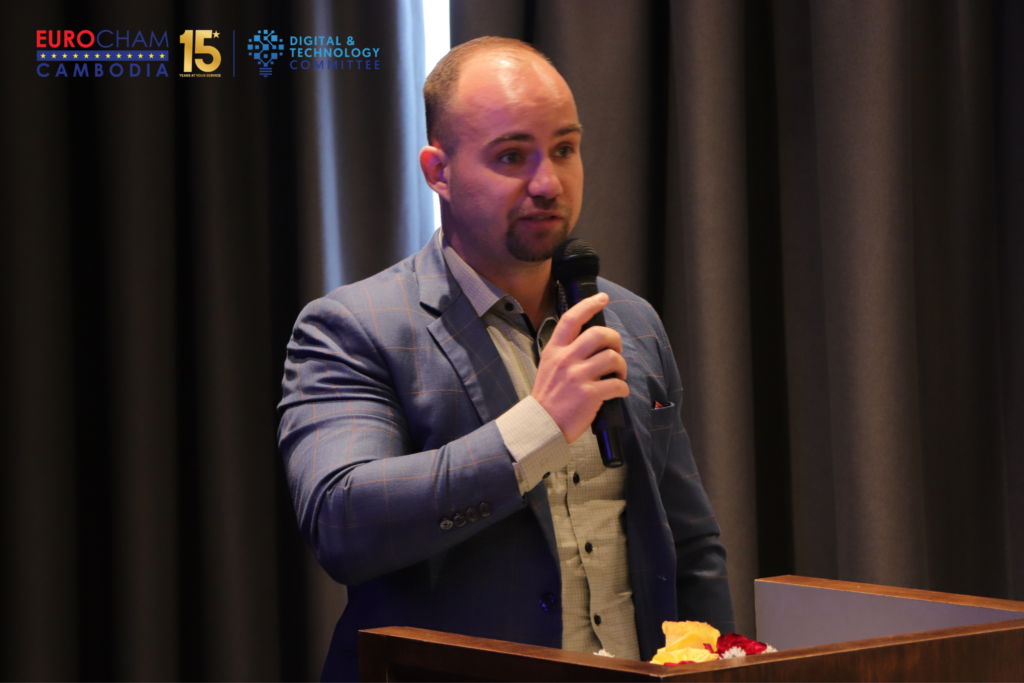
Closing remarks by Thomas Schings, Vice-Chairperson of the Digital & Technology Committee and General Manager of RGX, highlighted encouraging momentum in local data-centre initiatives and connectivity investments, while cautioning that coordinated action remains essential.
Founded in 2011 by French, German and British business associations, EuroCham Cambodia now represents more than 400 members across seven national chapters spanning 23 European countries. The chamber engages in policy dialogue with the Royal Government of Cambodia and advocates for an improved business and investment environment.
As Cambodia moves from launch to large-scale implementation, the debate is shifting from coverage to capability. The next phase of 5G development will likely hinge on how effectively infrastructure gaps are addressed and how quickly industry builds scalable applications that justify continued capital expenditure.
For business leaders, the message from the forum was clear: 5G’s promise lies not simply in faster speeds, but in its capacity to underpin a more data-driven, innovation-led economy.