
Cambodia Investment Review
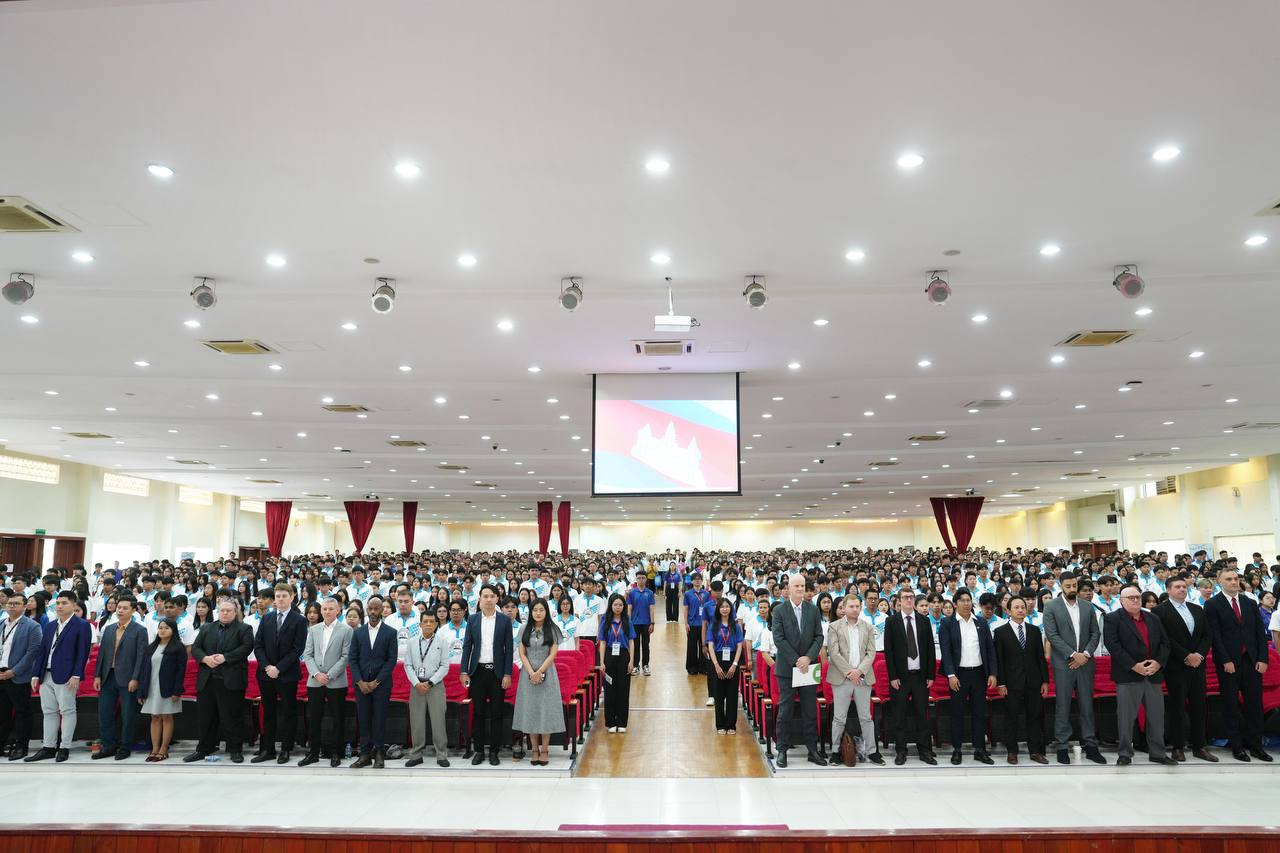
The Australian Centre for Education (ACE) marked the graduation of its General English Program and Diploma Program students from Term 4, 2025, underscoring the growing importance of English proficiency in education pathways and workforce readiness across Cambodia.
The ceremony brought together students, faculty, and families to recognise academic achievement and sustained commitment to learning. Beyond certificates and formal proceedings, the event reflected a broader shift in Cambodia’s education landscape, where internationally aligned skills—particularly communication—are increasingly viewed as foundational to further study, cross-border careers, and leadership development.

ACE’s presence at the ceremony also carried historical significance. Established in Cambodia in 1992 by IDP Education, the institution has supported generations of learners through periods of economic transition, regional integration, and rising demand for globally relevant skills. Over more than three decades, ACE has become a familiar fixture within the country’s private education sector, adapting its programmes alongside changes in technology, labour market needs, and student expectations.
English proficiency as a gateway to opportunity
Speaking at the event, ACE Principal Ashley Irving highlighted English proficiency as a practical enabler of opportunity rather than a purely academic achievement. As Cambodia becomes more integrated into regional and global markets, the ability to communicate clearly and confidently continues to shape access to international education, professional networks, and employment pathways.

This demand is reflected in the institution’s scale and reach. ACE records more than 100,000 enrolments annually, with learners representing over 30 nationalities. Its programmes are delivered through a combination of on-campus and virtual classrooms, allowing students from different age groups, academic levels, and professional backgrounds to access training aligned with modern learning needs. This blended delivery model mirrors broader regional trends, where flexibility and skills-focused education are gaining momentum.
ACE’s approach has also received international recognition. The institution was named Language Educator of the Year in 2021 and received the Digital Innovation award in 2022 at The PIEoneer Awards in London, highlighting its efforts to combine academic quality with innovation in teaching delivery.
Student outcomes beyond language learning
Graduate reflections shared during the ceremony illustrated how English education extends beyond grammar and vocabulary. Leang Siv Ing, described how classroom presentations, structured discussions, and creative projects helped her build confidence in public speaking and self-expression. She noted that regular practice and supportive instruction enabled her to overcome earlier communication challenges while preparing her for further studies linked to environmental fields.

Such experiences point to a shift toward applied learning within language education. Increasingly, English programmes incorporate critical thinking, collaboration, and presentation skills alongside language instruction—competencies that employers value in professional environments where teamwork and clarity of communication are essential. English proficiency is therefore being positioned not only as a language skill, but as a practical tool for leadership, problem-solving, and professional growth.
Long-term skills development and workforce readiness
Another graduate, Thai Saphryna, highlighted how sustained English education contributed to both academic and personal development. Alongside improvements in speaking and writing, she reflected on building resilience, self-discipline, and confidence through continuous learning. Managing pressure and turning challenges into motivation, she noted, became an important part of her educational journey.
From a broader perspective, the graduation ceremony underscored the role of private education providers in Cambodia’s human capital development. As the country seeks to enhance workforce readiness and attract higher-value investment, English language education remains a core enabler—supporting employability, international engagement, and long-term economic competitiveness.

For ACE, the event was both a celebration of student achievement and a reminder of its long-standing role within Cambodia’s education ecosystem. After more than 30 years in the Kingdom, the institution continues to evolve alongside national ambitions, offering programmes that span Children’s Programmes, Young Learners, and adult General English courses.
For the graduating cohort, the ceremony marked the close of one chapter and the start of another—carrying forward not only language proficiency, but the confidence and capabilities needed to navigate an increasingly connected world.