

Cambodia Investment Review
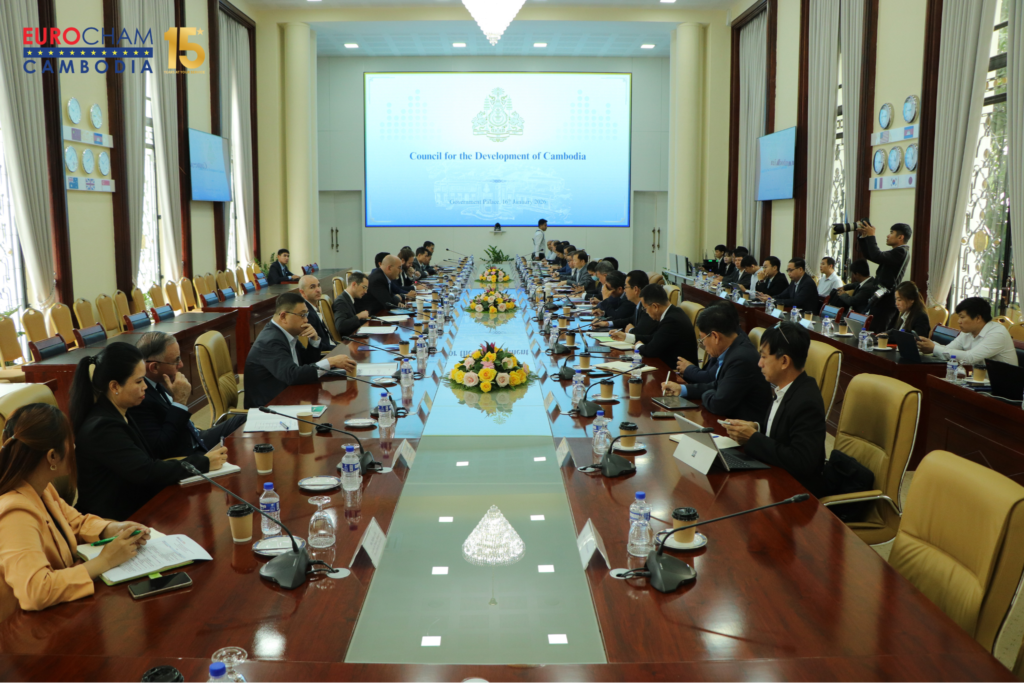
Cambodia’s push to strengthen its logistics competitiveness took another step forward this week as EuroCham Cambodia and the Council for the Development of Cambodia held a second high-level coordination meeting focused on improving operational efficiency at the Sihanoukville Autonomous Port (PAS).
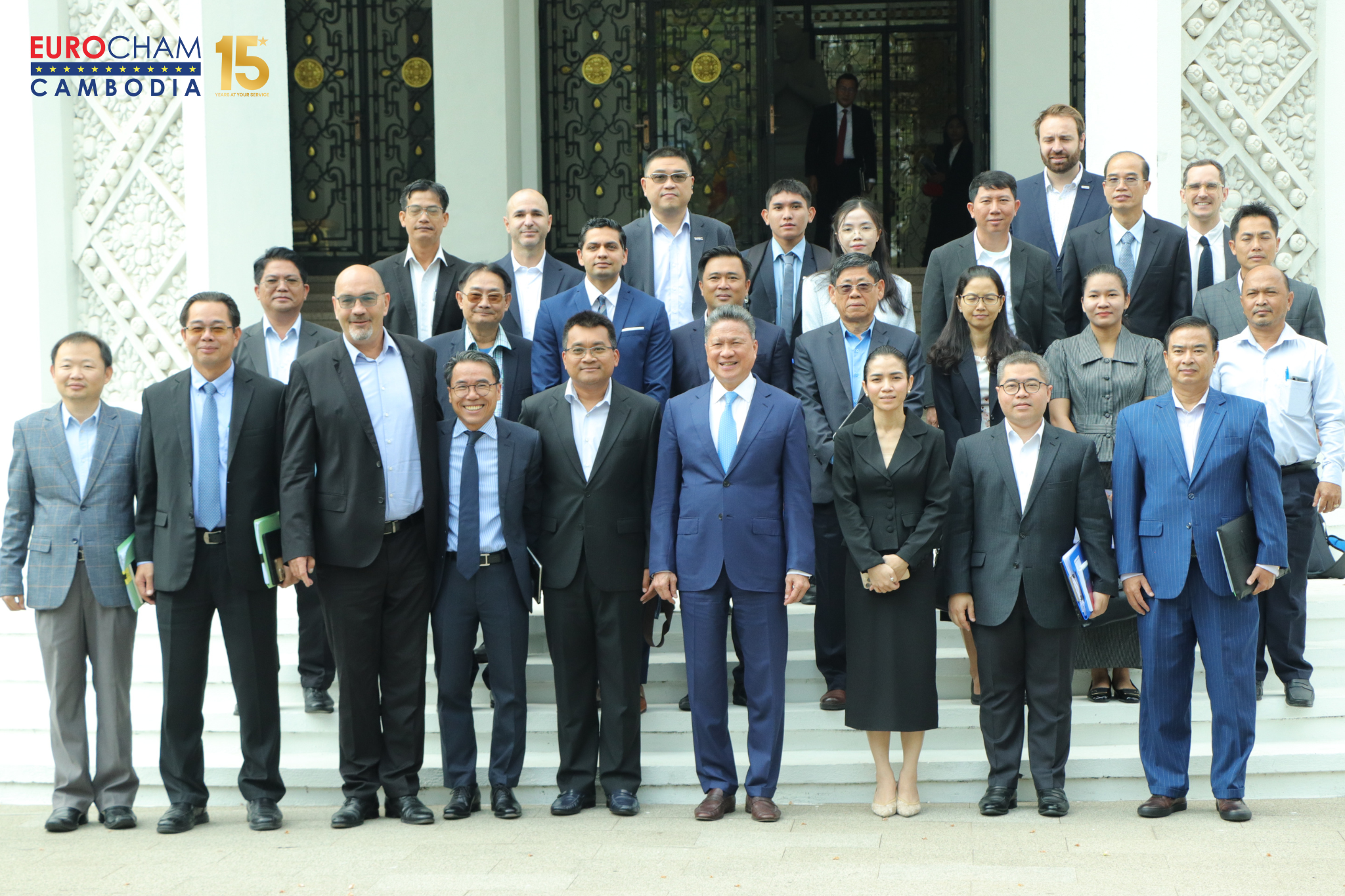
The meeting, hosted at the CDC and chaired by Sun Chanthol, Deputy Prime Minister and First Vice-Chairperson of the CDC, brought together government officials, port authorities, and private-sector logistics experts to assess progress and accelerate reforms at Cambodia’s only deep-sea port.
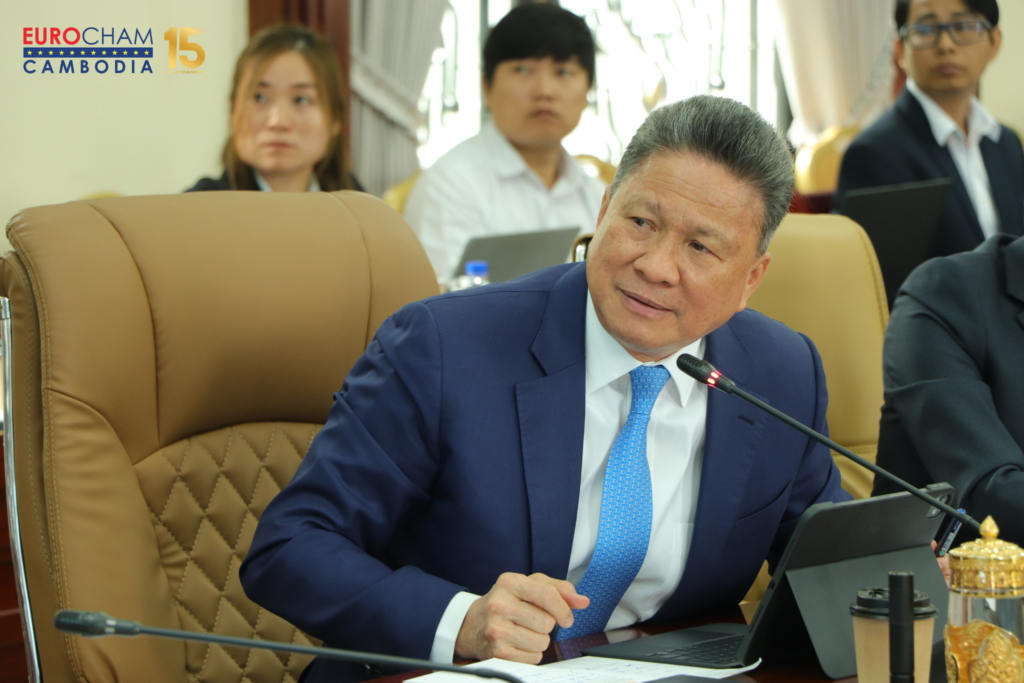
EuroCham was represented by Tassilo Brinzer, Vice-Chairperson of EuroCham Cambodia, alongside members of its Transport & Logistics Committee, who presented a series of operational recommendations based on on-the-ground experience across shipping, freight forwarding, and manufacturing supply chains.
Rising volumes put pressure on Cambodia’s main gateway
At the centre of discussions was the rapid growth in container traffic moving through PAS. Port volumes are expected to approach 1.5 million TEUs this year, a level that will test existing infrastructure ahead of a major expansion phase scheduled for completion in 2027.
Read More: Wing Bank Named Official Payment Partner of Sihanoukville Autonomous Port
While recent investments and procedural reforms have improved throughput, stakeholders acknowledged that the near-term challenge lies in managing congestion and maintaining reliability as exports continue to rise.
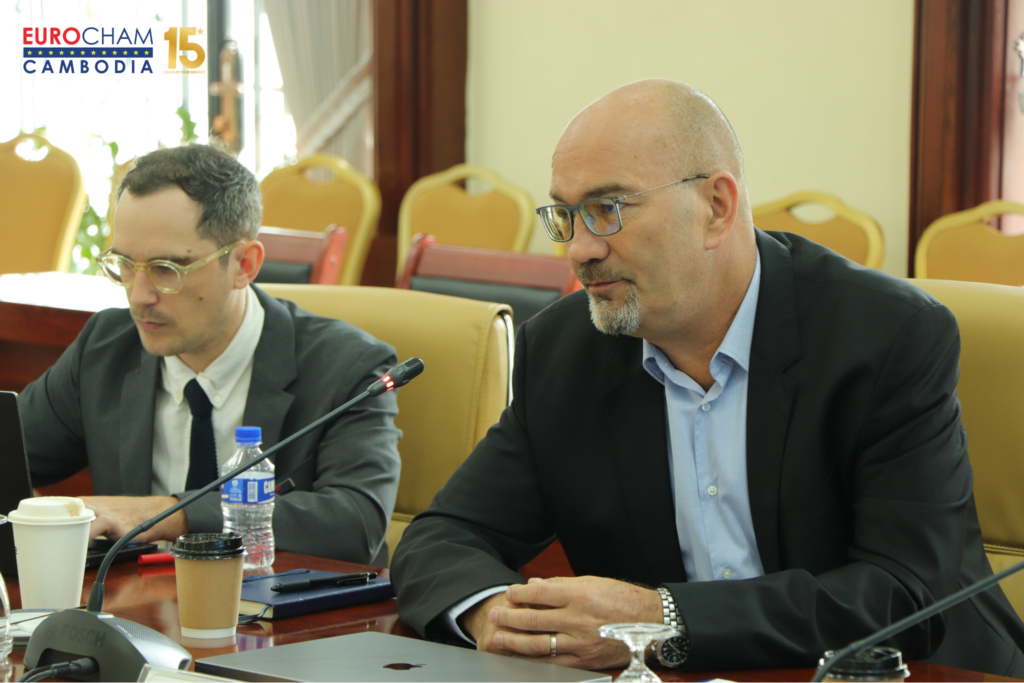
EuroCham representatives pointed to significant improvements over the past year, particularly in express logistics and customs operations, where administrative procedures have been simplified, processing times reduced, and digital systems refined. These gains, however, have coincided with a sharp increase in demand, putting additional strain on port handling capacity, road access, and gate operations.
The port authority outlined steps already underway to optimise terminal operations and manage higher cargo volumes, while emphasising the need for close coordination with logistics operators during this interim period.
Practical reforms target efficiency, not expansion
Rather than focusing on long-term infrastructure alone, EuroCham’s Transport & Logistics Committee framed its recommendations around efficiency-driven reforms that can be implemented in the short to medium term.
Four priority areas were highlighted: improving electronic data interchange between PAS systems and private logistics platforms; enhancing road access and gate flow management; strengthening rail connectivity and competitiveness; and encouraging a more balanced distribution of cargo movements throughout the week.
One key proposal involved enabling system-to-system integration between port digital platforms and private-sector logistics systems. Industry participants argued that better data connectivity would allow for more accurate planning, smoother gate operations, and reduced truck queuing during peak periods.
Rail transport was also a focal point, with calls to reassess handling fees and operational arrangements to make rail a more viable alternative to road transport between Phnom Penh and Sihanoukville. Greater rail utilisation, participants said, could ease pressure on road networks and reduce congestion at port gates.
Additional measures discussed included expanding customs availability to support extended and night-time port operations, as well as introducing incentives to promote off-peak use of the Phnom Penh–Sihanoukville Expressway, helping to smooth traffic flows and lower logistics costs.
Trade competitiveness and investor confidence at stake
For exporters, shipping lines, and manufacturers operating in Cambodia, the performance of PAS remains closely tied to cost competitiveness and supply chain reliability. Congestion, limited system integration, and restricted operating windows continue to translate into higher costs and greater uncertainty, particularly for time-sensitive exports.
EuroCham stressed that addressing these constraints is critical not only for existing operators, but also for sustaining investor confidence as Cambodia positions itself as a regional logistics and manufacturing hub.
Kaushal Rohilla, Vice-Chairperson of EuroCham’s Transport & Logistics Committee and General Manager of CMA CGM Cambodia, noted that the past year of engagement with the government and port authorities has helped advance practical solutions aimed at reducing bottlenecks and improving day-to-day efficiency.
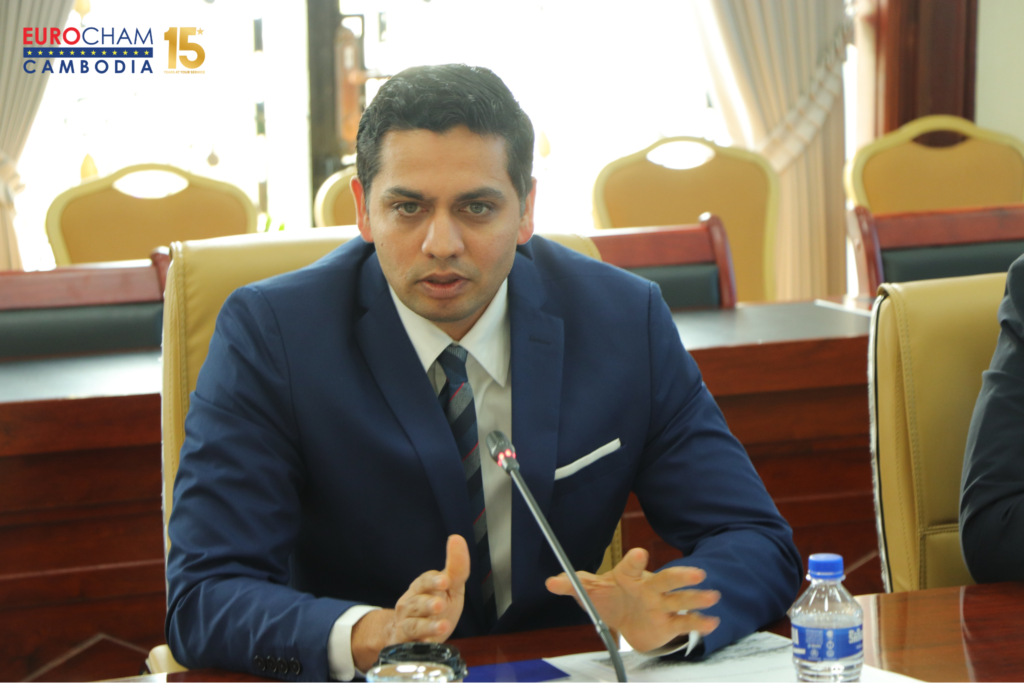
Participants from PAS welcomed the private sector’s input, sharing technical updates on ongoing improvements and acknowledging the urgency of implementing further measures to manage rising volumes until new infrastructure comes online.
Continued public-private coordination
In closing remarks, Sun Chanthol reaffirmed the Royal Government of Cambodia’s commitment to sustained dialogue with the private sector, underlining the importance of technical coordination in strengthening the country’s logistics ecosystem.
EuroCham confirmed it will continue working closely with the CDC, PAS, and relevant line ministries to translate private-sector insights into implementable reforms. Both sides agreed to maintain regular coordination meetings as efforts continue to improve port efficiency, customs processes, and overall logistics performance.
As Cambodia’s trade volumes grow and competition intensifies across the region, stakeholders see the ability to deliver predictable, efficient port operations as a key differentiator—one that will shape the country’s attractiveness to exporters, manufacturers, and investors in the years ahead.


