
Cambodia Investment Review
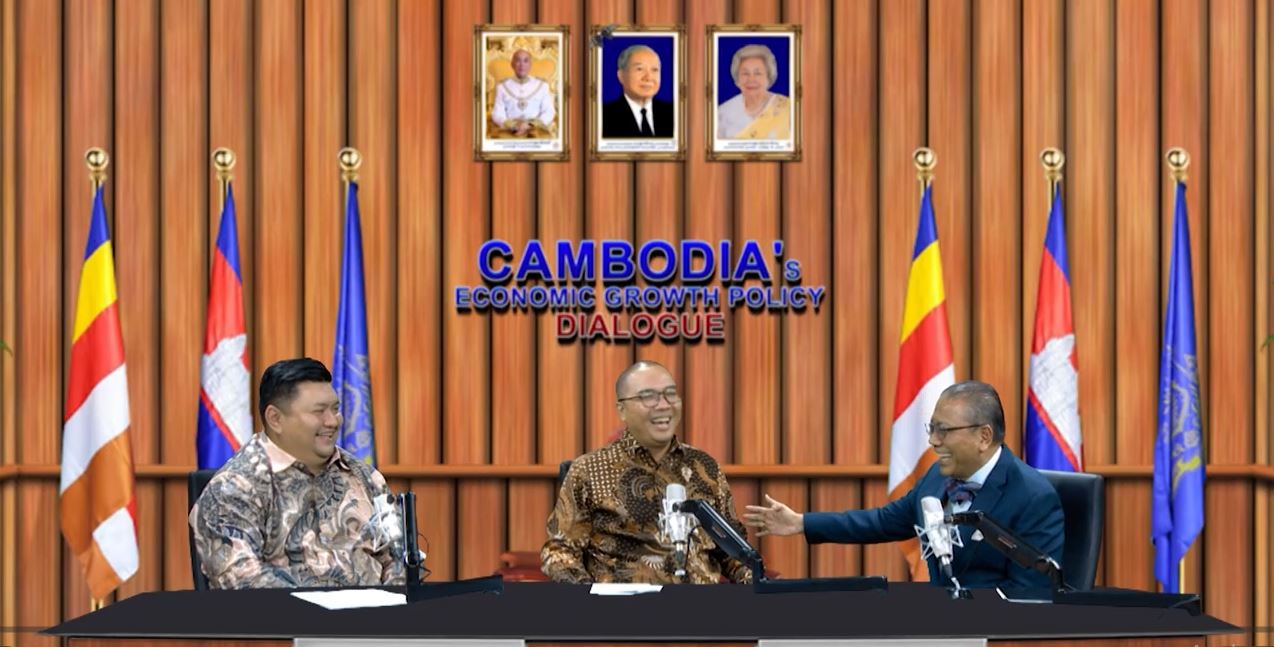
The 11th episode of Cambodia’s Economic Growth Policy Dialogue examined “Trade and Economic Relations with the Republic of Indonesia,” bringing together senior diplomatic and business leaders to assess the current state of bilateral cooperation and explore practical pathways to strengthen economic ties.
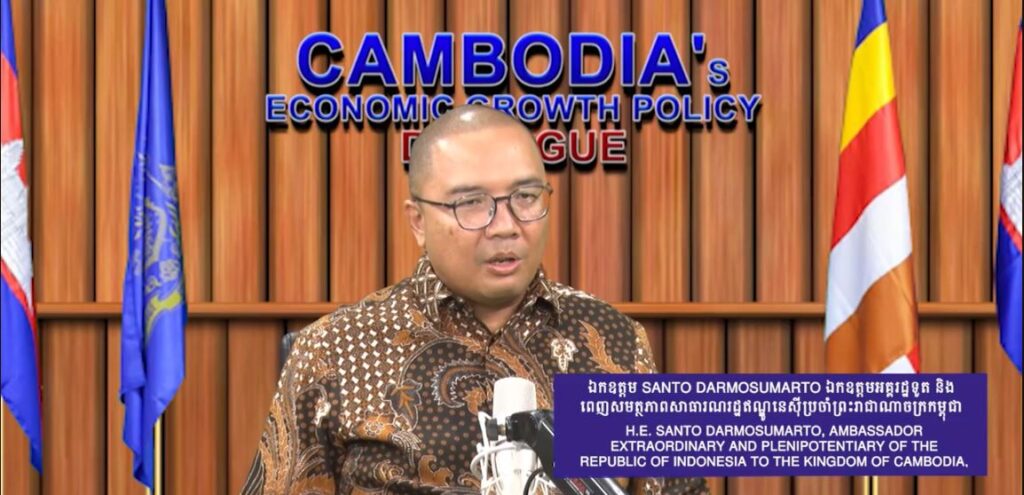
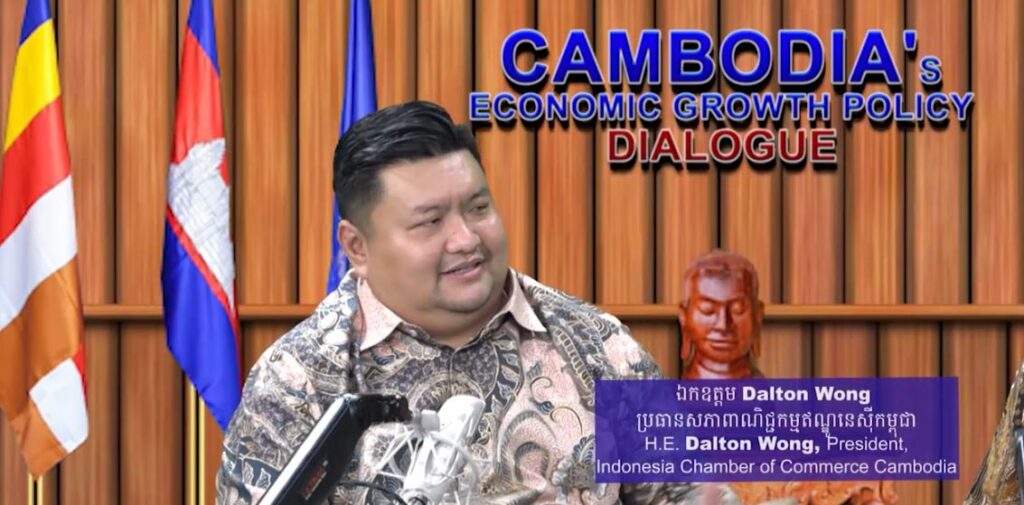
The Dialogue was hosted by H.E. Prof. Bundit Sapheacha Dr. Sok Siphana, Senior Minister in charge of Special Missions and Chairman of the Trade Policy Advisory Board (TPAB). Guests included H.E. Santo Darmosumarto, Ambassador Extraordinary and Plenipotentiary of the Republic of Indonesia to the Kingdom of Cambodia, and H.E. Dalton Wong, President of the Indonesia Chamber of Commerce in Cambodia.
The discussion ranged from trade flows and logistics to generational change in Cambodia’s private sector and Indonesia’s evolving role in regional and global economic forums.
Strengthening bilateral trade beyond commodities
Diplomatic relations between Cambodia and Indonesia have now reached 66 years, following a 65-year milestone last year. While government-to-government relations were described as strong and constructive, the speakers acknowledged that commercial ties still have significant room for growth.
Bilateral trade has hovered at around $1 billion-plus over the past two years, with hopes that this level can be maintained. However, the Indonesian Ambassador noted that in the first half of 2025, trade saw a slight decline, largely due to lower Cambodian exports to Indonesia.
The conversation highlighted that trade between the two countries remains concentrated in commodities and traditional trading relationships, rather than deeper investment partnerships. Dalton Wong said future cooperation should move beyond buying and selling raw goods and instead focus on joint ventures and co-investment models, similar to Indonesia’s partnerships with other regional economies.
Sok Siphana pointed to Cambodia’s rice export growth as an example of progress in value addition. When Cambodia’s rice policy was launched in 2010, exports were approximately 15,000 tons. Today, annual exports have reached roughly 700,000 to 800,000 tons. He said this demonstrated how policy support and private-sector development can gradually scale up a sector.
The discussion also touched on the need to develop by-products from agricultural commodities. Cashew processing, rice-based products, and other forms of agro-industrial transformation were cited as areas where Indonesia’s experience and industrial know-how could complement Cambodia’s resource base.
Intra-ASEAN trade and regional positioning
The Dialogue placed bilateral trade within the broader ASEAN context. Intra-ASEAN trade remains around 20 percent of total trade for the bloc, a level that participants described as relatively modest given the size and growth of Southeast Asian economies.
Sok Siphana encouraged ASEAN businesses to view regional markets as immediate opportunities, describing intra-ASEAN trade as a “low-hanging fruit” that remains underutilised. He stressed that beyond high-level summits and photo opportunities, there are detailed trade facilitation provisions and agreements that can benefit the private sector if more actively implemented and publicised.
Indonesia’s Ambassador noted that while ASEAN economies often produce similar goods, complementarities are increasingly emerging as countries diversify into different industrial segments. Indonesia, for example, is moving further into electric vehicle-related industries and associated supply chains.
The Ambassador also highlighted Indonesia’s participation in global forums, including its recent entry into BRICS and its longstanding membership in the G20, reinforcing Indonesia’s position as ASEAN’s largest economy and a bridge between regional and global platforms. At the same time, he stressed that ASEAN remains a community of equal members, and that Indonesia seeks to contribute without overshadowing smaller economies.
Logistics, infrastructure, and practical investment gaps
A recurring theme during the Dialogue was logistics. Participants acknowledged that while many global logistics costs have normalised since COVID-19, Cambodia’s transport costs remain relatively high, affecting competitiveness.
Sok Siphana referenced ongoing plans to deepen Cambodia’s main seaport, enabling it to accommodate larger vessels and reduce reliance on feeder routes through regional hubs. He also described inland waterways as underutilised and noted that improved connectivity could significantly lower transportation costs for agricultural exports.
The discussion included specific examples of market gaps that could attract investment. Cambodia’s daily milk demand was cited at roughly 120,000 to 150,000 litres, while local producers currently supply only around 20,000 litres per day. This shortfall was described as a potential opportunity for Indonesian companies with expertise in dairy production and processing.
Speakers also suggested that Indonesian firms should not view Cambodia solely as a domestic market of 17 million people, but as a production base linked to ASEAN and wider regional trade agreements. Investment in manufacturing, packaging, or assembly in Cambodia could serve larger export markets under regional trade frameworks.
Youth, perception, and the next phase of cooperation
Another key theme was generational change. Sok Siphana described how Cambodia’s older business leaders often built enterprises under challenging post-conflict conditions, with limited exposure to international markets. In contrast, a new generation of Cambodian entrepreneurs—many educated abroad—are returning with global perspectives and stronger familiarity with compliance, governance, and international business practices.
Indonesia’s Ambassador said these younger leaders represent a promising target group for deeper engagement. He recalled bringing young Cambodian business leaders to Indonesia to broaden their regional outlook and build direct connections.
The Dialogue also addressed perceptions. The Ambassador noted that many Indonesians still associate Cambodia primarily with historical narratives rather than its current economic development. Similarly, Cambodian views of Indonesia may be shaped by external media perspectives. Strengthening direct media, business, and educational exchanges was described as essential to reshaping narratives on both sides.
In closing, participants agreed that economic diplomacy should extend beyond formal government channels. Government-to-government ties are functioning well, they said, but sustained progress will depend on business-to-business partnerships, university cooperation, student exchanges, and greater information-sharing across sectors.