

Cambodia Investment Review
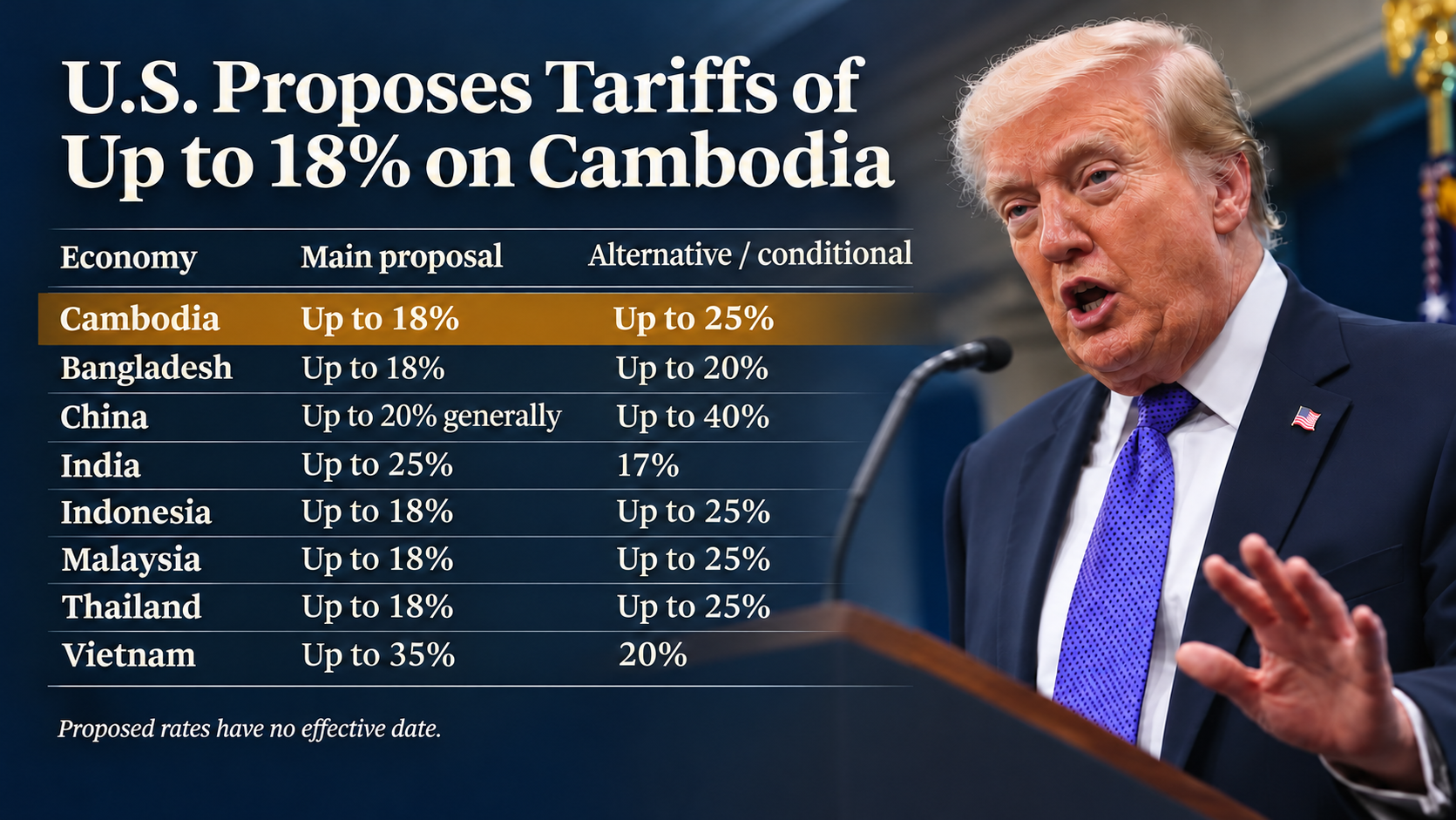
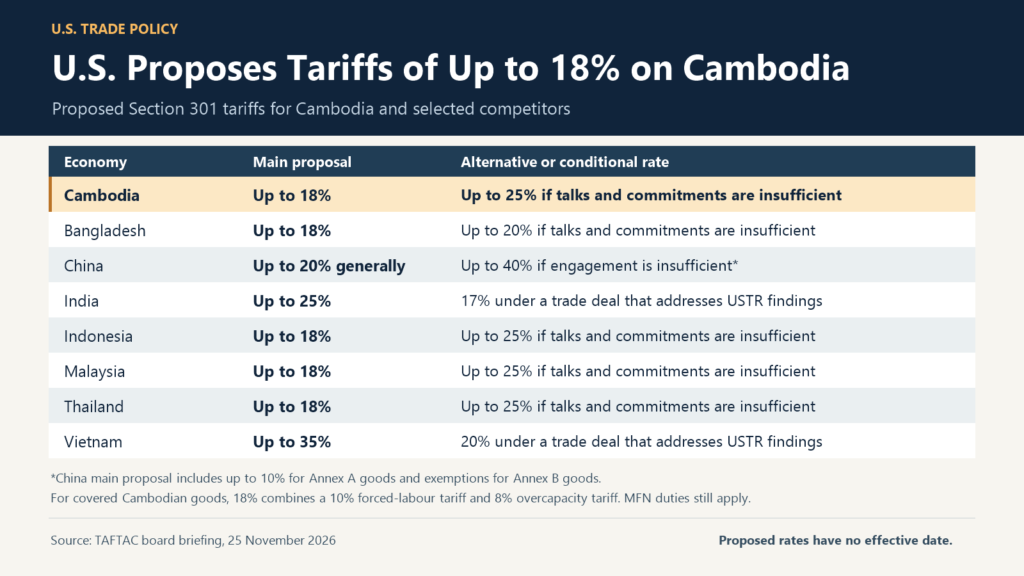
The Trump administration has proposed an 18% tariff on Cambodian goods as part of a broader trade action targeting 14 economies that Washington says contribute to excess manufacturing capacity, Reuters reported on November 25.
Cambodia faces the same proposed rate as Bangladesh, Indonesia, Malaysia and Thailand. Vietnam faces a proposed 35% tariff, the highest rate reported in the package.
The duties are subject to public comment and a hearing before they can take effect. A US official told Reuters that the process could push implementation into January.
Chinese Investment in Cambodia Draws US Scrutiny
The proposal follows a Section 301 investigation by the Office of the US Trade Representative into industrial policies and manufacturing practices across 16 trading partners. Washington argues that measures such as subsidies and other government support can encourage manufacturers to produce more than markets can absorb, putting pressure on US producers.
For Cambodia, part of the investigation focused on Chinese investment in manufacturing across Southeast Asia. US officials allege that some investments in Cambodia, Vietnam and Indonesia have been used to make goods for the US market while avoiding earlier tariffs.
China has rejected Washington’s broader allegations over industrial overcapacity, arguing that the strength of its exports reflects its competitiveness.
Chinese Investment in Cambodia Draws US Scrutiny
If implemented, the duties would raise costs for US importers buying affected Cambodian goods. Those buyers could absorb the costs, seek lower prices from suppliers or pass them on to consumers. The impact on Cambodian factories would depend in part on how buyers respond when setting prices and placing new orders.
The proposed rates could also affect how US buyers compare suppliers across Southeast Asia. Cambodia would face the same headline rate as several regional competitors and a lower rate than Vietnam. For exporters, the comparison will depend on the final rules, including which products are covered and how the new duties interact with existing tariffs.


