

Cambodia Investment Review
Cambodia ranked 138th out of 158 countries in a new assessment of resilience to illicit trade, placing it last among ASEAN’s 10 member states. The report calls for tighter customs oversight, stronger rules for online platforms and greater accountability across supply chains.
The report, released by the Transnational Alliance to Combat Illicit Trade (TRACIT) on November 10, found that ASEAN countries collectively scored just below the global average. It cited regional gaps in governance, enforcement capacity and supply-chain oversight, as well as limited enforcement of existing regulations.
The assessment does not specify which factors explain Cambodia’s ranking. It identifies broader vulnerabilities across ASEAN, including weak controls over intermediaries that move and sell goods—such as online marketplaces, postal networks, express couriers, maritime operators and free trade zones.
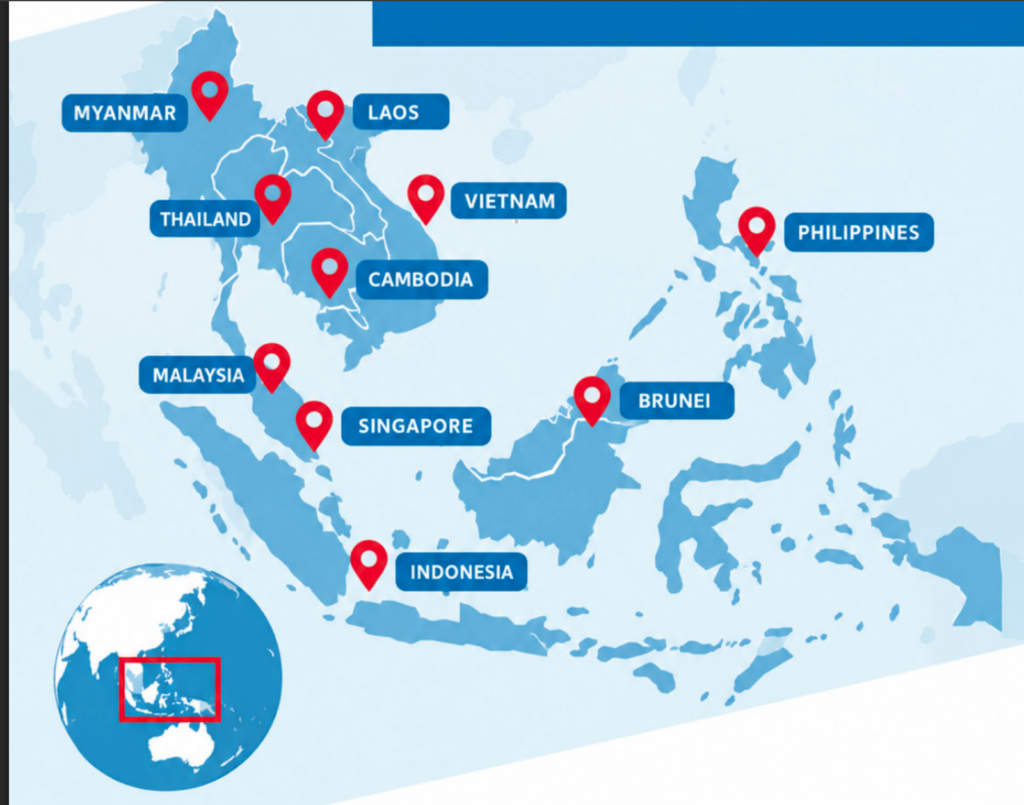
Singapore ranked highest in ASEAN at 29th globally, followed by Indonesia at 39th and Thailand at 56th. Laos ranked 100th and Myanmar 117th, ahead of Cambodia. No ASEAN country placed in the global top 20.
Where the controls need to improve
The report found that ASEAN performed relatively well in trade, customs and border controls, but nine of the 10 member states scored very low in regulating supply-chain intermediaries. It said illicit traders can exploit legitimate infrastructure to sell, conceal or reroute goods.
The controls discussed in the report include tracking goods in transit, checking the businesses and sellers handling shipments, sharing customs risk information between countries, and requiring online platforms to verify sellers and remove illegal listings. The report also calls for authorities to hold repeat offenders accountable and improve oversight of free trade zones.
Online marketplaces, social media and private messaging channels have expanded opportunities to distribute counterfeit goods, illicit medicines, illegal pesticides and other regulated products, the report said. It cited the Philippines’ e-commerce memorandum of understanding between platforms and rights holders, Vietnam’s seller-verification and repeat-violation rules, and Malaysia’s work on platform accountability as examples for regional action.
Recommended actions
TRACIT recommends that ASEAN countries:
- Tighten oversight of goods in transit and transshipment, including tracking shipments and clarifying responsibility for them.
- Share customs risk profiles for high-risk products and supply-chain methods.
- Make customs intellectual-property recordation systems interoperable across ASEAN to help authorities identify suspected counterfeit goods.
- Set enforceable rules for online marketplaces and social media platforms, including seller verification, screening and blocking illegal listings, and penalties for repeat offenders.
- Strengthen accountability in free trade zones to reduce opportunities to conceal or reroute illicit goods.
- Include anti-corruption measures in national plans to combat illicit trade.
Jeffrey Hardy, TRACIT’s director-general, said stronger trade-integrity safeguards would be needed as ASEAN works toward its Vision 2045 ambitions for deeper economic integration, resilient supply chains and a trusted digital economy.
The report said existing national frameworks and regional cooperation mechanisms give ASEAN a foundation for action, but called for stronger enforcement and coordination among governments, customs authorities, law enforcement and the private sector.