
By Roth Baraing
Cambodia is considering a significant change to its public education system by extending daily school hours from four to six hours.
The proposal, which adds two hours in the afternoon, aims to strengthen students’ academic abilities, improve teaching and learning quality, and provide more opportunities for students to develop essential knowledge and skills.
The initiative has attracted attention from educators, parents, students and policymakers.
A New Direction for Education
On October 28, 2026, Prime Minister Hun Manet discussed the need to increase daily learning hours in public schools from four to six hours. He said shortages of teachers, classrooms, and school facilities have limited the amount of time students can spend learning in public schools.
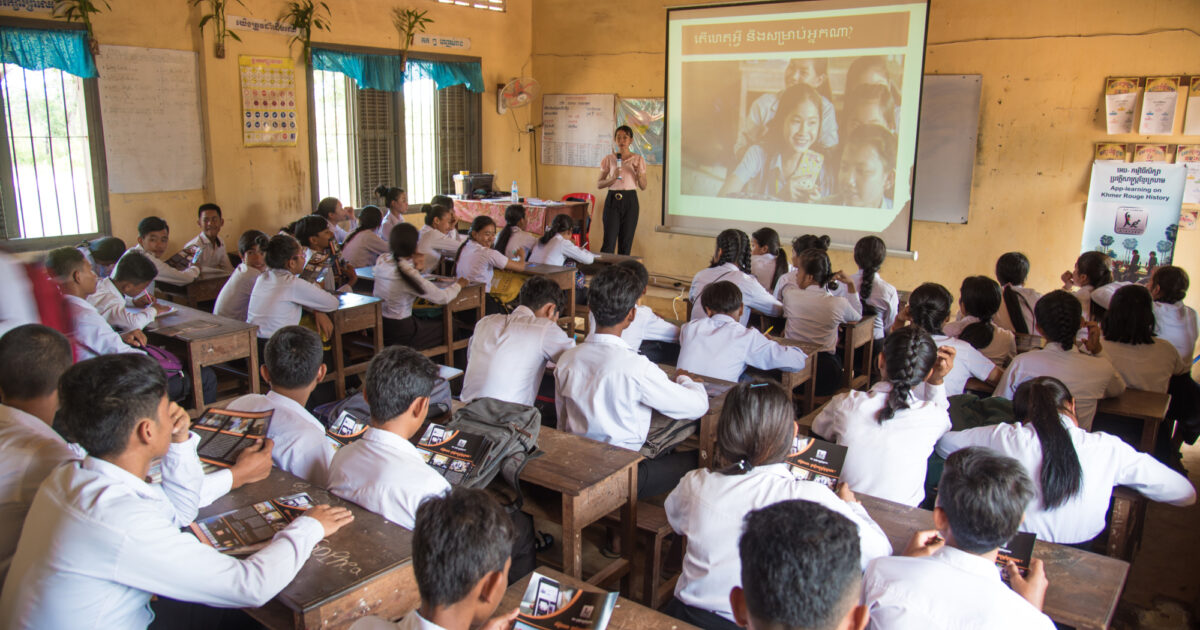
Under the proposed arrangement, students would attend four hours of regular morning classes, followed by two additional hours in the afternoon. The additional time would prioritize foundational subjects, particularly Khmer literature and mathematics, while giving students more opportunities to review lessons, ask questions, and strengthen their understanding.
The government’s official statement has also begun testing extended school hours in selected public schools and is examining the financial and practical requirements for expanding the program nationwide.
The Prime Minister has instructed the Ministry of Education, Youth and Sport and the Ministry of Economy and Finance to assess the implementation plan.
Why Does Learning Time Matter?
Time is an important factor in the learning process. Students need sufficient opportunities to understand lessons, practice new skills, complete assignments, participate in classroom discussions, and receive feedback from teachers.
In Cambodia, the traditional four-hour school schedule has often pressured teachers to complete the prescribed curriculum within a limited period. As a result, some students may have insufficient opportunities to practice, review difficult lessons, or receive individual academic support.
Extending school hours could help address these challenges by providing additional time for classroom exercises, reading activities, problem-solving, group discussions, and supplementary lessons.
More Hours Are Not Always Better
Although extending school hours offers potential benefits, Cambodia should carefully consider the relationship between instructional time and learning outcomes.
The World Bank research report, Instruction Time and Student Learning: Can Cambodia Improve Learning Outcomes by Introducing Full-day Lesson Schedules in Primary Schools? highlights an important finding: increasing instructional time may contribute to better academic performance, but the relationship between time spent in school and student achievement is relatively weak.
Teachers at the Center of Reform
Teachers play a fundamental role in determining whether longer school days will produce meaningful educational improvements. Extending the school schedule will require teachers to dedicate additional time and energy to classroom instruction, lesson preparation, student assessment and academic support.
The World Bank report on teaching quality in Cambodian primary education highlights the need to strengthen teacher training, improve teaching practices, and ensure that teachers have sufficient time and capacity to support their students.
Opportunities for Students and Parents
The proposed six-hour school schedule could offer benefits to students and families.
First, students may have more opportunities to strengthen their academic foundations without depending entirely on private tutoring.
Second, longer school hours may provide parents with greater confidence that their children are participating in structured educational activities rather than spending unsupervised time at home or elsewhere.
Challenges in Six-Hour School Days
Despite the potential benefits, expanding the program nationwide will require careful planning and sufficient resources.
There are two potential challenges. First, there is a shortage of teachers. Some public schools do not have enough teachers to accommodate additional teaching hours. Without sufficient staffing, extending the school day could increase teachers’ workloads and affect teaching quality.
The second challenge is limited school infrastructure. Many schools face challenges related to classroom availability, learning materials, sanitation facilities, and other essential resources. Additional school hours may require improvements to facilities.
What Should We Do for Six-Hour Success?
To ensure that longer school days lead to meaningful improvements, Cambodia should consider several key measures.
First, the Ministry of Education, Youth and Sport should introduce the policy gradually. Second, the government should prioritize teacher recruitment and professional development. Third, schools should use the additional two hours strategically.
Rather than simply repeating regular lessons, teachers could organize remedial classes, reading activities, practical exercises, group discussions, project-based learning, and individual academic support.
_________________________
Roth Baraing hold a master’s degree of Teaching English to Speakers of Other Languages (TESOL) from Preah Sihamoniraja Buddhist University