
Kong Arunputhirith
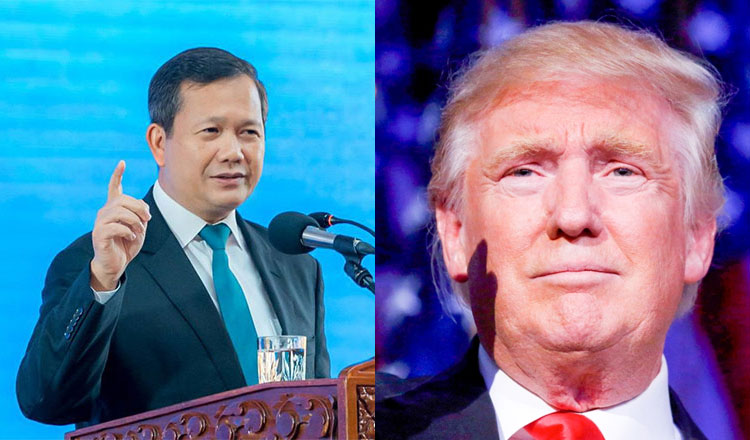
In January, Donald Trump will be sworn in as the 47th US president. Though he has a business background, Trump has been unpopular for pursuing a foreign economic policy with a tariff obsession. His second presidency will be similar to his previous one with a strong stance on tariffs and trade in dealing with foreign countries. While China is to feel the heat from Trump’s tariffs and trade, other Asian nations are not exempt. Kong Arunputhirith asks what Cambodia can expect in economic relations with the US under Trump 2.0?
Recapping US-Cambodia economic relations during Trump’s first term.
After Trump took office in January 2017, Cambodia’s exports to the US rose from $2.4 billion to over $5.3 billion over four years.
The leading exports include garments, footwear, agricultural products, trunks and cases, and travel goods. The US market was crucial for Cambodian manufacturers as it provided access under the Generalized System of Preferences (GSP) program, allowing certain products to enter the US duty-free.
However, bilateral relations are not all sunshine. Trump’s America cut aid to Cambodia in 2018 due to internal issues ranging from human rights to backtracking on democracy, leading to a decision not to renew the GSP program for Cambodia in December 2020 at the end of his term.
With the expiry of the GSP, Cambodian exports to the US are now subject to “most favored nation” (MFN) tariffs, which range from 12 percent to 33 percent. However, Cambodia’s exports to the US continued to grow to $8 billion in 2024.
Revisiting Trump’s “America First”
Since Trump took office, US trade with its partners has been met with tariffs everywhere, even on its ally, South Korea. In 2020, the US extended tariffs on Korean trucks for another 20 years. In his first week in office, Trump abandoned the Trans-Pacific Partnership (TPP). In addition, the administration shut down the organization’s appellate body, the Supreme Court of Trade Dispute Settlement.
In his second term, Trump will likely withdraw America from the Paris Climate Agreement again, after Joe Biden rejoined in 2021, to reduce restraints on US productivity.
Regarding regional ties, Trump did not value ASEAN as a key regional grouping, as he only attended one out of four ASEAN summits during his presidency. This created a distance between the Southeast Asian blocs and the US.
Trump only traveled to Southeast Asia three times during his presidency: Vietnam for the APEC (Asia-Pacific Economic Cooperation) summit, the Philippines for the ASEAN summit, and Singapore to meet North Korean leader Kim Jong Un. There was no trip to Cambodia.
Trump is a protectionist of the US economy, hating the idea of foreign countries taking advantage of the US market, which impacts domestic producers. Trump would criticize countries with large trade surpluses with the US, indicating that those countries export to the US more than they import.
Vietnam was one of them. In 2019, Trump called Vietnam the world’s “worst abuser” of US trade, worse than China, as the country’s trade surplus with America stood at around $54 billion a year.
For the last two years, Cambodia’s trade surplus with the US amounted to $14 billion, which could get a reaction from Trump because Cambodia imports around $15 billion from China, primarily raw materials.
The US could view this as Cambodia importing Chinese goods with US money. With his negative view of trade surplus and China, Trump could hit Cambodia with tariffs on goods made from imported Chinese materials.
Trump’s new tariff plans
During the US election campaign, most Southeast Asian countries paid close attention to Trump’s promises to impose a blanket ten percent to 20 percent tariff on imports from all countries. This has become a daunting proposition for a region heavily reliant on exports to the US, including Cambodia, whose largest export market is the US.
In 2024 alone, Cambodia exported around $8.2 billion worth of goods to the US but Trump threatening to impose a new wave of tariffs could mean more effort for the same or lower profits for Cambodia.
Furthermore, during the Trump administration, the US and China were engulfed in a so-called trade war. Both countries imposed tariffs on each other’s products, hurting both countries’ private sectors. During his re-election campaign, Trump threatened to impose a 60 percent tariff on Chinese imports.
However, this means US companies in China are also affected and looking for a way out. Cambodia was also a destination for these companies due to its low cost of labor and low tariffs on exports to the US Steve Madden, a shoe company worth $3 billion, said it would be sourcing its goods from Cambodia, Vietnam, Mexico, Brazil, and other countries.
Cambodia’s love-hate relationship with the US will continue into Trump’s new term. Trump will continue his aggressive foreign policy with multilateral and bilateral partners of the US. While GSP for Cambodia is unlikely to be renewed, trade will likely increase with the surplus remaining high.
The America First policy will again be at the center of Trump’s foreign policies, which could lead to conflicts with international organizations and, most noticeably, tensions with the WTO. High tariffs are to be expected to be imposed on China. Still, amid chaos, there is an opportunity for Cambodia to present itself as an alternative for both US and Chinese companies to set up their new production lines.