
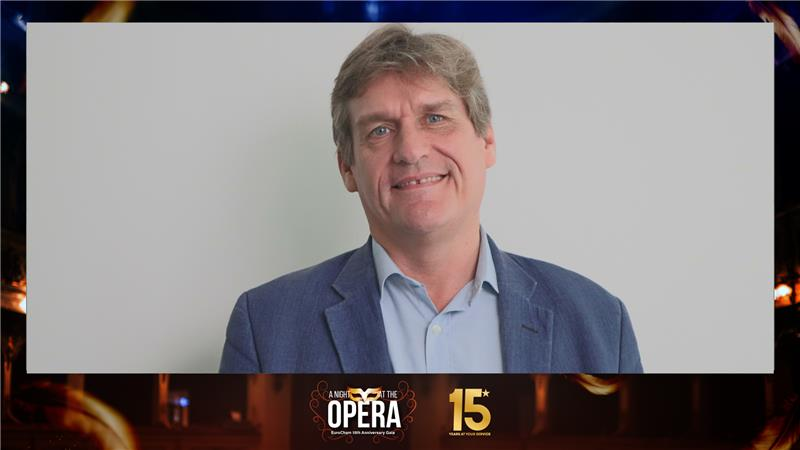
Stew Post
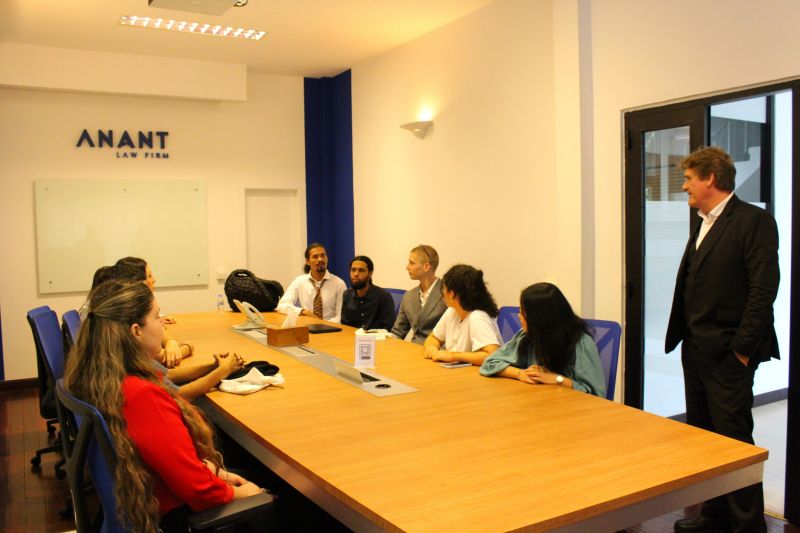
EuroCham’s Senior Communications Officer Stew Post sat down with Antoine Fontaine, EuroCham co-founder, founding partner at ANANT Law Firm, and one of the longest-standing figures in Cambodia’s legal and business community. In a wide-ranging discussion, Antoine reflected on nearly 30 years of nation-building work—from contributing to the Criminal Code and supporting institutional reform, to helping establish EuroCham Cambodia and shaping today’s legal and regulatory landscape.
Stew: You’ve been in Cambodia for nearly three decades and have become a pillar of the business and legal community here. What brought you to Cambodia and what has kept you here?
Antoine: I first arrived in Cambodia through a cooperation program with the French Embassy, as part of what was my military service. I was assigned to the Royal University of Law and Economics (RULE) to lead a cooperative initiative designed to help rebuild the country’s intellectual and institutional elite after years of disruption. At the time, Cambodia was in the early stages of reconstruction, and the need for expertise, guidance, and structured legal education was immense.
My work quickly expanded beyond academia. I collaborated closely with the Ministry of Justice, contributing to the drafting of the Criminal Code and the internal regulations of the Bar Association of the Kingdom of Cambodia. I also supported the Royal School of Administration, helping shape training programs for future civil servants. These experiences immersed me in the heart of nation-building at a very formative period.
After several years, I created my own law firms—first Bun & Associates, and later ANANT Law Firm—with two former students. Building these firms was both a professional challenge and a deeply personal project, grounded in long-term relationships with the country’s rising generation of legal professionals.
What truly kept me in Cambodia was the ability to be genuinely useful. I was involved in the underdeveloped insurance sector and played a role in facilitating the entry of most life and micro-insurance operators into the market. I also supported the drafting of key health-related legislation. Today, my focus includes tax matters and regulatory frameworks for public-private partnerships.
In short, I stayed because Cambodia offered not only opportunities but also a unique sense of purpose. I have witnessed—and in modest ways contributed to—an extraordinary national transformation.
A deep belief in European cooperation
Stew: Beyond your legal and regulatory work, you were also instrumental in the creation of EuroCham Cambodia. What inspired you to be part of this effort, and do you recall any anecdotes that illustrate the challenges or motivations of those early days?
Antoine: My enthusiasm for EuroCham stemmed from a personal and long-standing commitment to European integration, influenced by my grand-uncle, who was the personal secretary of Jean Monnet. At nineteen, I was already serving on the board of the largest European federalist youth association. That experience shaped a deep belief in European cooperation—something I later sought to bring to Cambodia’s business community.
At the time EuroCham was conceived, I was serving as Chairman of the French Chamber of Commerce and Industry in Cambodia (CCIFC). Although the CCIFC was the largest Western chamber in the country, we struggled with limited resources and sometimes lacked the institutional credibility required for effective policy advocacy.
The turning point came when Jean-Jacques Bufflet, former regional attaché for the European Commission, introduced the ICI+ initiative. This offered an opportunity not only to unite European business communities but also to professionalise and strengthen our collective capacity. I immediately saw its strategic importance.
However, the creation of EuroCham was not guaranteed. The name “EuroCham” was not protected, and some private groups attempted to position themselves as alternative beneficiaries of ICI+ support. We had to act quickly and with unity. The project succeeded thanks to the goodwill of our members—and especially Dominique Catry—who understood that a European chamber must be built collectively rather than competitively.
Those early days were marked by enthusiasm, uncertainty, and a shared conviction that Cambodia’s business landscape would benefit from a more coordinated European presence. That founding spirit still guides my involvement today.
Stew: Cambodia has undergone significant transformations in the past three decades. Within the legal and tax landscape, what have been the most significant developments? How have they impacted the business environment?
Antoine: The transformation has been extraordinary. When I arrived in 1999, many roads were unpaved, electricity was limited outside Phnom Penh, and the state depended heavily on international donors—nearly half the budget came from external assistance as late as 2003.
Legally and institutionally, Cambodia was rebuilding nearly everything from scratch. Few universities produced graduates with modern legal training, and the regulatory framework necessary for a functioning market economy was still emerging.
Today, electricity reaches almost the entire country, infrastructure has surged forward, and a new generation of highly trained professionals has emerged. The pace of skills development has been exponential.
In terms of law, the adoption of modern codes and sector-specific regulations has created a far more predictable and stable environment for investors. Tax reforms have strengthened the state—though certain issues remain—and institutions such as the National Commercial Arbitration Center now offer credible dispute-resolution options. In 2000, there was almost no private law at all.
For businesses, this evolution means greater clarity, reduced uncertainty, and an increasingly international-standard regulatory framework. Cambodia remains dynamic and evolving, but the trajectory has been consistently positive.
Values resonate strongly with Cambodian institutions
Stew: You continue to be involved with EuroCham as a board member. How do the Chamber’s sectoral committees support Cambodia’s business environment? And are there any initiatives you’re particularly excited about?
Antoine: EuroCham plays an essential and strategic role in Cambodia. It represents not only European business interests but also European values—quality, transparency, legal certainty, and cooperation. These values resonate strongly with Cambodian institutions.
One of EuroCham’s greatest strengths lies in its sectoral committees. They are viewed not as adversarial critics but as development partners. Whether dealing with labour issues, taxation, digitalisation, or green energy, the committees offer practical, well-researched recommendations that support both the government and the private sector.
From its earliest days, EuroCham has contributed to strengthening the rule of law and economic governance. For example, we supported the establishment of the NCAC, which has become a credible and increasingly utilised dispute-resolution mechanism.
Looking ahead, I am particularly interested in initiatives that reinforce regulatory clarity, promote SME growth, and encourage sustainable investment practices. However, advocacy can only be effective with active member participation. EuroCham is a powerful tool—but one that requires collective engagement to deliver meaningful results.