

Cambodia Investment Review
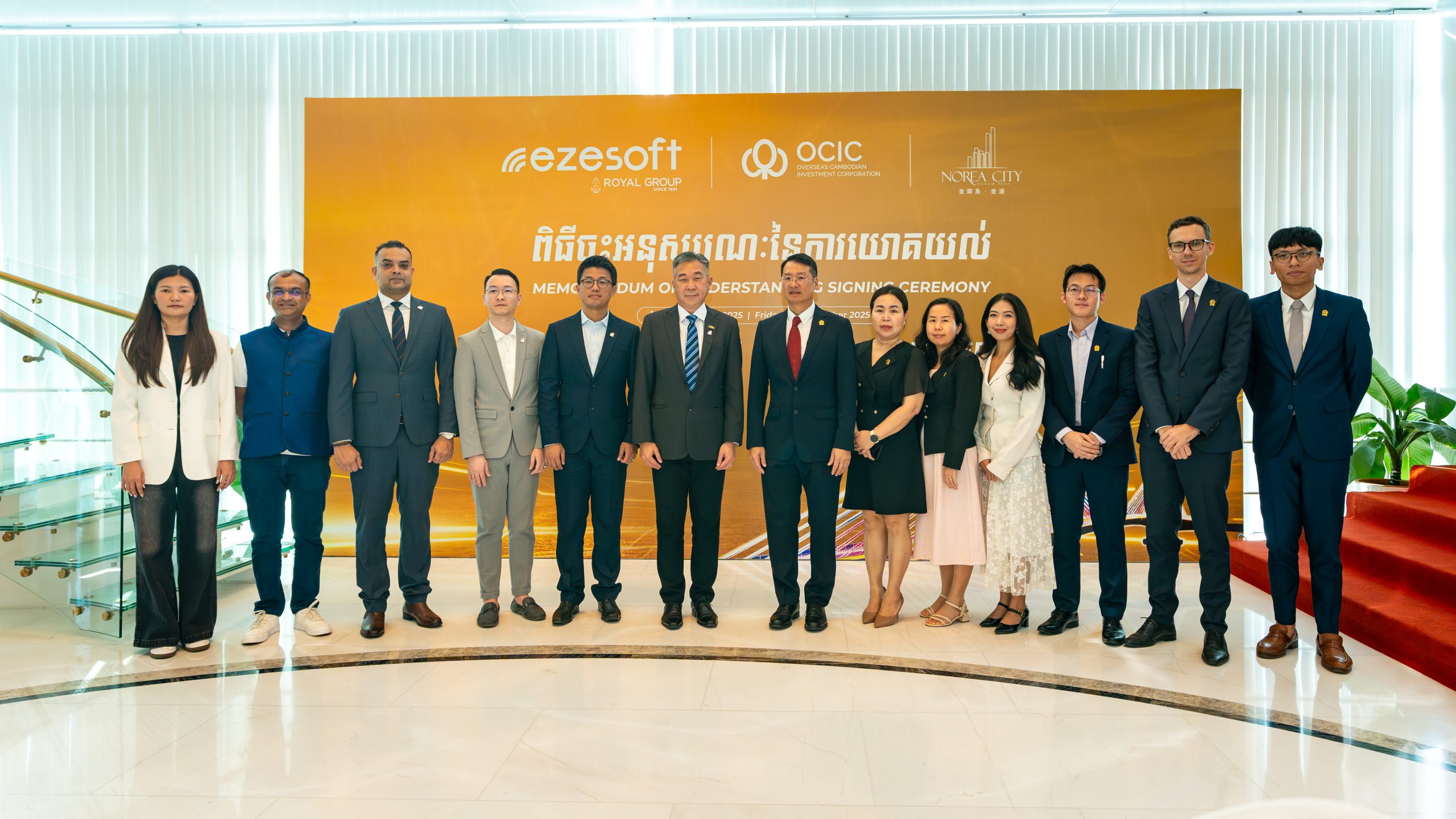
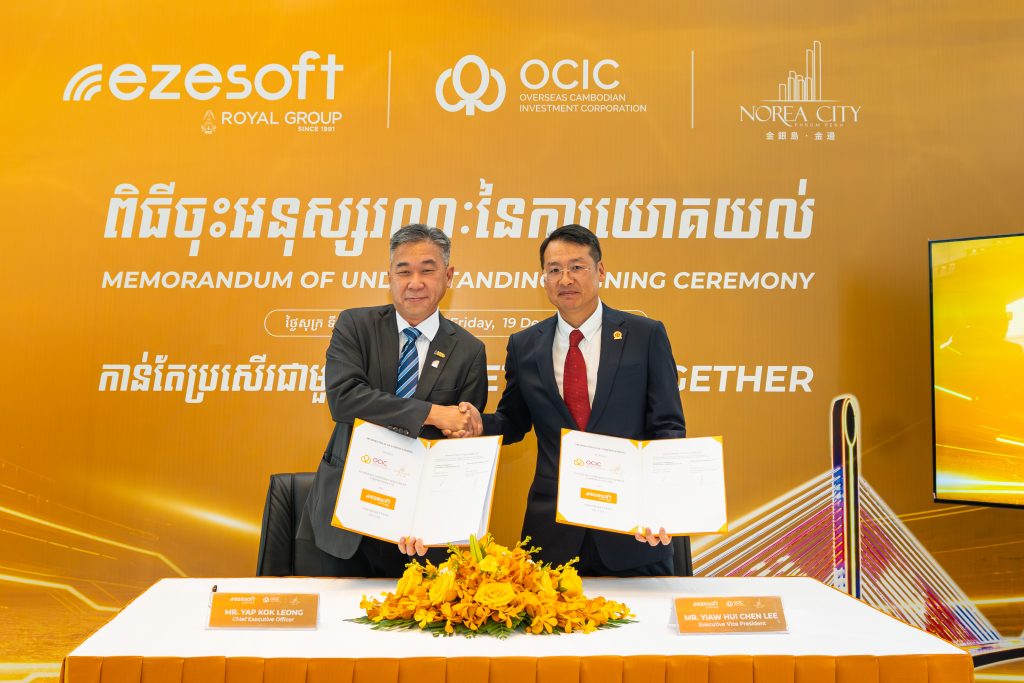
Phnom Penh’s urban digital infrastructure took a notable step forward this week as Overseas Cambodian Investment Corporation (OCIC) and Ezesoft announced a strategic partnership to launch WiFiX, Cambodia’s first large-scale public WiFi zone. The service will debut at Norea City, offering free, secure, 24-hour internet access across key public areas.
The agreement, signed in Phnom Penh, positions Norea City as a testbed for wider public connectivity initiatives as Cambodia accelerates its digital transformation agenda. WiFiX is designed to complement, rather than replace, existing mobile data services provided by operators such as Cellcard, extending internet access into shared urban spaces where residents, visitors and businesses congregate.
A Smart City layer for a growing urban hub
Norea City is being developed as a mixed-use district combining residential, commercial, lifestyle and public spaces along the Mekong River. OCIC said the introduction of WiFiX adds a digital layer to the project’s broader Smart City ambitions, supporting everyday connectivity for work, learning and leisure.
According to figures shared by the developers, key destinations within Norea City — including Norea Parkway and Coconut Park Koh Norea — attract between 4,000 and 7,000 visitors on weekdays, rising to 8,000 to 15,000 on weekends. During major holidays and special events, footfall can reach as high as 10,000 to 30,000 people, underscoring the scale of demand for reliable public internet access.
WiFiX is supported by a high-speed fiber-optic backbone integrated into the development’s public infrastructure. The network is intended to provide stable, secure connectivity throughout the day, catering to users who rely on digital services for navigation, communication, cashless payments, content creation and remote work.
OCIC executives framed the project as a long-term investment in digital readiness. The group said it is planning its infrastructure with future technologies in mind, including compatibility with next-generation mobile networks, as Phnom Penh’s data usage continues to rise alongside urbanisation and population growth.
Private-sector collaboration drives digital access
The WiFiX initiative brings together two Cambodian-owned companies, reflecting a growing trend of domestic firms collaborating on technology-led public infrastructure. The partnership is being rolled out under the theme “Better Together,” highlighting a shared focus on practical digital solutions with broad public benefit.
Ezesoft, which specialises in digital platforms and services, said the launch of WiFiX comes at a time when dependable connectivity is increasingly viewed as essential infrastructure, on par with transport and utilities. Public WiFi, the company noted, can play a role in narrowing access gaps, particularly for students, freelancers, small entrepreneurs and visitors who may need short-term connectivity without additional cost.
Beyond convenience, the partners also pointed to wider economic spillovers. Improved connectivity in high-traffic urban zones can support digital commerce, tourism-related services and location-based applications, while also enhancing the attractiveness of developments like Norea City to investors and tenants seeking future-ready environments.
Strengthening Phnom Penh’s digital ecosystem
The launch of WiFiX aligns with broader national efforts to modernise Cambodia’s digital economy, including the expansion of e-payments, online public services and tech-enabled education. While mobile internet penetration in Cambodia is relatively high, access quality and cost can vary, particularly in shared public spaces where network congestion is common.
By providing free, secure WiFi in a large, mixed-use development, OCIC and Ezesoft aim to demonstrate how public-private collaboration can enhance urban liveability while supporting digital inclusion. The partners said the network has been designed with security and reliability in mind, addressing common concerns around public WiFi usage.
For Norea City, the initiative reinforces its positioning as an active urban district rather than a purely residential or commercial enclave. OCIC said the integration of digital infrastructure is intended to support continuous activity across retail, lifestyle and community spaces, helping to create a more connected and inclusive urban experience.
While WiFiX is currently focused on Norea City, the project is likely to be closely watched by developers, policymakers and technology providers as a potential model for similar deployments elsewhere in Phnom Penh and other Cambodian cities. As competition among urban developments intensifies, access to robust digital infrastructure is increasingly emerging as a differentiator.
For now, the launch marks a tangible step toward embedding connectivity into Phnom Penh’s public realm, reflecting how digital infrastructure is becoming central to the next phase of the city’s growth.