
By Pheakdey Heng
As we start 2026, Cambodia is facing a reality we haven’t seen in decades. While the government continues its “Phase II” transition toward high-tech growth, the country is in the middle of a massive rescue mission.
If 2025 was the year of the “Border Shock,” 2026 must be the year we bring our people home, not just to their villages but back into the economy.
To succeed this year, Cambodia cannot just talk about 5G and AI. We must prioritize three urgent, human-centered goals.
The Immediate Priority: Reintegrating the Million
The most pressing issue for 2026 is the nearly one million people who fled the border or returned from Thailand during the 2025 conflict.
As of January, over 400,000 remain internally displaced, and hundreds of thousands more are back in their home villages with no way to pay their debts.
Read More: Opinion: The Elephant in the Room – The Cost of Avoiding What Everyone Knows
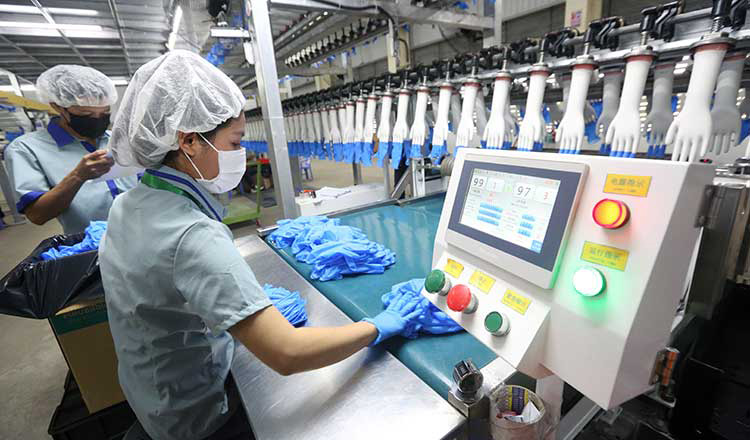
Our top priority this year must be economic reintegration. We cannot simply tell these workers to “go back to farming.” The government needs to fast-track “TVET 2.0” — a massive, emergency training program to enable these manual laborers to have more job opportunities.
But training takes time; in the short term, we need immediate debt relief and job-matching platforms that connect returnees with the new job opportunies in Phnom Penh, Sihanoukville and other provinces.
The Economic Priority: Filling the $5 Billion Trade Gap
With political tensions likely to linger through the 2026 Thai election cycle, the border will not return to normal soon. The paralysis of nearly $5 billion in annual border trade is a massive blow, but it is also a forced opportunity to diversify.
To prevent a permanent economic slide, our 2026 priority must be supply chain realignment.
We are already seeing Vietnamese buyers replace Thai ones for our agricultural exports, and through the RCEP agreement, we must aggressively pivot our electronics and automotive parts toward more stable markets in Japan, South Korea and China.
However, finding new buyers is only half the battle; we also have to stop being “import-addicted.” For years, we relied on Thailand for 45% of our essential goods and 30 percent of our fuel.
Cambodia needs to prioritize domestic resilience by incentivizing local food processing and the production of agriculture inputs and construction materials at home.
The Survival Priority: The “Digital Skills”
The 2025 crisis was a wake-up call: an economy built on physical borders and manual migration is inherently fragile. This is why the shift to high-tech growth isn’t a luxury. It’s a survival tactic.
While the 5G rollout and new data centers provide the skeleton of a digital economy, we must now provide the muscle: human capital. By training workers for tech-enabled roles — such as e-commerce entrepreneurship, digital logistics and remote service work — we can protect our workers from the geopolitical shocks of the future.
Beyond individual job security, a digitally literate workforce is the engine for national economic sovereignty. It allows Cambodia to move up the value chain, attracting high-quality foreign investment that seeks more than just cheap labor.
The Bottom Line
In 2026, Cambodia’s true priority isn’t a “Pentagonal Strategy” on a piece of paper. It is the people behind the numbers. If we can reintegrate our displaced workers, diversify our trade, and train our people with digital skills to contribute to our digital economy, Cambodia will be remembered as a nation that not only endured but also thrived in the face of challenges.
The path forward requires a difficult but necessary transition. We must evolve from a nation that exports labor and imports essentials to one that builds value and creates opportunity within its own borders.
Pheakdey Heng is an independent public policy analyst.