
Cambodia Investment Review
Cambodia’s economy is showing increasingly divergent performance across sectors, with strong export growth and resilient consumption offset by a sluggish tourism recovery that continues to weigh heavily on overall growth, according to a new report from Mekong Strategic Capital (MSC).
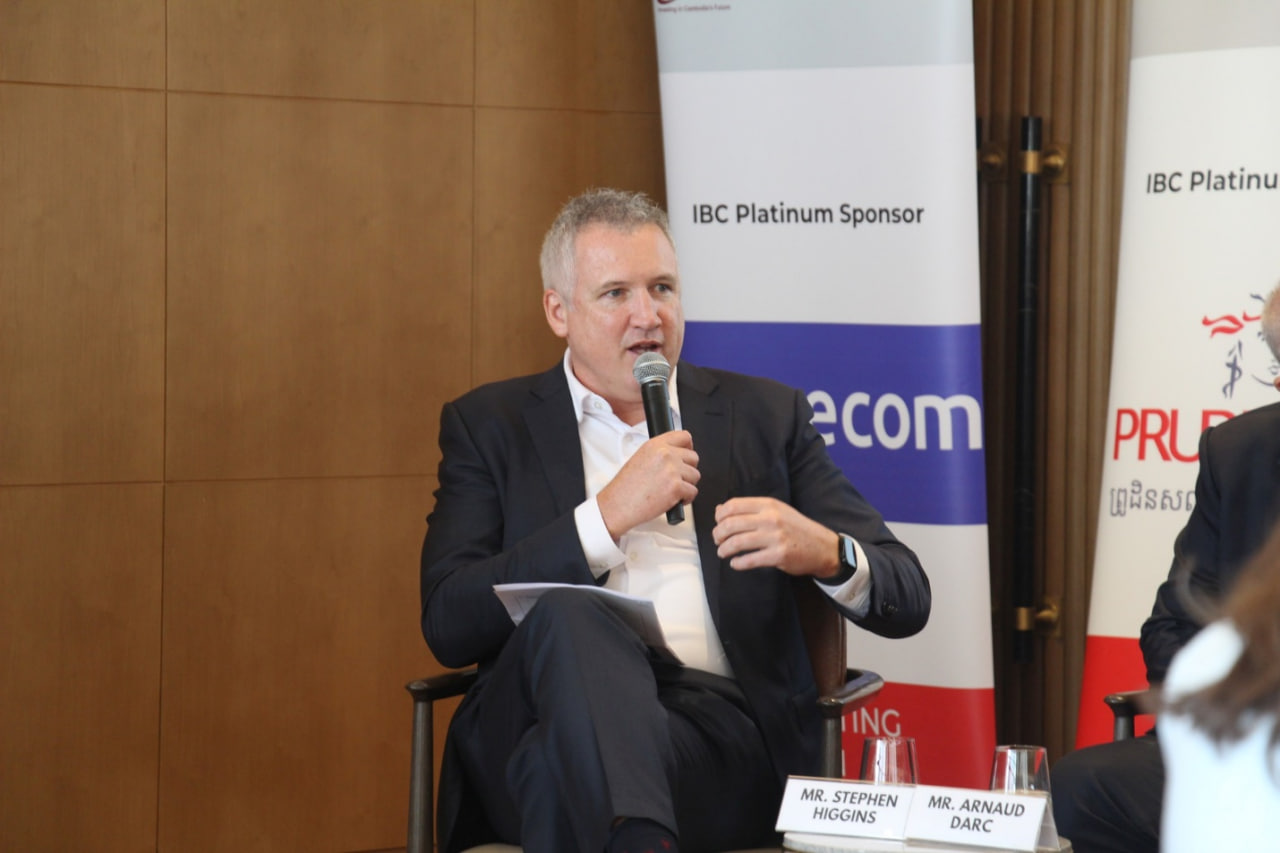
The findings were presented at the IBC 2026 Economic Outlook briefing on January 14, where Stephen Higgins of MSC outlined the firm’s latest assessment of Cambodia’s economic trajectory. The report, titled Cambodia Economic Outlook: A Two-Speed Economy?, estimates that headline GDP growth is likely to remain around 4% in 2025 and 2026—well below the country’s potential
Higgins said the most significant drag on growth remains tourism, which has recovered far more slowly than in neighboring Vietnam, limiting job creation and downstream activity across hospitality, retail, and services.
“If Cambodia had grown tourism at the same rate as Vietnam this year, we’d be looking at roughly 7% GDP growth instead of around 4%,” Higgins told the audience.

Tourism divergence with Vietnam remains stark
MSC’s analysis highlights a widening gap between Cambodia and Vietnam in tourism performance since 2018. While Vietnam has posted strong gains across most major source markets, Cambodia has seen declines or only modest recoveries, particularly from East Asian visitors.
Higgins noted that if Cambodia’s tourism numbers had matched Vietnam’s growth rate since 2018, the country would now be hosting approximately 82% more international tourists.
“That level of difference fills a lot of hotel rooms and restaurants,” he said. “It feeds directly into employment, small business revenues, and domestic demand.”
The report shows that tourism weakness is especially pronounced during the low season, with Angkor ticket sales still well below pre-pandemic levels for much of the year. MSC attributes this to a combination of reputational challenges, heightened regional competition, and slower return of East Asian travelers.

Exports and consumption offset some weakness
Despite tourism underperformance, Cambodia’s economy has avoided a sharper slowdown thanks to strong export momentum. Goods exports rose 15% in 2025, with shipments to the United States up 28% and exports to Europe increasing 12%, even amid global tariff uncertainty.
Manufacturing remains the backbone of growth, with garments still the largest export category, while furniture, rubber products, vehicles, and electrical goods recorded some of the fastest expansion rates.
Domestic consumption has also shown signs of recovery. VAT and excise tax collections rebounded strongly in 2025 after a weak 2023, rising 23% year-to-date through September, according to MSC’s analysis. Vehicle imports reached record levels late in the year, reinforcing signals that household spending has stabilized.
“These indicators suggest the economy is holding together better than many expected,” Higgins said. “But the composition of growth is unbalanced.”

Property and credit pressures remain a constraint
While exports and consumption have provided support, the report warns that ongoing stress in the property sector continues to spill over into the financial system. Around 17.6% of loans are either in arrears or restructured, equivalent to roughly 22% of GDP, reflecting weak demand and excess supply in real estate.
Credit growth has slowed to record lows, though MSC notes this appears to be more a demand-side issue than a lack of liquidity in the banking system. Elevated non-performing loans also limit banks’ appetite to expand lending, further constraining growth momentum.

Upside risks depend on tourism recovery
Looking ahead, MSC expects Cambodia’s economy to remain in a “two-speed” pattern, with manufacturing and consumption advancing while tourism and property lag behind. Under this baseline, growth is expected to remain around 4% in both 2025 and 2026.
However, Higgins emphasized that the outlook could improve meaningfully if tourism performance strengthens, even modestly.
“Tourism is one of the fastest ways to convert external demand into domestic income,” he said. “If confidence improves and visitor growth accelerates, the upside for Cambodia’s economy is significant.”
For now, MSC sees risks broadly balanced, with tourism recovery representing the single largest opportunity to lift Cambodia’s growth trajectory closer to regional peers.