
Cambodia Investment Review
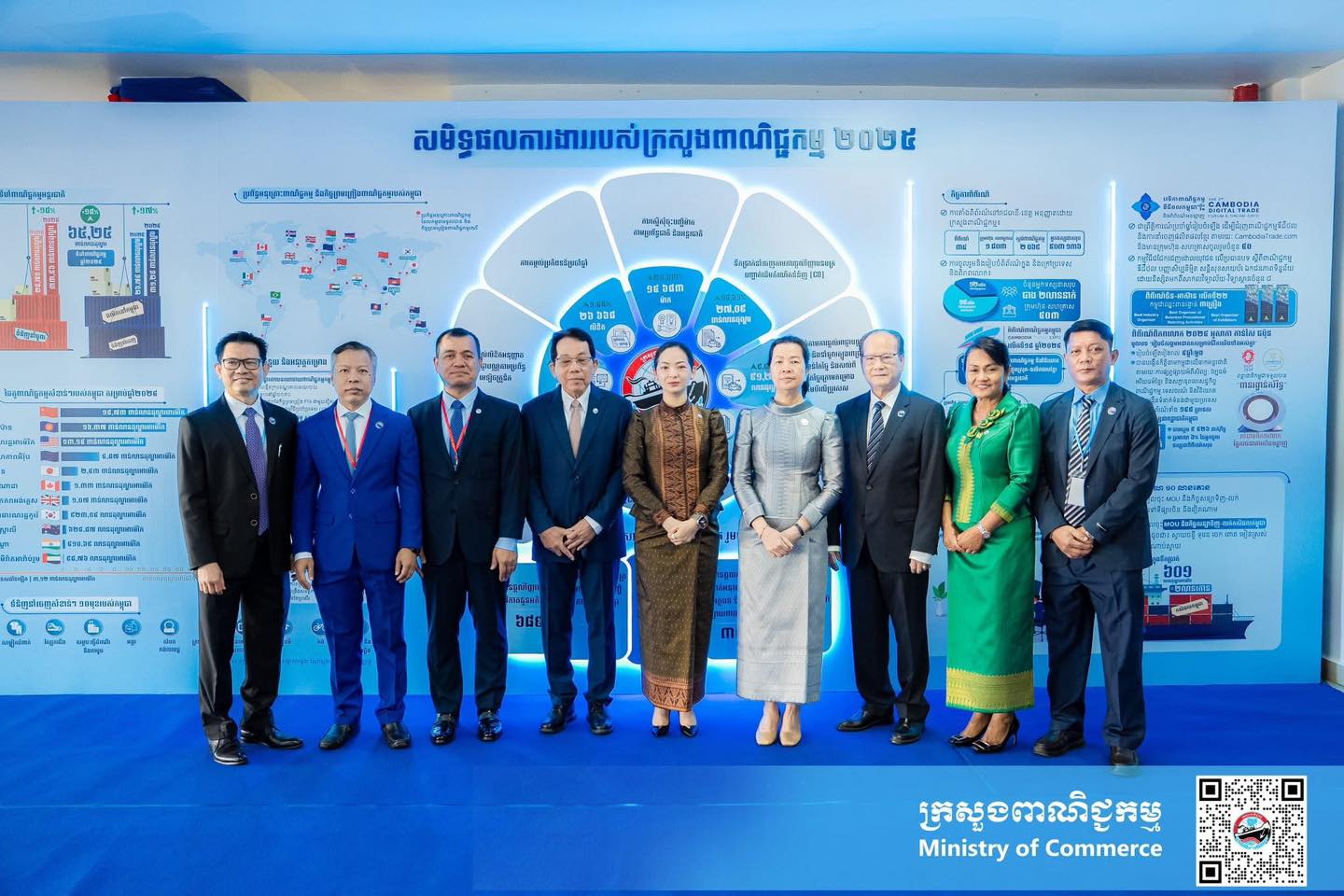
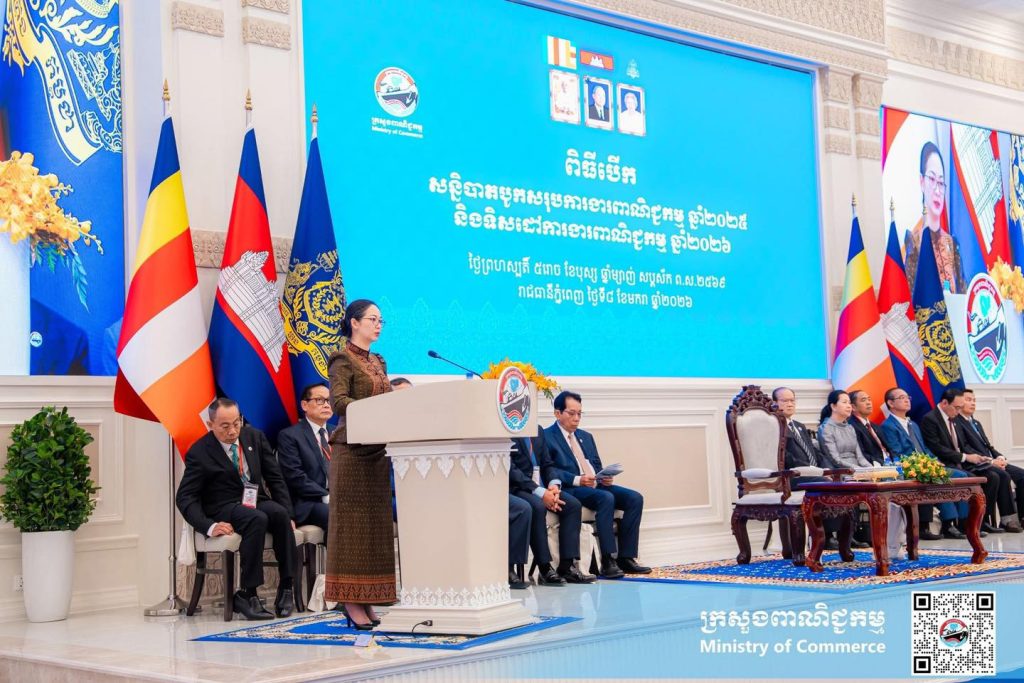
Cambodia’s Ministry of Commerce (MoC) used its Annual General Meeting (AGM) 2026 to review trade performance in 2025 and outline priorities for the year ahead, highlighting continued export growth, wider market reach, and efforts to balance international integration with domestic market stability.
Speaking at the meeting, Minister of Commerce Cham Nimul said Cambodia’s recent trade performance reflected ongoing policy efforts by the Royal Government of Cambodia to strengthen existing markets, expand into new ones, and improve competitiveness through value addition and trade facilitation.
The AGM reviewed outcomes from 2025 while setting objectives for 2026, at a time when Cambodia continues to operate within a global trade environment affected by geopolitical uncertainty, conflict, and regional challenges.
Trade performance in 2025: key figures
At the AGM, the Ministry presented headline figures outlining Cambodia’s trade position in 2025, which form the baseline for policy planning in 2026:
• Economic growth forecast: around 5.2 percent
• Total trade volume: USD 65.24 billion
• Total exports: USD 31.28 billion, up 17 percent from USD 26.75 billion in 2024
• Total imports: USD 33.96 billion, up 18 percent from USD 28.70 billion in 2024
• Export destinations: 169 countries, compared with 164 in 2024
According to the Ministry, Cambodia’s main trading partners during the year included China, ASEAN member states, the United States, the European Union, Japan, Canada, the United Kingdom, the Republic of Korea, Australia, India, and the United Arab Emirates.
Export diversification and supply chains
The MoC said market diversification remained a central theme of trade policy, with Cambodian goods reaching a wider range of international destinations. Officials noted that broader market access has helped reduce reliance on a limited number of export markets and supported Cambodia’s participation in regional and global supply chains.
Key export categories in 2025 included garments, footwear and travel goods, rice, cashew nuts, cassava, pepper, animal feed, bicycles, tyres, and other manufactured and agricultural products. The Ministry said efforts are continuing to increase value addition along these supply chains to improve returns for producers and investors.
Use of preferential trade schemes and free trade agreements also increased during the year, with certificates of origin issued rising by nearly 20 percent. The MoC indicated that further uptake of these agreements will be encouraged in 2026 as part of its competitiveness strategy.
Retaining major markets and regulatory preparation
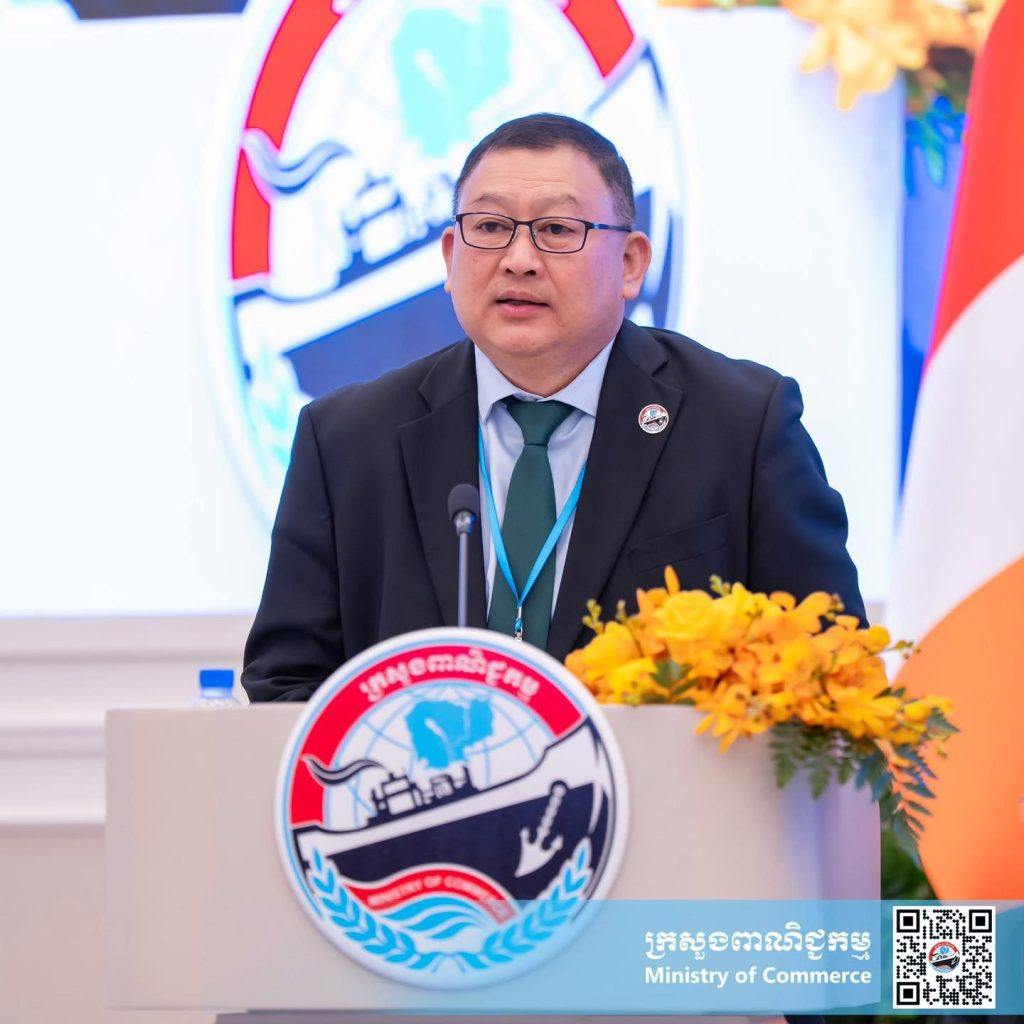
The AGM also reviewed progress in maintaining access to key export markets. Penn Sovicheat, Secretary of State and spokesperson for the MoC, said the United States remained a major destination for Cambodian exports, particularly garments, textiles, footwear, and travel goods. He noted that continued market access was supported by trade negotiations, resulting in a 19 percent tariff rate.
In parallel, the Ministry is continuing preparatory work on geographical indications, collective brands, and regulatory branding frameworks, which are intended to support product differentiation and strengthen Cambodia’s trade reputation.
Domestic trade and price stability
Beyond external trade, the MoC reiterated its focus on domestic market management. Officials said the ministry continues to promote local agricultural and consumer products by strengthening linkages between small-scale farmers, producer groups, and markets, supported by entrepreneurship initiatives, technical training, and infrastructure development.
Price stability for daily necessities and strategic goods was highlighted as an ongoing priority. According to the Ministry, measures aim to prevent excessive price increases that could affect consumers, while also avoiding price declines that could negatively impact producers and domestic supply.
Looking ahead
As outlined at the MoC’s AGM 2026, the Ministry’s approach for the coming year will continue to centre on strengthening trade diversification, expanding market access, improving the use of trade agreements, and maintaining domestic market stability.
The MoC said these priorities are intended to support Cambodia’s economic resilience and integration into regional and global trade systems, while managing risks linked to global uncertainty and domestic market pressures.