
Harrison White
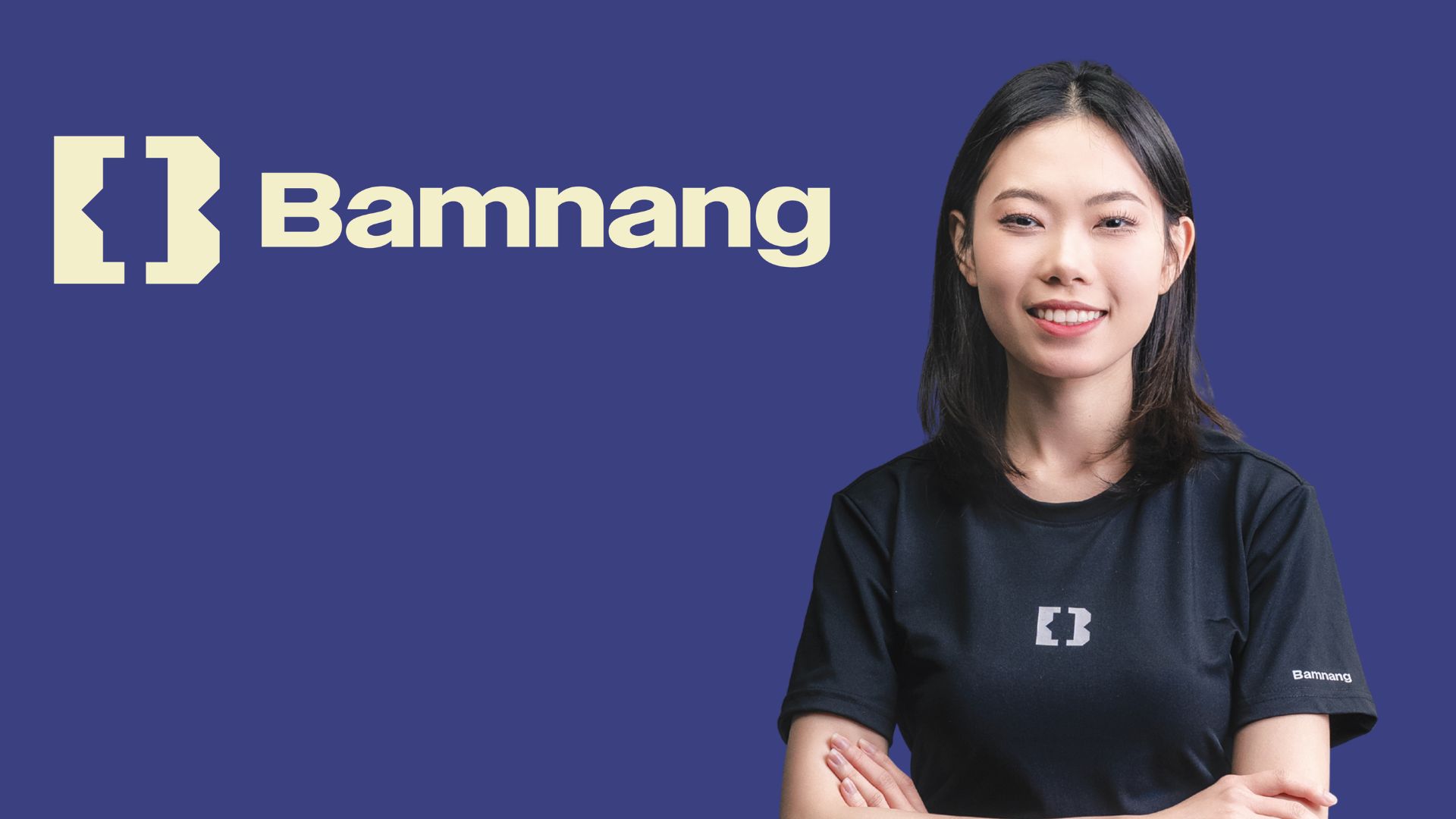
In this edition of Cambodia Investment Review – Leader Talks, we speak with Rothsethamony Seng, Co-Founder and Chief Executive Officer of Bamnang—a student housing and support platform addressing one of Cambodia’s most under-served segments in higher education.
The name Bamnang, which in Khmer translates to “aspiration” or “purpose,” reflects the company’s underlying premise: that access to safe, reliable accommodation is a foundational enabler of educational outcomes and long-term economic mobility. Positioned at the intersection of student housing, digital platforms, and mentorship, Bamnang is building a scalable model that responds to Cambodia’s rapid urbanisation and growing demand for higher education.
Drawing on Seng’s personal journey from Prey Veng province to Phnom Penh and the United States, the conversation explores how lived experience, large-scale student mentorship, and ecosystem partnerships have shaped Bamnang’s student-centric approach. It also examines the company’s growth strategy following investment from Plug and Play Tech Center, and what the platform’s evolution signals for investors watching Cambodia’s emerging education, proptech, and digital economy sectors.
Journey and the Origin of Bamnang
HW: Bamnang was created to help young people access safe, reliable accommodation while building a supportive community during their studies. What aspects of your own background and early experiences inspired you to co-found this platform, and how did those insights shape the model you built?
Rothsethamony Seng: Growing up in Cambodia and working closely with more than 10,000 students across provinces, I repeatedly encountered young people who were forced to leave Phnom Penh—or abandon university altogether—because they could not find safe, affordable housing. This challenge was particularly acute for young women leaving home for the first time. I saw parents torn between wanting to educate their children and fearing unsafe neighborhoods, predatory landlords, and mounting financial pressure.
Read More: Plug and Play Launches in Cambodia with MPTC and AUPP Technology Center Partnership
My own journey—from Prey Veng to studying in Phnom Penh, then DeKalb and Chicago in Illinois, and later at Harvard in Cambridge—showed me that housing is stressful even in world-class systems, especially for first-generation and international students. I struggled to find safe, affordable accommodation in every new city. Those experiences stayed with me whenever I mentored students and asked myself how much harder the process must be for someone starting from scratch in Cambodia.
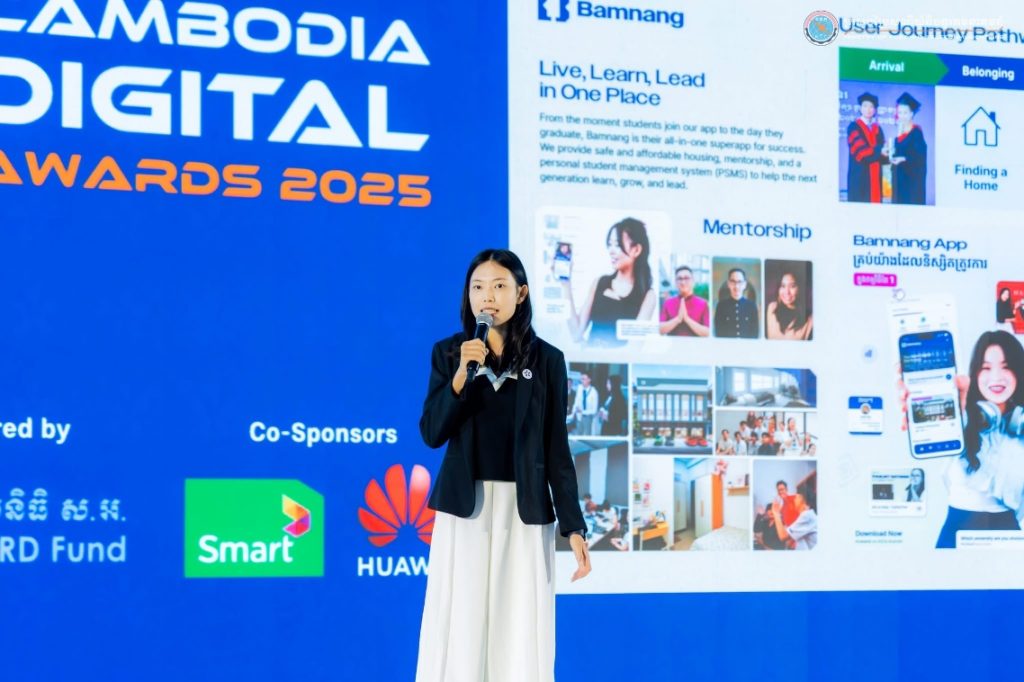
With the support of mentors and networks from Harvard and MIT, alongside encouragement from Prime Minister Samdech Moha Bovorthipadi Hun Manet and H.E. Dr. Chea Vandeth, Minister of Post and Telecommunications, I decided to pursue a more innovative solution. On March 14, 2024, my co-founder Menghieng Ngov and I pivoted our earlier digital marketing agency, Bamnang Creative Innovation, toward solving what we saw as one of the most silent but powerful determinants of educational success in Cambodia: student housing.
After launching our first MVP campus in December 2024, it became clear that we did not want to build another listing site. We wanted to design a student-centric ecosystem that supports the emotional and practical journey of leaving home, adapting to city life, and succeeding academically. Housing is the entry point, but the broader mission is to support the full student journey through mentorship, guidance, and a digital platform that functions almost like a second campus.
Differentiation and Value Proposition
HW: Your platform goes beyond simple rental matching by offering mentorship, community spaces, and ongoing support. What do you see as the core elements that set Bamnang apart from traditional rental services in Cambodia?
Rothsethamony Seng: Bamnang is not just about matching rooms and tenants; it is about building an environment where students can live, learn, and lead together. In a market where many students still rely on Facebook groups, word-of-mouth, and informal agreements, we wanted Bamnang to feel like a trusted companion for both students and their families.
Our differentiation begins with an all-in-one student superapp. Students can search for housing, manage contracts, and handle payments in one place, rather than juggling cash, screenshots, and multiple platforms. We also integrate services such as scholarship announcements and student resources, with plans to launch an AI-powered personalized student management system by June 2026.
Mentorship is embedded into the platform because many housing challenges are ultimately life-guidance challenges. Having mentored over 10,000 students and reached millions through digital content, I saw how strongly accommodation issues are tied to confidence, career direction, and personal development.
Community is another core pillar. Our housing model emphasizes co-living and shared experiences, supported by workshops, networking events, and creative or tech-focused activities. Finally, trust and safety are central. We work closely with landlords and institutions to raise standards and transparency, positioning Bamnang as an extended campus that supports student retention and well-being beyond the classroom.
Plug and Play Investment and Growth Strategy
HW: Securing funding from Plug and Play Tech Center is a major milestone for a Cambodian startup. What resonated most during those discussions, and how will this investment shape your roadmap?
Rothsethamony Seng: The investment from Plug and Play validated our belief that a startup born in Cambodia can address problems that are both deeply local and globally relevant. I believe what resonated most was the clarity of the problem we are solving in a rapidly urbanizing country where student mobility has outpaced the development of safe, supportive housing.
Our vision of an integrated student superapp that combines proptech, edtech, and community-building also aligned strongly with their focus on scalable, technology-enabled models. Importantly, our traction as a local founder team embedded in the community and experienced in public–private collaboration helped reinforce that credibility.

This investment directly shapes our roadmap in three ways: strengthening product features, expanding coverage around key university hubs in Cambodia while preparing for ASEAN expansion, and building strategic partnerships. Over time, we see opportunities to collaborate on areas such as digital identity, student finance, and scholarship ecosystems, helping make education access more equitable.
Strengths and Gaps in Cambodia’s Startup Ecosystem
HW: How do you assess Cambodia’s current startup environment, and what challenges still make scaling difficult?
Rothsethamony Seng: Cambodia’s startup ecosystem is full of energy, creativity, and a young, digital-first population that rapidly adopts new technologies. This creates strong potential in sectors such as fintech, education, and e-commerce, supported by growing government and development partner engagement.
At the same time, structural challenges remain. Early-stage funding is limited, with few clear exit stories to attract larger investors. Talent gaps persist, particularly in experienced product management and engineering roles, and support quality across incubators and accelerators can be uneven. Regulatory frameworks are improving but still lack the speed and clarity high-growth startups need.
My approach has been to treat these gaps as design constraints—building Bamnang to be resilient while also advocating for stronger policies, better talent pipelines, and more inclusive founder support.
Future Trends and Regional Scaling Opportunities
HW: Looking ahead, what trends will shape Cambodia’s startup landscape, and what practical steps should founders take to scale regionally?
Rothsethamony Seng: I believe Cambodia’s startup future will be shaped by deeper sector focus, stronger ecosystem data, and tighter regional integration. Edtech, fintech, and climate-related solutions stand out as areas where local needs align closely with investor and policy interest.
Regional integration will increasingly become the default path. With global accelerators, universities, and investors engaging more actively in Cambodia, startups will naturally plug into ASEAN value chains rather than operating in isolation.

For founders aiming to scale, the key is to build depth before expansion, design products with cross-border adaptability from day one, and leverage platforms and partnerships for knowledge and credibility—not just capital. Ultimately, my vision is that Bamnang becomes proof that a startup born from the real struggles of Cambodian students can serve learners across ASEAN and beyond, while staying rooted in local impact.
Within a year of launching our first MVP, we are already supporting hundreds of students with safe housing, thousands through mentorship, and reaching over a million learners globally through educational content. For me, that progress reinforces the idea that geography does not limit impact when community, purpose, and the right support systems come together.
Cambodia Investment Review – Leader Talks series features in-depth conversations with influential leaders from Cambodia and across the region, offering readers insights into current dynamics and emerging investment opportunities.