
Cambodia Investment Review
Cambodia’s informal economy is playing a pivotal—though often overlooked—role in helping households navigate the country’s most significant economic shocks in years, according to the latest World Bank assessment. With the country facing a property market downturn, sharp declines in remittances, and disruptions linked to border conflict and trade restrictions, analysts say informal work has become a critical buffer for millions.
The report highlights that as formal sector job creation slows and household income contracts, the informal economy has expanded to absorb returning migrants and underemployed workers, softening the immediate impact on poverty levels. But it also warns that heavy reliance on informal activity limits long-term productivity, raises vulnerability, and constrains the country’s ability to withstand future shocks.
Informal Work Absorbs Return Migrants Amid Sudden Loss Of Remittances
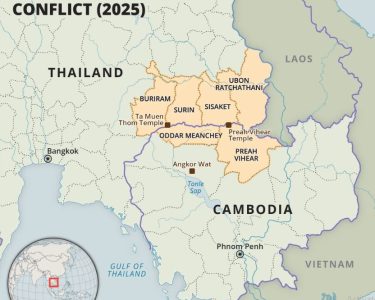
One of the most significant shocks this year has been the abrupt return of nearly 940,000 migrant workers from Thailand, triggered by the border conflict. This reversal has led to a projected 60% drop in remittances, which had previously accounted for 5.5% of GDP and served as a crucial income source for lower-income households.
With formal-sector job opportunities unable to keep pace, many returnees have shifted into informal employment—typically in low-skill, low-wage activities such as small-scale services, household businesses, agriculture, and construction. The report notes that more than 70% of job openings are in manufacturing, yet just 4–5% of returnees have the relevant experience, forcing many back into the informal sector.
This transition has immediate implications for poverty: households with migrants already faced poverty rates 11 percentage points higher than the national average, and without adequate job absorption, poverty among them could rise by 20 percentage points, according to simulations within the report.

Informal Businesses Help Households Cope—But At Lower Productivity
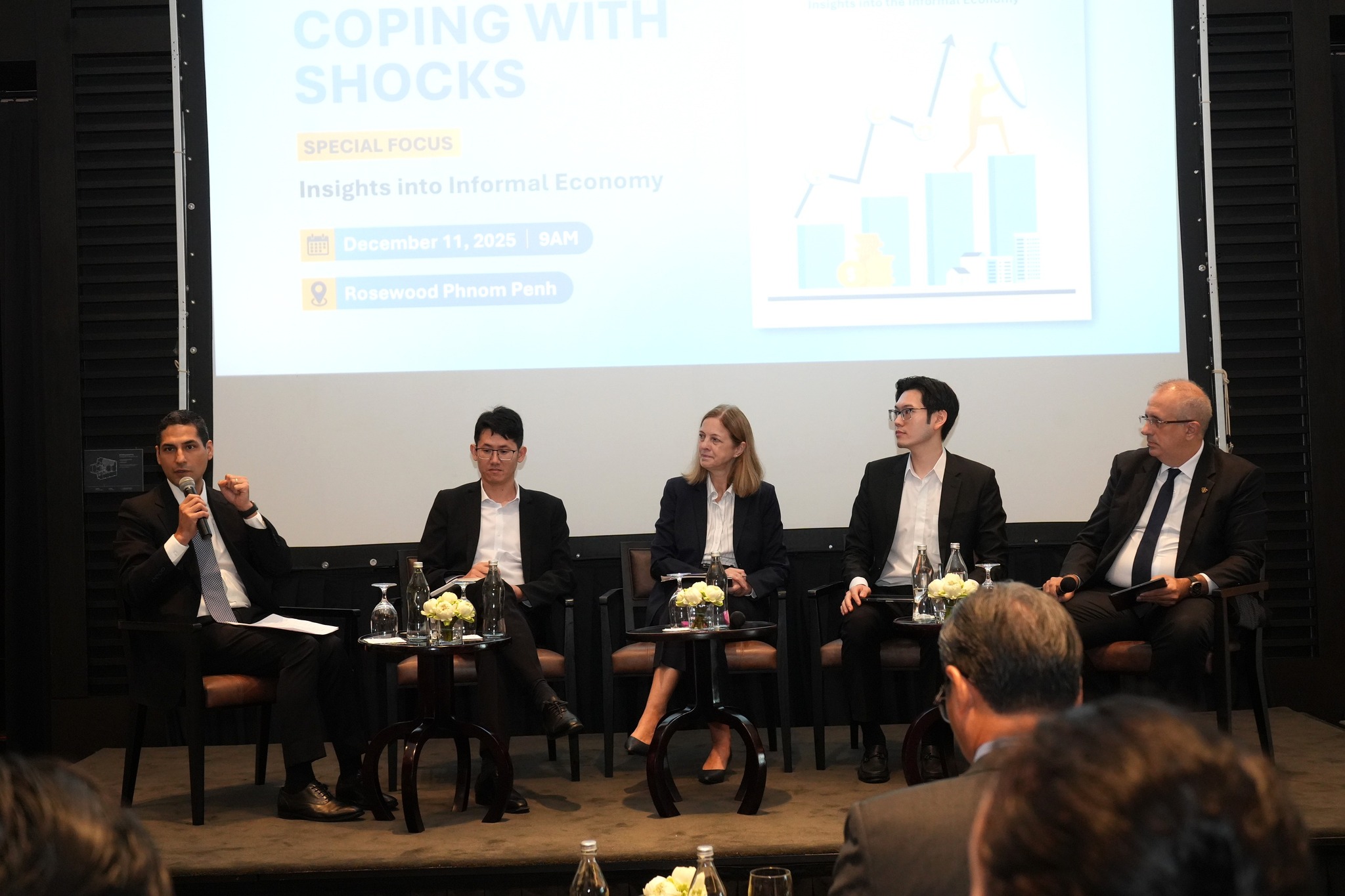
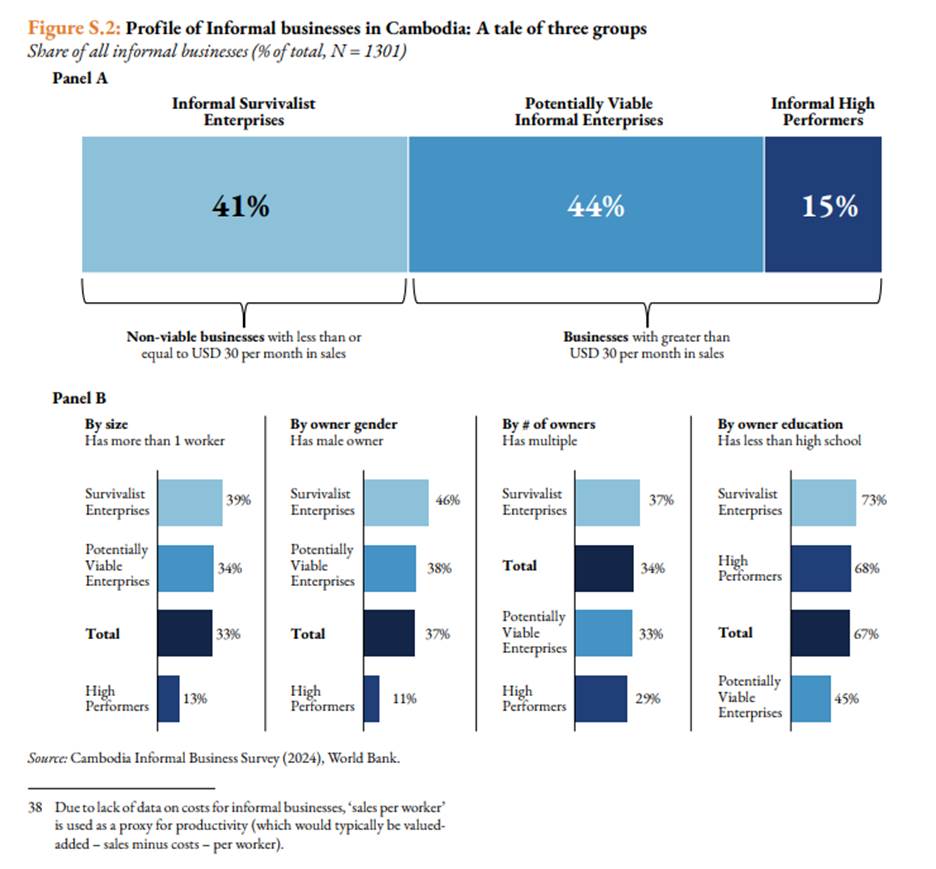
The World Bank’s special focus chapter, Insights into the Informal Economy, shows that informal businesses account for a substantial share of Cambodia’s economic activity compared with regional peers. They serve as a first line of defense during crises by offering flexible, easy-entry income streams that help stabilize households experiencing sudden income losses.
However, the report underscores a significant productivity gap between informal and formal firms:
- Informal firms—especially “survivalist” operations—tend to be small, low-capital, and low-skill, resulting in much lower labor productivity.
- Only a subset—classified as “viable informal businesses”—demonstrate the potential to grow or formalize.
- Access to finance, technology adoption, and stronger owner skills are strongly associated with higher productivity within this viable segment.
The data suggest that while informality cushions shocks in the short term, it also reinforces structural weaknesses in the economy by keeping a large portion of the labor force in low-productivity activities.
Informal Economy Central To Coping With Macro Shocks – But Long-Term Risks Building
The World Bank notes that Cambodia entered 2025 confronting several simultaneous macroeconomic pressures:
- A prolonged property market downturn dragging down investment and private consumption.
- Supply chain and labor disruptions caused by border conflict, including the sudden influx of returnees.
- 19% U.S. tariff rates weakening goods export competitiveness, which accounts for two-thirds of GDP.
- A sharp fall in global rice prices, affecting millions of rural households reliant on paddy farming.
Against this backdrop, the informal sector has become a key resilience mechanism, absorbing labor market shocks and maintaining a baseline of economic activity. Yet its expansion also raises concerns: increased unpaid family work, higher household debt burdens, and reduced access to social protection all increase household vulnerability during prolonged downturns.

Formalization Could Boost Productivity—But Obstacles Remain
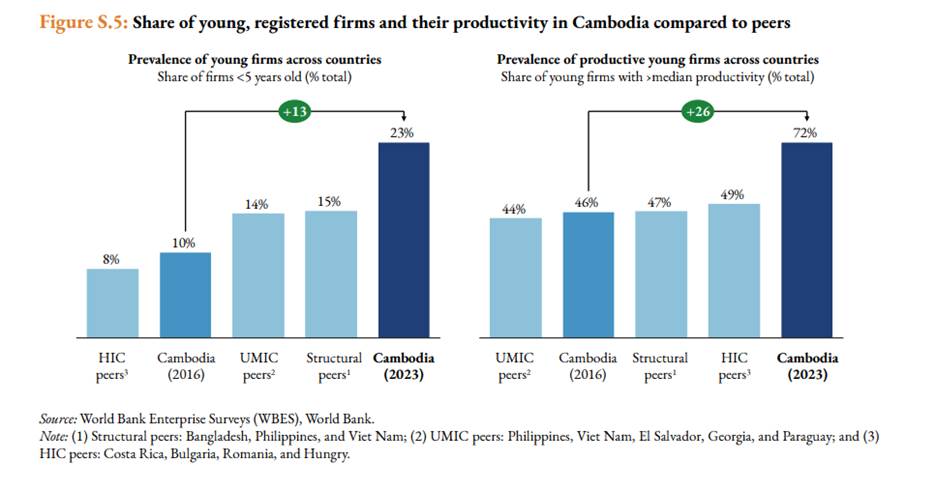
The report argues that targeted reforms could help transition viable informal enterprises into formal businesses, enhancing productivity and broadening the country’s tax base. Formalization could also help firms access finance, improve governance, and integrate into supply chains.
But significant barriers persist:
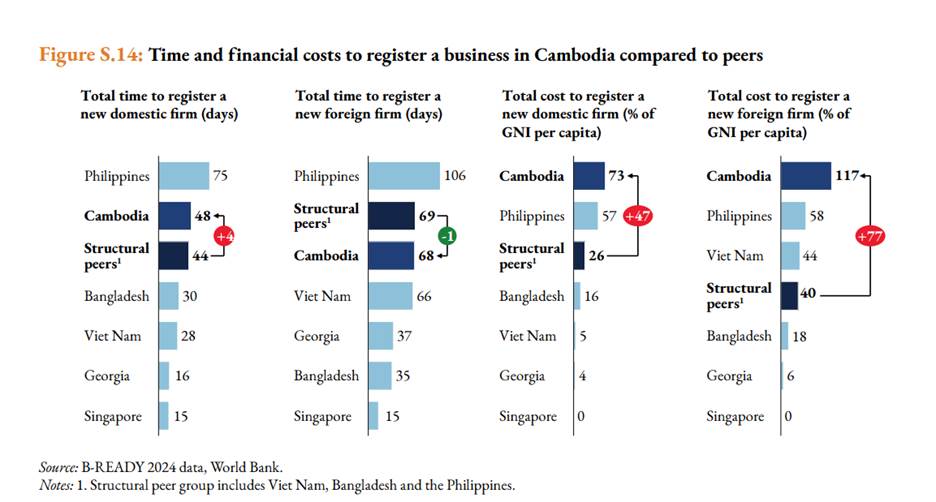
- High administrative costs and complex registration procedures.
- Limited awareness of the benefits of formalization.
- Weak enforcement and inconsistent regulatory environments.
- Financial and time costs that remain high relative to regional peers.
If these constraints were reduced, the report notes that productivity among viable informal businesses could rise substantially, supporting stronger long-term growth and greater resilience to shocks.
Policy Implications: Support Vulnerable Workers, Ease Formalization, And Boost MSMEs Competitiveness
To strengthen shock-absorption capacity while improving long-term competitiveness, the World Bank recommends:
- Emergency cash transfers for vulnerable returnees and expanded job-matching programs.
- Training modules co-designed with employers to address skills mismatches.
- Streamlined business registration and licensing aligned with the ongoing Business Ready reforms.
- Greater access to finance, especially for MSMEs outside major cities.
- Use of digital payments and modernized social assistance systems to improve targeting and delivery.
Outlook: Informal Economy Remains A Necessary Safety Net—But Not A Growth Engine
Cambodia’s informal economy is helping households navigate the immediate effects of economic shocks, acting as the country’s largest buffer during a period of unusual volatility. But the report concludes that without reforms to boost productivity, connect firms to formal markets, and support MSMEs, informality will continue to limit Cambodia’s long-term resilience.
As the economy moves toward recovery—and as the country approaches LDC graduation in 2029—the challenge will be balancing the short-term protective role of informality with the need to transition more workers and firms into productive, formal economic activity.